Inbunden, Engelska, 2001
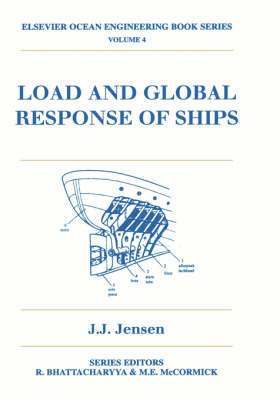
Load and Global Response of Ships
Av J.J Jensen
2105 kr
Beställningsvara. Skickas inom 5-8 vardagar. Fri frakt över 249 kr.
Beskrivning
Load and Global Response of Ships gives an introductory background to naval architecture statistics and strength of materials. Each subject is treated in detail; starting from the first principle. The aim of this title was to derive and present the necessary theoretical framework for predicting the extreme loads and the corresponding hull girder stresses that a ship may be subjected to during its operational lifetime.Although some account is given to reliability analysis, the present treatment has to be supplemented with methods for detailed stress evaluation and for structural strength assessment before a complete structural reliability analysis can be carried out.The classification societies have issued rules and regulations for a proper structural analysis of a ship and selection of the scantlings. Previously, those rules rather explicitly gave formulae for the thickness of the hull plantings, the size of the stiffeners etc. Such empirical rules must necessarily be rather conservative in order to apply to a large variety of ships. With the advent of powerful computers, the rules have changed. Today, the naval architect can perform the structural analysis using mainly rational methods based on first principles. The classification society may then specify proper safety factors against local global failure modes, taking into account the consequences of failure and the analysis procedure used. A cruder method of analysis then necessitates a larger safety factor. Therefore the effort made by the experienced naval architect to perform a detailed structural analysis will be returned not just by a rational structural arrangement but also often in lower weight of the ship and thus a higher payload throughout the operational lifetime of the ship.This analysis has attempted to make explicit one way in which designers limit the design space by creating rules to which they expect users to adhere. It is also an attempt to encourage designers to reconsider the 'rules of use' that they have used in their designs, so as to reconceptualise potential usage. This can help design behaviour where rule use is not blindly followed.By making these rules visible, it is possible to expose the limitations of current technology, and development design solutions that do not restrict use to the 'normal' case of action. Rules are useful to designers because they are simplifications of activity. Rules encode the normal case, and these are simplistic representations of work that are, in many cases, accurate enough for the purpose of design. However, encoding behaviour in rules has dangers in that they do not encompass the whole range of behaviours that can be performed. Using examples, this title shows that being able to break rules means that people are able to engage in a richer more flexible set of actions (and therefore more appropriate to contingency) than when they are constrained to a limited range.
Produktinformation
- Utgivningsdatum: 2001-08-08
- Mått: 184 x 260 x 21 mm
- Vikt: 810 g
- Format: Inbunden
- Språk: Engelska
- Serie: Elsevier Ocean Engineering Series
- Antal sidor: 352
- Förlag: Elsevier Science
- ISBN: 9780080439532
Utforska kategorier
Betyg & recensioner
0 recensioner
Inga recensioner tillgängliga.