• Fri frakt över 249 kr
  • •
  • Snabba leveranser
  • •
  • Billiga böcker
Kundservice

Du är på sajten för privatpersoner.

Företag, bibliotek eller offentlig verksamhet?

Du handlar på classic.bokus.com, där alla dina funktioner finns intakta.
Till classic.bokus.com
Bokus logotyp. Gå till startsidan.
  • Erbjudanden
  • Nyheter
  • Student
  • Topplistor
  • Barn & ungdom
  • Bokus Play
  • E-böcker
  • Pocketböcker
  • Spel & pussel

10% rabatt på allt med kod: NYSTART10 →

Sidfot

Mina sidor

    Hjälp

    • Kundservice
    • Vanliga frågor och svar
    • Frakt och leverans
    • Retur vid ångerrätt
    • Reklamera vara
    • Betalning
    • Köpvillkor
    • Allmänna villkor
    • Information om webbplatsens tillgänglighet

    Om Bokus

    • Om oss
    • Pressrum
    • För studenter
    • För företag
    • För bibliotek och offentlig verksamhet
    • För leverantörer
    • Hållbarhet

    Populärt

    • Aktuella erbjudanden
    • Presentkort
    • Studentlitteratur
    • Nya böcker
    • Topplistor
    • Signerade böcker
    • Engelska böcker

    Inspiration

    • Boktips
    • BookTok
    • Populära bokserier
    • Barnbokskaraktärer
    • Populära författare
    Logotyp för Bokus
    Följ oss på Facebook (extern länk)Följ oss på Instagram (extern länk)Följ oss på YouTube (extern länk)Följ oss på TikTok (extern länk)
    bokus @ CookiesAnpassa cookiesIntegritetspolicyKöpvillkor
    Till Citymail hemsida (extern länk)Till Budbee hemsida (extern länk)Till Postnord hemsida (extern länk)Till Schenker hemsida (extern länk)Till Early Bird hemsida (extern länk)Till Walleys hemsida (extern länk)
    1. Naturvetenskap och teknik
    2. Teknik och industri
    3. Tillverkningsteknik

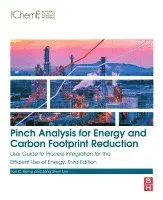
    Pinch Analysis for Energy and Carbon Footprint Reduction

    User Guide to Process Integration for the Efficient Use of Energy

    AvIan C. Kemp,Jeng Shiun Lim

    Häftad, Engelska, 2020

    1 165 kr

    Beställningsvara. Skickas inom 10-15 vardagar. Fri frakt över 249 kr.

    Beskrivning

    Pinch Analysis for Energy and Carbon Footprint Reduction is the only dedicated pinch analysis and process integration guide, covering a breadth of material from foundational knowledge to in-depth processes. Readers are introduced to the main concepts of pinch analysis, the calculation of energy targets for a given process, the pinch temperature, and the golden rules of pinch-based design to meet energy targets. More advanced topics include the extraction of stream data necessary for a pinch analysis, the design of heat exchanger networks, hot and cold utility systems, combined heat and power (CHP), refrigeration, batch- and time-dependent situations, and optimization of system operating conditions, including distillation, evaporation, and solids drying.

    This new edition offers tips and techniques for practical applications, supported by several detailed case studies. Examples stem from a wide range of industries, including buildings and other non-process situations. This reference is a must-have guide for chemical process engineers, food and biochemical engineers, plant engineers, and professionals concerned with energy optimization, including building designers.


    • Covers practical analysis of both new and existing processes
    • Teaches readers to extract the stream data necessary for a pinch analysis and describes the targeting process in depth; includes a downloadable spreadsheet to calculate energy targets
    • Demonstrates how to achieve the targets by heat recovery, utility system design, and process change
    • Updated to include carbon footprint, water and hydrogen pinch, developments in industrial applications and software, site data reconciliation, additional case studies, and answers to selected exercises

    Produktinformation

    • Utgivningsdatum:2020-08-05
    • Mått:191 x 235 x undefined mm
    • Vikt:1 120 g
    • Format:Häftad
    • Språk:Engelska
    • Antal sidor:566
    • Upplaga:3
    • Förlag:Elsevier Science
    • ISBN:9780081025369

    Utforska kategorier

    • Tillverkningsteknik inom Naturvetenskap och teknik

    Mer om författaren

    Ian Kemp has over 30 years of experience in pinch analysis and process energy reduction, including consultancy, R&D, and technical writing. He was a principal technologist at AEA Technology, Harwell, and a scientific leader at GSK. He received the IChemE Junior Moulton Medal in 1989 for his paper on Batch Process Integration and the IChemE Brennan Medal in 2007 for the second edition of this book. His specialties include solids processing, particularly of pharmaceuticals, and drying processes, including spray drying, fluid bed drying and granulation, and dryer selection and troubleshooting, as well as energy reduction, sustainability, and pinch analysis. Dr. Jeng Shiun Lim is a researcher in Process Systems Engineering Center (PROSPECT) and Research Institute of Sustainable Environment (RISE). His specialties include energy management and energy planning for greenhouse gas emissions reduction and resource conservation and planning via systematic techniques (pinch analysis, mathematical modelling, and optimization). He has published 45 ISI and 37 Scopus indexed articles to date. He has been extensively involved in research projects and industrial-based projects to assist those companies identifying energy saving opportunities worth millions of dollars through the use of process integration and process systems engineering approach.

    Innehållsförteckning

    • 1. Introduction1.1 What is pinch analysis?1.2 Historical development and industrial experience1.3 Why does pinch analysis work?1.4 The concept of process synthesis1.5 Hierarchy of energy reduction1.6 The role of thermodynamics in process design1.7 Learning and applying the techniques1.8 A note on terminology2. Carbon footprint and primary energy2.1 Introduction2.2 Definition of carbon footprint2.3 Primary energy2.4 Carbon dioxide emissions and carbon footprint2.5 Components of carbon footprint 2.6 Carbon pinch and emissions targeting 2.7 Energy costs2.8 Conclusions3. Key concepts of pinch analysis3.1 Heat recovery and heat exchange3.2 The pinch and its significance3.3 Heat exchanger network design 3.4 Choosing ΔTmin: supertargeting 3.5 Methodology of pinch analysis3.6 Worked exercise4. Data extraction and energy targeting4.1 Data extraction4.2 Case study - organics distillation plant4.3 Energy targeting4.4 Multiple utilities4.5 More advanced energy targeting4.6 Targeting heat exchange units, area and shells 4.7 Supertargeting; cost targeting for optimal ΔTmin4.8 Targeting for organics distillation plant case study4.9 ExercisesAppendix – Algorithms for Problem Table and composite curves5. Heat exchanger network design5.1 Introduction5.2 Heat exchange equipment 5.3 Stream splitting and cyclic matching 5.4 Network relaxation 5.5 More complex designs 5.6 Multiple pinches and near-pinches5.7 Retrofit design5.8 Operability; multiple base case design5.9 Network design for organics distillation case study5.10 Conclusions5.11 Exercises6. Utilities, heat and power systems6.1 Concepts6.2 Combined heat and power systems6.3 Heat pumps and refrigeration systems 6.4 Total site analysis 6.5 Worked example – organics distillation unit6.6 Worked case study and example for total site problem table algorithm6.7 Case studies and examples6.8 Exercises7. Process change and evolution7.1 Concepts7.2 General principles7.3 Reactor systems7.4 Distillation columns 7.5 Evaporator systems 7.6 Flash systems 7.7 Solids drying 7.8 Other separation methods 7.9 Application to the organics distillation process case study 7.10 Summary and conclusions 7.11 Exercises8. Batch and time-dependent processes8.1 Introduction8.2 Concepts8.3 Types of streams in batch processes8.4 Time intervals8.5 Calculating energy targets8.6 Heat exchanger network design8.7 Rescheduling8.8 Debottlenecking8.9 Other time-dependent applications8.10 Conclusions9. Water, hydrogen, and carbon pinch9.1 Introduction9.2 Concepts9.3 Key steps in mass pinch analysis9.4 Application and case study for water pinch analysis (Glove Industry)9.5 Application and case study for hydrogen pinch analysis9.6 Conclusions for water and hydrogen pinch analysis9.7 Carbon pinch10. Applying the technology in practice10.1 Introduction10.2 How to do a pinch study10.3 Heat and mass balance10.4 Stream data extraction 10.5 Targeting and network design10.6 Project evaluation and costing10.7 Targeting software10.8 Exercises11. Industrial experience11.1 Overview11.2 Oil refining11.3 Bulk chemicals – continuous11.4 Speciality and batch chemicals and pharmaceuticals11.5 Pulp and paper11.6 Food and beverage11.7 Consumer products and textiles11.8 Minerals and metals11.9 Heat and power utilities11.10 Buildings11.11 Waste processing and sewage12. Case studies12.1 Introduction12.2 Crude preheat train12.3 Aromatics plant12.4 Evaporator/dryer plant12.5 Organic chemicals manufacturing site12.6 Food processing plant12.7 Hospital site12.8 Conclusions12.9 Exercises13. ConclusionsNotationFurther readingAppendix 1. Using the spreadsheet softwareAppendix 2. Answers to selected exercisesIndex