Du är på sajten för privatpersoner.
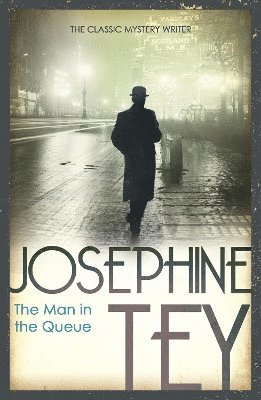
Josephine Tey is one of the best-known and best-loved of all crime writers. She began to write full-time after the successful publication of her first novel, The Man in the Queue (1929), which introduced Inspector Grant of Scotland Yard. In 1937 she returned to crime writing with A Shilling for Candles, but it wasn't until after the Second World War that the majority of her crime novels were published. Josephine Tey died in 1952, leaving her entire estate to the National Trust.
The Man In The Queue is as fresh and original as ever, 85 years on. Never one to tie herself to genre conventions, Tey builds on character and circumstances to create an enthralling cat-and-mouse hunt.
I really struggled with this book and finally gave up. I was lured by the glowing comments from several high-profile newspapers. The characters are utterly boring and they are portrayed in a long-winded contrived language, which is a pain. I started skipping several pointless passages and finally gave up. I now have learned that the book was published in 1930. If you enjoy that period in criminal fiction, there ar far better alternatives.
Tomas H
Du är på sajten för privatpersoner.
Josephine Tey is one of the best-known and best-loved of all crime writers. She began to write full-time after the successful publication of her first novel, The Man in the Queue (1929), which introduced Inspector Grant of Scotland Yard. In 1937 she returned to crime writing with A Shilling for Candles, but it wasn't until after the Second World War that the majority of her crime novels were published. Josephine Tey died in 1952, leaving her entire estate to the National Trust.
The Man In The Queue is as fresh and original as ever, 85 years on. Never one to tie herself to genre conventions, Tey builds on character and circumstances to create an enthralling cat-and-mouse hunt.
I really struggled with this book and finally gave up. I was lured by the glowing comments from several high-profile newspapers. The characters are utterly boring and they are portrayed in a long-winded contrived language, which is a pain. I started skipping several pointless passages and finally gave up. I now have learned that the book was published in 1930. If you enjoy that period in criminal fiction, there ar far better alternatives.
Tomas H