• Fri frakt över 249 kr
  • •
  • Snabba leveranser
  • •
  • Billiga böcker
Kundservice

Du är på sajten för privatpersoner.

Företag, bibliotek eller offentlig verksamhet?

Du handlar på classic.bokus.com, där alla dina funktioner finns intakta.
Till classic.bokus.com
Bokus logotyp. Gå till startsidan.
  • Erbjudanden
  • Nyheter
  • Student
  • Topplistor
  • Barn & ungdom
  • Bokus Play
  • E-böcker
  • Pocketböcker
  • Spel & pussel

10% studentrabatt med kod TERM26

Sidfot

Mina sidor

    Hjälp

    • Kundservice
    • Vanliga frågor och svar
    • Frakt och leverans
    • Retur vid ångerrätt
    • Reklamera vara
    • Betalning
    • Köpvillkor
    • Allmänna villkor
    • Information om webbplatsens tillgänglighet

    Om Bokus

    • Om oss
    • Pressrum
    • För studenter
    • För företag
    • För bibliotek och offentlig verksamhet
    • För leverantörer
    • Hållbarhet

    Populärt

    • Aktuella erbjudanden
    • Presentkort
    • Studentlitteratur
    • Nya böcker
    • Topplistor
    • Signerade böcker
    • Engelska böcker

    Inspiration

    • Boktips
    • BookTok
    • Populära bokserier
    • Barnbokskaraktärer
    • Populära författare
    Logotyp för Bokus
    Följ oss på Facebook (extern länk)Följ oss på Instagram (extern länk)Följ oss på YouTube (extern länk)Följ oss på TikTok (extern länk)
    bokus @ CookiesAnpassa cookiesIntegritetspolicyKöpvillkor
    Till Citymail hemsida (extern länk)Till Budbee hemsida (extern länk)Till Postnord hemsida (extern länk)Till Schenker hemsida (extern länk)Till Early Bird hemsida (extern länk)Till Walleys hemsida (extern länk)
    1. Medicin
    2. Andra medicinska specialiteter
    3. Farmakologi

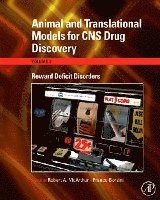
    Animal and Translational Models for CNS Drug Discovery: Reward Deficit Disorders

    AvRobert A. McArthur,Franco Borsini

    Inbunden, Engelska, 2008

    916 kr

    Beställningsvara. Skickas inom 10-15 vardagar. Fri frakt över 249 kr.

    Beskrivning

    Reward Deficit Disorders is written for researchers in both academia and the pharmaceutical industry who use animal models in research and development of drugs for reward deficit disorders such as alcohol dependence, nicotine dependence, heroin and cocaine addiction, obesity, and gambling and impulse control disorders. Reward Deficit Disorders has introductory chapters expressing the view of the role and relevance of animal models for drug discovery and development for the treatment of psychiatric disorders from the perspective of (a) academic basic neuroscientific research, (b) applied pharmaceutical drug discovery and development, and (c) issues of clinical trial design and regulatory agencies limitations. Each volume examines the rationale, use, robustness and limitations of animal models in each therapeutic area covered and discuss the use of animal models for target identification and validation. The clinical relevance of animal models is discussed in terms of major limitations in cross-species comparisons, clinical trial design of drug candidates, and how clinical trial endpoints could be improved. Reward Deficit Disorders also has a section dedicated to the specifics of the regulatory aspects to abuse liability testing. The aim of this series of volumes on Animal and Translational Models for CNS Drug Discovery is to identify and provide common endpoints between species that can serve to inform both the clinic and the bench with the information needed to accelerate clinically-effective CNS drug discovery.

    This is the third volume in the three volume-set, Animal and Translational Models for CNS Drug Discovery 978-0-12-373861-5, which is also available for purchase individually.


    • Provides clinical, academic, government and industry perspectives fostering integrated communication between principle participants at all stages of the drug discovery process
    • Critical evaluation of animal and translational models improving transition from drug discovery and clinical development
    • Emphasizes what results mean to the overall drug discovery process
    • Explores issues in clinical trial design and conductance in each therapeutic area
    • Neurological Disorders is available for purchase individually.

    Produktinformation

    • Utgivningsdatum:2008-11-15
    • Mått:184 x 260 x 28 mm
    • Vikt:960 g
    • Format:Inbunden
    • Språk:Engelska
    • Antal sidor:432
    • Förlag:Elsevier Science
    • ISBN:9780123738608

    Utforska kategorier

    • Farmakologi inom Medicin
    • Tillverkningsteknik inom Naturvetenskap och teknik

    Mer om författaren

    Dr. McArthur began his professional career investigating the role of serotonin on feeding behaviour at the Clarke Institute of Psychiatry in Toronto, Canada. This interest led him to complete a PhD in the psychopharmacology of feeding behaviour and macronutrient selection with John Blundell at the University of Leeds, Leeds, UK.In 1981 he joined Beecham Pharmaceuticals to work on adrenergic involvement in energy expenditure and obesity. In 1983 Dr McArthur began working on M1 functional agonists for the treatment of Alzheimer disease and was responsible for demonstrating the initial procognitive effects of Sabcomeline. Following the merger of Beecham with SmithKline French, Dr McArthur was appointed Business Development Executive at I.T.E.M-Labo, Paris working with Roger Porsolt in behavioural pharmacology contract research. In 1992, Robert was appointed Head of Behavioral Pharmacology at Farmitalia Carlo Erba, later Pharmacia in Milan. His lab was responsible for the preclinical behavioural pharmacology of Sabcomeline (Alzheimer’s and schizophrenia); Safinamide (epilepsy and Parkinson’s); Reboxetine (depression); Cabergoline (Parkinson’s); Nicergoline (Mild Cognitive Impairment); and Amperozide (alcoholism).He is listed as an inventor in 19 issued patents and applications of which he is the principal inventor in 3. In 1998, Robert transferred to the Pharmacia and Upjohn Company in Kalamazoo, Michigan where as senior behavioural pharmacologist responsible, he worked on mutant mouse characterizations, the establishment of a primate unit assessing cognitive changes in monkeys (CANTAB), and development of anxiety models in marmosets. Soon after the merger of Pharmacia and Upjohn with Monsanto-Searle, Robert returned to Europe where in 2001 he founded the consulting company, McArthur and Associates GmbH in Basel.Robert has since worked on a series of projects for both large Pharma as well as biotechs, including further primate work in Parkinson’s, development of behavioural pharmacology expertise, novel target validation, due diligence, medical writing, strategy evaluation, scientific advisor and as an expert witness. Dr McArthur has pursued his academic interests in translational neuroscience. In 2003, Robert was appointed as a visiting Associate Research Professor in the Department of Neuroscience (Division of Behavioural Neuroscience) at the Karolinska Institute in Stockholm.He has written and co-edited extensively on the subject of the clinical and translational relevance of animal models of CNS disorders. He has authored 43 peer-reviewed papers, 13 book chapters, co-author on 1 book and senior editor of a three-volume set on translational value of animal models for CNS drug discovery. He has served as section editor (CNS) for Current Opinion in Investigational Drugs and is on the editorial board of Drugs of the Future. In 2009 he was appointed an independent scientific expert evaluator for the European FP7-Health call.Franco Borsini, Head, Central & Peripheral Nervous System and General Pharmacology Area - R&D Department, sigma-tau SpA, Pomezia (Rome), Italy

    Innehållsförteckning

    • Preface to Reward Deficit Disorders Volume:What Do You Mean By “Translational Research”? An Enquiry through Animal and Translational Models for CNS Drug Discovery: Reward Deficit DisordersRobert A McArthur and Franco Borsini1.C. Heidbreder. Impulse and Reward Deficit Disorders: Drug Discovery and Development2.D. McCann et al. Drug Discovery and Development for Reward Disorders: Views from Government3.T. Gardner et al. Issues in Designing and Conduction Clinical Trails for Reward Disorders: A Clinical View4.G. Koob. The Role of Animal Models in Reward Deficit Disorders: Views of Academia5.Hilary J Little et al. Pharmacotherapy of Alcohol Dependence: Improving Translation from the Bench to the Clinic6.A. Markou et al. Contribution of Animal Models and Preclinical Human Studies to Medication: Development for Nicotine Dependence7.B. Rocha et al. Development of Medication for Heroin and Cocaine Addiction and Regulatory Aspects of Abuse Liability Testing8.C. Dourish et al. Anti-obesity Drugs: From Animal Models to Clinical Efficacy9.W. Williams et al. Current Concepts in the Classification, Treatment and Modeling of Pathological Gambling and other Impulse Control DisordersEpilogue:Translational Models for the 21st century: Reminiscence, Reflections and Some RecommendationsPaul Willner, Franco Borsini, and Robert A McArthur