1 868 kr
Beställningsvara. Skickas inom 7-10 vardagar. Fri frakt över 249 kr.
Beskrivning
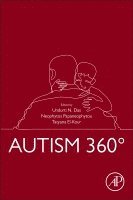
Autism 360 uses a hybrid and transdisciplinary methodology to identify mechanisms on how autism is prevented, diagnosed, treated and managed within personal and social constructs around the world. Adopting a lifespan approach, the book discusses lifestyle challenges and emphasizes issues relating to neurodiversity, individuality, best practices, and support of both people on the spectrum and their families. This book will help change population and individual attitudes and behaviors regarding autism. Its ultimate goal is to empower readers to become both agents of change and an integral part of the solution.
- Covers topics from the prevention and treatment of autism and how to live with it
- Adopts an integrated methods approach
- Features field experiences
- Provides valuable syntheses of scattered material
- Compares cross-cultural learnings
- Discusses the education and employment of those with autism
Produktinformation
- Utgivningsdatum:2019-09-30
- Mått:152 x 229 x 35 mm
- Vikt:880 g
- Format:Häftad
- Språk:Engelska
- Antal sidor:554
- Förlag:Elsevier Science
- ISBN:9780128184660
Utforska kategorier
Mer om författaren
Undurti N. Das is an M.D. in Internal Medicine from Osmania Medical College, Hyderabad, India; a Fellow of the National Academy of Medical Sciences, India, and Shanti Swaroop Bhatnagar prize awardee. Apart from clinical work, he is researching the role of polyunsaturated fatty acids, cytokines, nitric oxide, free radicals, and anti-oxidants in cancer, inflammation, metabolic syndrome, schizophrenia, sepsis, rheumatological conditions and autisms. His current interests include the epidemiological and molecular aspects of autism, diabetes mellitus, hypertension, cardiovascular diseases and metabolic syndrome. Dr. Das was formerly scientist at Efamol Research Institute, Kentville, Canada; Professor of Medicine at Nizam’s Institute of Medical Sciences, Hyderabad, India and Research Professor of Surgery and Nutrition at SUNY (State University of New York) Upstate Medical University, Syracuse, USA. At present, he is the Chairman and Research Director of UND Life Sciences LLC, USA, and serves as a consultant to both Indian and USA based biotech and pharmaceutical companies. Undurti Das is the Founding Editor of the international journal: Lipids in Health and Disease; and serves on the editorial board of another 10 international journals. Dr Das has more than 500 international publications and has been awarded 5 USA patents.Dr. Neophytos (Neo) L. Papaneophytou earned a Ph.D. in Clinical Psychology and holds licenses to practice psychotherapy in various States in America. He has completed specialization training in the areas of sexual abuse and maltreatment, personality disorders and trauma. Dr. Papaneophytou has extensive experience working with both victims and abusers. Moreover, he as experience diagnosing and treating various psychiatric conditions and stressors related to anxiety, mood disorders, depression, schizophrenia, bereavement, divorce, adjustment issues, LGBTQU issues, ADHD, PTSD, school/behavioral issues, and parenting among others. When working with clients (children, adults, and couples) Dr. Papaneophytou utilizes a client-centered approach to facilitate optimal therapeutic results that allows clients to enjoy an improved quality of life. In his client-centered approach, Dr. Papaneophytou utilizes techniques from the following therapeutic orientations: cognitive behavioral therapy, dialectical behavioral therapy, transference-focused psychotherapy, dynamic psychotherapy, and trauma-focused CBT. In addition to his clinical practice and research, Dr. Papaneophytou’s career has included over 20 years of the teaching of multiple graduate and undergraduate psychology courses at institutions such as the City University of New York, The State University of New York, and many other local and international universities. Dr. Papaneophytou is the founder and President of non-profit organizations, aiming at expanding awareness and offering actionable help to people on the Autism Spectrum and their families. He organized the Annual Cyprus International Conference on Autism Treatment and Research, and he is working toward the establishment of a model Center for Excellence: The Cyprus International Center for Autism Education Treatment and Research. This is the 3rd book Dr. Papaneophytou has co-authored pertinent to ASD. He welcomes scientific collaboration, particularly comparative international research. Dr. Tatyana El-Kour is the proud daughter of Palestinian parent refugees, raised in a household where exile was not a chapter in a history book but a living inheritance. Her parents carried stories of uprooting, endurance, and rebuilding with dignity, and they passed on a simple truth: food is more than nutrition—it is memory, safety, and belonging. As a child, Tatyana grew up in communities shaped by poverty, migration, and crisis. She often joined her parents as they cared for neighbors, recent arrivals, and families with fewer resources. These early encounters with deprivation and resilience formed her earliest education. Supporting crisis-affected people was never a choice or a profession; it was life itself. As she often says, this work “grew in my blood.Her career extends that inheritance across continents. For more than two decades, Tatyana has worked throughout the Middle East, Central Asia, Africa, Europe, and North America, moving between refugee camps, fragile communities, policy spaces, and academic institutions. She is known for integrating nutrition, psychology, and narrative inquiry with emerging technologies. Her recent work explores how AI, augmented reality, and immersive media can preserve community stories, elevate the voices of marginalized populations, and create new ways of teaching and understanding human experience in crisis settings.Tatyana holds a PhD in Psychology (Media Psychology) and advanced degrees in Medical Nutrition Therapy and Media Psychology. A Registered Dietitian Nutritionist and Fellow of the Academy of Nutrition and Dietetics, she writes as both scholar and witness—someone shaped by the very histories she now works to illuminate.
Innehållsförteckning
- Section IPrevention1. A perinatal strategy to prevent autismUndurti N. Das2. The early development of autism spectrum disorder and its careColwyn Trevarthen and Jonathan Delafield-Butt3. Autistic ontologies and the open genomeMajia H. Nadesan4. Underestimated environmental factors contributing to autism spectrum disordersJean-Baptiste Fini, Michelle Leemans, and Barbara A. Demeneix5. Dietary interventions to prevent autism spectrum disorderTatyana El-Kour, Melissa Olive, Natalia Neophytou, and Sandra PretoriusSection IIAssessment and Diagnosis6. Deriving resting-state fMRI biomarkers for classification of autism spectrum disorder Antonis D. Savva, Aikaterini S. Karampasi, and George K. Matsopoulos7. Current assessment and diagnostic practices in the United States: what they are missingNina Newman and Ira Glovinsky8. A multidisciplinary and parent-useful approach to assessment and diagnosis: creating a road map for professionals, parents, and better outcomesfor childrenIra Glovinsky and Nina Newman10. Introducing best practices in treatment modalities using a lifecycle approachGil Tippy11. Treatment in autism spectrum disorder: areas of unmet need in the United StatesStephanny Freeman and Tanya Paparella12. Full circle autism care includes family relationships and dynamicsRuby Moye Salazar13. DIR ModelSerena Wieder14. Sensory processing and meaning making in autism spectrum disorderIsabelle Mueller and Ed Tronick15. Early intervention for children with autistic spectrum disorders through a system of mobile services in the local communityIvanka Pejic16. A comparative study of infants and toddlers treated with The Mifne Approach intervention for AutismSpectrum DisorderHanna A. Alonim, Ido Lieberman, Danny Tayar, Giora Scheingesicht, and Hillel D. Braude17. Targeting gut microbiota as a possible therapeutic intervention in autismAfaf El-Ansary and Ramesa Shafi Bhat18. Nutrition and dietary considerations during treatment of autism spectrum disorder Tatyana El-Kour, Melissa Olive, Natalia Neophytou, and Sandra Pretorius19. Exercise-based interventions for individuals with autism spectrum disorderNatalia Neophytou20. Adjusting the lens on the spectrum through a developmental, individual-difference, relationshipbased model: a developmental, parent-mediated, play-based interventionGilbert M. Foley Section IVTraining and Education21. A comprehensive approach to inclusion: theoretical and clinical implications using the developmental, individual difference, relationship-based DIR ModelAlisa Vig22. New approaches to the development of personalized rehabilitation programs for the children with disabilities, including autism spectrum disordersO.G. Safonicheva and M.A. Ovchinnikova23. Architecture for autism: built environment performance in accordance to the autism ASPECTSS design indexMagda Mostafa
Du kanske också är intresserad av
Emerging Programs for Autism Spectrum Disorder
Neophytos L. Papaneophytou, Undurti N. Das
1 490 kr
Perinatal Strategy For Preventing Adult Disease: The Role Of Long-Chain Polyunsaturated Fatty Acids
Undurti N. Das
1 094 kr
Perinatal Strategy For Preventing Adult Disease: The Role Of Long-Chain Polyunsaturated Fatty Acids
Undurti N. Das
1 094 kr