• Fri frakt över 249 kr
  • •
  • Snabba leveranser
  • •
  • Billiga böcker
Kundservice

Du är på sajten för privatpersoner.

Företag, bibliotek eller offentlig verksamhet?

Du handlar på classic.bokus.com, där alla dina funktioner finns intakta.
Till classic.bokus.com
Bokus logotyp. Gå till startsidan.
  • Erbjudanden
  • Student
  • Topplistor
  • Barn & ungdom
  • Bokus Play
  • E-böcker
  • Ljudböcker
  • Pocketböcker
  • Spel och pussel

Pocketfynda! Hundratals böcker för 49 kr/st →

Sidfot

Mina sidor

    Hjälp

    • Kundservice
    • Vanliga frågor och svar
    • Frakt och leverans
    • Retur vid ångerrätt
    • Reklamera vara
    • Betalning
    • Köpvillkor
    • Allmänna villkor
    • Information om webbplatsens tillgänglighet

    Om Bokus

    • Om oss
    • Pressrum
    • För studenter
    • För företag
    • För bibliotek och offentlig verksamhet
    • För leverantörer
    • Hållbarhet

    Populärt

    • Aktuella erbjudanden
    • Presentkort
    • Studentlitteratur
    • Nya böcker
    • Topplistor
    • Signerade böcker
    • Engelska böcker

    Inspiration

    • Boktips
    • BookTok
    • Barnbokskaraktärer
    • Populära författare
    Logotyp för Bokus
    Följ oss på Facebook (extern länk)Följ oss på Instagram (extern länk)Följ oss på YouTube (extern länk)Följ oss på TikTok (extern länk)
    bokus @ CookiesAnpassa cookiesIntegritetspolicyKöpvillkor
    Till Citymail hemsida (extern länk)Till Budbee hemsida (extern länk)Till Postnord hemsida (extern länk)Till Schenker hemsida (extern länk)Till Early Bird hemsida (extern länk)Till Walleys hemsida (extern länk)
    1. Naturvetenskap och teknik
    2. Matematik och naturvetenskap
    3. Kemi

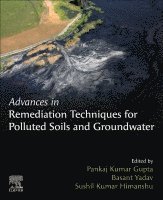
    Advances in Remediation Techniques for Polluted Soils and Groundwater

    AvPankaj Kumar Gupta,Basant Yadav

    Häftad, Engelska, 2021

    2 244 kr

    Beställningsvara. Skickas inom 10-15 vardagar. Fri frakt över 249 kr.

    Beskrivning

    Advances in Remediation Techniques for Polluted Soils and Groundwater focuses on the thematic areas for assessment, mitigation, and management of polluted sites. This book covers advances in modelling approaches, including Machine Learning (ML)/ Artificial Intelligence (AI) applications; GIS and remote sensing; sensors; impacts of climate change on geogenic contaminants; and socio-economic impacts in the poor rural and urban areas,�which are lacking in a more comprehensive manner in the previous titles.�This book encompasses�updated information as well as future directions for researchers working in the field of management and remediation of polluted sites.

    • Introduces fate and transport of multi-pollutants under varying subsurface conditions
    • Details underlying mechanisms of biodegradation and biodetoxification of geogenic, industrial and emerging pollutants
    • Presents recent advances and challenges in assessment, water quality modeling, uncertainty, and water supply management
    • Provides authoritative contributions on the diverse aspects of management and remediation from leading experts around the world

    Produktinformation

    • Utgivningsdatum:2021-12-14
    • Mått:191 x 235 x 25 mm
    • Vikt:810 g
    • Format:Häftad
    • Språk:Engelska
    • Antal sidor:406
    • Förlag:Elsevier Science
    • ISBN:9780128238301

    Utforska kategorier

    • Kemi inom Naturvetenskap och teknik
    • Miljöteknik inom Naturvetenskap och teknik

    Mer om författaren

    Dr. Pankaj Kumar Gupta is a Ramanujan fellow ​at the Indian Institute of Technology (I.I.T.) Delhi, India and post-doctoral fellow in the faculty of environment, University of Waterloo, Canada. His current research focuses on investigating the behavior of pollutants in peatlands (Canada) and mineral aquifers (India) under dynamically fluctuating groundwater table conditions. Majority of his works focus on two areas: (1) understanding the occurrence of bio-geo-chemical interactions when pollutants migrate into groundwater systems; and (2) developing remediation strategies. Dr. Gupta hsa in-depth experience in incorporating novel technologies to map soil-water systems in more than 30sites in India. He is passionate about interdisciplinary research and teaching to understand multi-scale interactions between different components of the subsurface environment, especially the soil- groundwater-pollutant-microbes system.Dr Basant Yadav Ph.D. (Civil Engineering), is a postdoctoral fellow in Water Science Institute of Cranfield University (UK), working on groundwater quality and quantity management. Specific focus of Dr Yadav’s research includes flow and transport processes in ground water and in the vadose zone; hydroinformatics; managed aquifer recharge. Dr. Yadav's research emphasizes the Integration of Experimental, Numerical and data based modeling approaches for the better and efficient management of the groundwater quantity and quality. His work uses a range of numerical, statistical, and stochastic modeling approaches and experimental work to analyze the fate and transport of contaminant in saturated and unsaturated zones. Dr. Yadav is an agricultural engineer and received his M.Tech in hydrology jointly from Indian Institute of Technology Roorkee (India) and Technical University Stuttgart (Germany). He did his PhD from Indian Institute of Technology Delhi (India) on ‘Application of soft computing techniques in water quality and quantity modeling’. He was awarded prestigious National Postdoctoral fellowship (NPDF) in 2017 to work on his postdoctoral project in Indian Institute of Science Bangalore, India. He has received scholarships like DAAD (Germany), MHRD (India) for his masters and PhD work. He has authored/co-authored more than fifteen research publications in high impact journals such as journal of Hydrology, Hydrological Science, Journal of Environmental Engineering, Journal of Hydrologic Engineering, and Measurement Journal. Dr. Yadav has presented his work in highly reputed meeting like AGU (December- 2014, USA), AOGS (August-2017, Singapore), JpGU (June-2018, Japan). He is a member of the American Geophysical Union (AGU), Asia Oceania Geosciences Society (AOGS) and Japan Geoscience Union (JpGU). He is the reviewer of high repute journals like Science of Total Environment, Hydrological processes, Journal of Hydrology, Journal of Hydrologic Engineering, Water Resources Management, ISH Journal of Hydraulic Engineering and Journal of Hydroinformatics. Dr. Sushil Kumar Himanshu is an Associate Professor and Deputy Dean at the Faculty of Food, Agriculture, and Natural Resources, Asian Institute of Technology (AIT), Thailand. He obtained his M.Tech in Hydrology and PhD in Water Resources Development and Management from the Indian Institute of Technology (IIT) Roorkee and conducted postdoctoral research at Texas A&M University. Dr. Himanshu’s research focuses on the applications of generative AI, remote sensing, and modeling applications for climate-smart water management. His research has been funded by ADB, World Bank, UN-FAO, USDA, and other agencies to support agricultural and aquacultural sustainability, food security, and water security. He is a co-editor of the Elsevier book Advances in Remediation Techniques for Polluted Soils and Groundwater.

    Innehållsförteckning

    • 1. Water is life: Implications of multi-pollutants around the globe2. Subsurface pollution by geogenic, industrial, and emerging pollutants3. Soil contamination: efficacy of fertilizer, sawdust and horse manure application as a treatment technique for oil-polluted soil in the tropics4. Groundwater pollution and Climate change: Advances in interlinking tools5. Advances in modeling and laboratory analysis for multi-phase flow in porous media6. Large scale (2D/3D) laboratory experiments and numerical modeling to assist PAHs behaviours in the subsurface7. Heavy metals and metalloids in subsurface environment: environmental and health hazards and bioremediation strategies8. Flow and movement of gaseous pollutants in the subsurface: CO2 and CH4 dynamics at a CCS site9. Density driven flow, saline water intrusion- Consequences and Current status10. Fate of selenium and naturally occurring materials in soil and groundwater: role of isotopic techniques in assessment and remediation11. Impacts of climatic variability on subsurface water resources and nitrate-N movement12. Advancement in groundwater quality modeling: Conceptual and Computational models13. Simulation-Optimization Approaches in remediation system design14. Estimation of groundwater recharge and its impacts on groundwater quality15. Evaluation of Machine Learning-Based modeling approaches in groundwater quantity and quality prediction16. Remote sensing and GIS application in contaminant mapping and prediction17. Uncertainty in groundwater quality modeling: Causes and impacts18. A comparative study of Artificial Neural Network and Genetic Algorithm Model for the prediction of Fluoride in the Groundwater: A case study of Rajasthan, India19. Assessing the risks of interaction between the natural water table and on-site wastewater treatment systems20. Soil erosion risk assessment over an agricultural watershed21. Managed aquifer recharge structures for fluoride remediation in India22. Column Adsorption Studies for the Removal of Chemical Oxygen Demand from Fish Pond Wastewater using Waste Alum Sludge23. Micro-plastic in the subsurface: extraction and characterization from sediments of River Ganga near Patna, Bihar24. Development in microbial techniques for management and remediation of PPCPs polluted sites25. Riverbank infiltrations- sustainable tool for rural faecal contaminations26. Economical risk analysis for Management and Remediation of polluted sites27. Evaluation of health risk analysis for industrial pollutants28. Understanding the Hydrogeology of Polluted Sites29. Groundwater Policy- What need to modify?30. Applicability, Implications and Development for Treatment of Polluted Groundwater