• Fri frakt över 249 kr
  • •
  • Snabba leveranser
  • •
  • Billiga böcker
Kundservice

Du är på sajten för privatpersoner.

Företag, bibliotek eller offentlig verksamhet?

Du handlar på classic.bokus.com, där alla dina funktioner finns intakta.
Till classic.bokus.com
Bokus logotyp. Gå till startsidan.
  • Erbjudanden
  • Nyheter
  • Student
  • Topplistor
  • Barn & ungdom
  • Bokus Play
  • E-böcker
  • Pocketböcker
  • Spel & pussel

10% rabatt på allt med kod: NYSTART10 →

Sidfot

Mina sidor

    Hjälp

    • Kundservice
    • Vanliga frågor och svar
    • Frakt och leverans
    • Retur vid ångerrätt
    • Reklamera vara
    • Betalning
    • Köpvillkor
    • Allmänna villkor
    • Information om webbplatsens tillgänglighet

    Om Bokus

    • Om oss
    • Pressrum
    • För studenter
    • För företag
    • För bibliotek och offentlig verksamhet
    • För leverantörer
    • Hållbarhet

    Populärt

    • Aktuella erbjudanden
    • Presentkort
    • Studentlitteratur
    • Nya böcker
    • Topplistor
    • Signerade böcker
    • Engelska böcker

    Inspiration

    • Boktips
    • BookTok
    • Populära bokserier
    • Barnbokskaraktärer
    • Populära författare
    Logotyp för Bokus
    Följ oss på Facebook (extern länk)Följ oss på Instagram (extern länk)Följ oss på YouTube (extern länk)Följ oss på TikTok (extern länk)
    bokus @ CookiesAnpassa cookiesIntegritetspolicyKöpvillkor
    Till Citymail hemsida (extern länk)Till Budbee hemsida (extern länk)Till Postnord hemsida (extern länk)Till Schenker hemsida (extern länk)Till Early Bird hemsida (extern länk)Till Walleys hemsida (extern länk)
    1. Samhälle och politik
    2. Krig och försvar

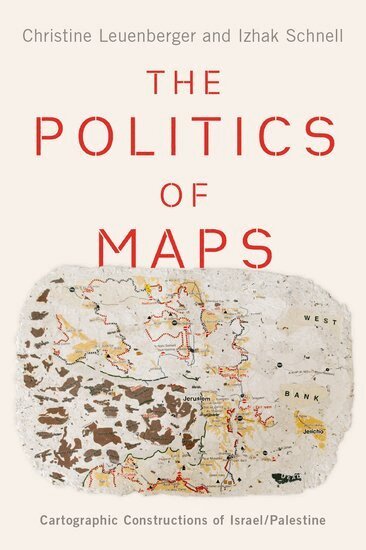
    The Politics of Maps

    Cartographic Constructions of Israel/Palestine

    AvChristine Leuenberger,Izhak Schnell

    Inbunden, Engelska, 2020

    1 587 kr

    Beställningsvara. Skickas inom 5-8 vardagar. Fri frakt över 249 kr.

    Beskrivning

    The land between the Mediterranean Sea and the Jordan Valley has been one of the most disputed territories in history. Since the establishment of the state of Israel in 1948, Palestinians and Israelis have each sought claim to the national identity of the land through various martial, social, and scientific tactics, but no method has offered as much legitimacy and national controversy as that of the map.The Politics of Maps delves beneath the battlefield to unearth the cartographic strife behind the Israel/Palestine conflict. Blending science and technology studies, sociology, and geography with a host of archival material, in-depth interviews and ethnographies, this book explores how the geographical sciences came to be entangled with the politics, territorial claim-making, and nation-state building of Israel/Palestine. Chapters chart the cartographic history of the region, from the introduction of Western scientific and legal paradigms that seemingly legitimized and depoliticized new land regimes to the rise of new mapping technologies and software that expanded access to cartography into the public sphere. Maps produced by various sectors like the "peace camps" or the Jewish community enhanced national belonging, while others, like that of the Green Line, served largely to divide.The stories of Israel's many boundaries reveal that there is no absolute, technocratic solution to boundary-making. As boundaries continue to be controversial and the Israeli-Palestinian conflict remains intractable and unresolved,The Politics of Maps uses nationally-based cartographic discourses to provide insight into the complexity, fissures, and frictions within internal political debates, illuminating the persistent power of the nation-state as a framework for forging identities, citizens, and alliances.

    Produktinformation

    • Utgivningsdatum:2020-09-17
    • Mått:236 x 157 x 22 mm
    • Vikt:680 g
    • Format:Inbunden
    • Språk:Engelska
    • Antal sidor:244
    • Förlag:OUP USA
    • ISBN:9780190076238

    Utforska kategorier

    • Krig och försvar inom Samhälle och politik
    • Geografi inom Naturvetenskap och teknik
    • Mellanösterns historia inom Historia och arkeologi

    Mer om författaren

    Christine Leuenberger, PhD, is Senior Lecturer in the Department of Science & Technology Studies at Cornell University. Her work has been published in various academic journals, as well as in edited volumes and popular news outlets. She was a Fulbright Scholar, a Fulbright Specialist, and an American Association for the Advancement of Science Science & Technology Policy Fellow. Dr. Leuenberger was a recipient of a National Science Foundation Scholar's award to investigate the history and sociology of mapping practices in Israel and the Palestinian Territories. She is also conducting research on issues of migration and borders, and is engaged in peace and educational initiatives in the Middle East and Sub-Saharan Africa.Izhak Schnell, PhD, is Professor Emeritus in the Department of Geography and Human Environment at Tel Aviv University and former President of the Israeli Association of Geographers. His works focus on the analysis of social space under globalization and socio-spatialintegration and segregation of social groups in globalized realities, interpretations of the meanings of spaces and places including the representations of spaces and places like art and cartographic pieces and the monitoring of urban environments as risks for health and urban parks as restorative environments.

    Recensioner i media

    This book will benefit readers who are interested in the politicization of culture and science in Middle Eastern conflicts.

    Innehållsförteckning

    • ForewordAcknowledgmentsChapter 1: Why Maps Matter Chapter 2: Imagining Nations and Making States: Some PrerequisitesChapter 3: Map-Making and State-BuildingChapter 4: Map-Making and Nation-Building: Pre-state and Early State Mapping in IsraelChapter 5: Maps with a Mission post-1967: Securing Jewish LandChapter 6: Maps with a Mission post-1967: Israeli 'Peace Camp' NGO's on the warpathChapter 7: Constructing Israel's BordersChapter 8: Map-Making for Building the Palestinian Nation-State Chapter 9: Conclusion