• Fri frakt över 249 kr
  • •
  • Snabba leveranser
  • •
  • Billiga böcker
Kundservice

Du är på sajten för privatpersoner.

Företag, bibliotek eller offentlig verksamhet?

Du handlar på classic.bokus.com, där alla dina funktioner finns intakta.
Till classic.bokus.com
Bokus logotyp. Gå till startsidan.
  • Erbjudanden
  • Student
  • Topplistor
  • Barn & ungdom
  • Bokus Play
  • E-böcker
  • Ljudböcker
  • Pocketböcker
  • Spel och pussel

5% studentrabatt – använd koden KURSBOK27 →

Sidfot

Mina sidor

    Hjälp

    • Kundservice
    • Vanliga frågor och svar
    • Frakt och leverans
    • Retur vid ångerrätt
    • Reklamera vara
    • Betalning
    • Köpvillkor
    • Allmänna villkor
    • Information om webbplatsens tillgänglighet

    Om Bokus

    • Om oss
    • Pressrum
    • För studenter
    • För företag
    • För bibliotek och offentlig verksamhet
    • För leverantörer
    • Hållbarhet

    Populärt

    • Aktuella erbjudanden
    • Presentkort
    • Studentlitteratur
    • Nya böcker
    • Topplistor
    • Signerade böcker
    • Engelska böcker

    Inspiration

    • Boktips
    • BookTok
    • Barnbokskaraktärer
    • Populära författare
    Logotyp för Bokus
    Följ oss på Facebook (extern länk)Följ oss på Instagram (extern länk)Följ oss på YouTube (extern länk)Följ oss på TikTok (extern länk)
    bokus @ CookiesAnpassa cookiesIntegritetspolicyKöpvillkor
    Till Citymail hemsida (extern länk)Till Budbee hemsida (extern länk)Till Postnord hemsida (extern länk)Till Schenker hemsida (extern länk)Till Early Bird hemsida (extern länk)Till Walleys hemsida (extern länk)
    1. Språk och ordböcker
    2. Språkvetenskap och lingvistik

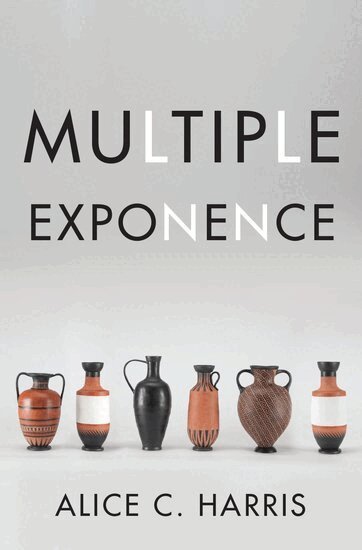
    Multiple Exponence

    AvAlice C. Harris

    Inbunden, Engelska, 2017

    2 444 kr

    Beställningsvara. Skickas inom 5-8 vardagar. Fri frakt över 249 kr.

    Fler format och utgåvor

    E-bok

    1 444 kr

    E-bok

    1 444 kr

    Beskrivning

    Multiple (or extended) exponence is the occurrence of multiple realizations of a single morphosemantic feature, bundle of features, or derivational category within a word. This book provides data and direction to the discussion of ME, which has gone in a variety of directions and suffers from lack of evidence. Alice Harris addresses the question of why ME is of interest to linguists and traces the discussion of this concept in the linguistic literature. The four most commonly encountered types of ME are characterized, with copious examples from a broad variety of languages; these types form the basis for discussion of the processing of ME, the acquisition of ME, the historical development of ME, and analysis of ME. The book addresses some of the most important questions involving ME, including why it exists at all.

    Produktinformation

    • Utgivningsdatum:2017-02-23
    • Mått:239 x 163 x 27 mm
    • Vikt:550 g
    • Format:Inbunden
    • Språk:Engelska
    • Antal sidor:312
    • Förlag:OUP USA
    • ISBN:9780190464356

    Utforska kategorier

    • Språkvetenskap och lingvistik inom Språk och ordböcker

    Mer om författaren

    Alice Harris works on syntax, morphology, and historical linguistics cross-linguistically and especially in languages spoken in the Caucasus. She received the Bloomfield Book Award in 1998, was designated Collitz Professor for 2011, was named a Fellow of the Linguistic Society of America in 2012, and was elected President of the Society for 2016.

    Innehållsförteckning

    • Preface Acknowledgments Abbreviation and Conventions 1. Introduction1.1. What is multiple exponence?1.2. Why is multiple exponence of interest to linguists?1.3. Why this book?1.4. The approach taken here1.5. How can we distinguish reanalyzed successive markers from ME?1.6. Conclusion 2. Multiple Exponence in Linguistic Theory: A History of the Inquiry2.1. Introduction2.2. Multiple Exponence and the Elsewhere Condition2.3. Multiple Exponence and the Split Morphology Hypothesis2.4. Multiple Exponence in Distributed Morphology and Articulated Morphology2.5. Multiple Functional heads2.6. Multiple Exponence in Minimalist Morphology2.7. Paradigm Function Morphology2.8. Multiple Exponence in Word and Paradigm Morphology2.9. Optimality Theory and Multiple Exponence2.10. Breton Again2.11. Summary 3. Frequently Found Types of Multiple Exponence3.1. Description of the Database and Method3.2. Exceptional vs. Systematic ME3.3. General Characteristics of Four Frequent Types3.4. Type 1: Dependent ME3.5. Type 2: Alternating ME3.6. Type 3: Supporting ME3.7. Type 4: Subset/Overlapping ME3.8. ME Involving a Non-Affixal Exponent3.9. ME in Compounds3.10. ME in Reduplication3.11. Discussion3.12. Summary 4. Psycholinguistic Approaches4.1. Processing Multiple Exponence4.2. Acquisition of Multiple Exponence4.3. The Psychological Reality of Stem Alternation + Affix4.4. Conclusion 5. Origins of Type 1 (Periodic) Multiple Exponence5.1. Introduction5.2. Grammaticalization of Auxiliaries and Determiners5.3. Auxiliaries that Grammaticalize, Creating Type 1 ME5.4. Grammaticalization of Demonstratives and Articles5.5. The Role of Compounding in the Origin of ME5.6. ME and the Nature of Grammaticalization: Trapped Morphemes5.7. Additional Discussion and Conclusion: Correlations of Grammaticalization with Type 1 ME 6. Origins of Types 2-4: Alternating, Reinforcement, and Accidental Multiple Exponence6.1. Introduction6.2. Literature on the Origins of ME6.3. "Externalization" of Inflection6.4. Processes that Lead to Reinforcement, Type 3 ME: Extension and Borrowing6.5. Origins of Type 4, Accidental ME6.6. The Origins of ME Are Not Limited to These Pathways6.7. Loss of ME6.8. Conclusions 7. Analysis of Multiple Exponence7.1. Introduction7.2. Possible Analyses from a Theory-Neutral Point of View7.3. ME and the Elsewhere Principle: The Problem of Selective Blocking7.4. Morpheme-Based Morphology and ME7.5. Inflection of Derived Words7.6. Realizational Optimality Theory7.7. Conclusion 8. Explanation8.1. Introduction8.2. Affix Adjacency and Affix Identity8.3. Factors Contributing to Reinforcement of Previously Affixed Forms8.4. ME and the Order of Affixes8.5. Why is ME Rare?8.6. Why Do Languages Not Uniformly Eliminate ME? Why is One Exponent Not Sufficient? Appendix A Appendix B References