• Fri frakt över 249 kr
  • •
  • Snabba leveranser
  • •
  • Billiga böcker
Kundservice

Du är på sajten för privatpersoner.

Företag, bibliotek eller offentlig verksamhet?

Du handlar på classic.bokus.com, där alla dina funktioner finns intakta.
Till classic.bokus.com
Bokus logotyp. Gå till startsidan.
  • Erbjudanden
  • Nyheter
  • Student
  • Topplistor
  • Barn & ungdom
  • Bokus Play
  • E-böcker
  • Pocketböcker
  • Spel & pussel

10% rabatt på allt med kod: NYSTART10 →

Sidfot

Mina sidor

    Hjälp

    • Kundservice
    • Vanliga frågor och svar
    • Frakt och leverans
    • Retur vid ångerrätt
    • Reklamera vara
    • Betalning
    • Köpvillkor
    • Allmänna villkor
    • Information om webbplatsens tillgänglighet

    Om Bokus

    • Om oss
    • Pressrum
    • För studenter
    • För företag
    • För bibliotek och offentlig verksamhet
    • För leverantörer
    • Hållbarhet

    Populärt

    • Aktuella erbjudanden
    • Presentkort
    • Studentlitteratur
    • Nya böcker
    • Topplistor
    • Signerade böcker
    • Engelska böcker

    Inspiration

    • Boktips
    • BookTok
    • Populära bokserier
    • Barnbokskaraktärer
    • Populära författare
    Logotyp för Bokus
    Följ oss på Facebook (extern länk)Följ oss på Instagram (extern länk)Följ oss på YouTube (extern länk)Följ oss på TikTok (extern länk)
    bokus @ CookiesAnpassa cookiesIntegritetspolicyKöpvillkor
    Till Citymail hemsida (extern länk)Till Budbee hemsida (extern länk)Till Postnord hemsida (extern länk)Till Schenker hemsida (extern länk)Till Early Bird hemsida (extern länk)Till Walleys hemsida (extern länk)
    1. Ekonomi och Ledarskap
    2. Nationalekonomi
    3. Ekonomisk politik

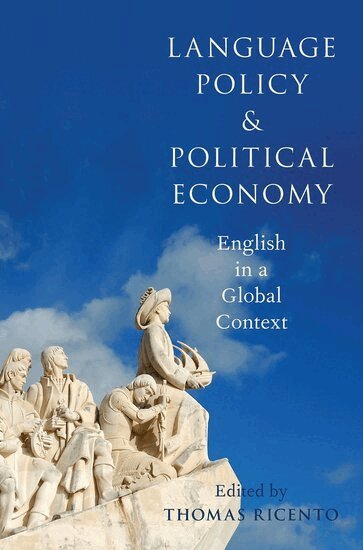
    Language Policy and Political Economy

    English in a Global Context

    AvThomas Ricento

    Häftad, Engelska, 2016

    712 kr

    Beställningsvara. Skickas inom 5-8 vardagar. Fri frakt över 249 kr.

    Beskrivning

    This volume articulates a new framework for language policy research that explores the connections between language policy and political economy. The chapters are united in their focus on English, a language that has enjoyed a reputation as a "global language" over the course of the last century and that is perceived as a tool for socioeconomic mobility. The book argues that adopting a new, political economic approach to language policy research will enhance our ability to provide more consistent explanations about the status, functions, benefits, and limitations of English in its various roles in non-English dominant countries. The book poses the questions: Does English serve as a "lingua franca" and does it advance the interests of sustainable economic and social development in low-income countries? Written by leading experts in language policy research, the chapters reveal the myriad and complex ways in which government leaders, policymakers, and communities make decisions about the languages that will be taught as subjects or used as media of instruction in schools. English is often advertised as a social "good" with unquestioned instrumental value, yet access to quality English-medium education in low-income countries tends to be restricted to those with sufficient economic means to pay for it. As the capitalist world economy continues to change and grow, and assuming that translation technologies continue to improve, it is likely that the roles and relative importance of English as a global language will change significantly. Assessing the costs and benefits of acquiring English therefore takes on increased urgency. The book argues that a political economic approach is particularly appropriate in this endeavor, as it takes into account theories and empirical findings from a range of disciplines in order to assess and explain real-world phenomena that do not fit neatly into boxes labeled "economic," "social," "political" or "cultural." Together, the chapters in this volume argue for a new direction in language policy studies-grounded in political economy -- that will explain why English has been experienced as both a blessing and curse in different parts of the world, why English continues to be useful as a lingua franca for particular sectors of the global economy, and why it is a detriment to economic development in many low-income countries. The book will be invaluable to language policy scholars, policy-makers, and educators, significantly advancing research in this important field.

    Produktinformation

    • Utgivningsdatum:2016-12-08
    • Mått:231 x 155 x 25 mm
    • Vikt:499 g
    • Format:Häftad
    • Språk:Engelska
    • Antal sidor:336
    • Förlag:OUP USA
    • ISBN:9780190656737
    • Utmärkelser:Winner of the 2018 American Association for Applied Linguistics Book Award

    Utforska kategorier

    • Ekonomisk politik inom Ekonomi och Ledarskap
    • Språkvetenskap och lingvistik inom Språk och ordböcker

    Mer om författaren

    Thomas Ricento is Professor and Research Chair at the University of Calgary, Canada. He has published widely in the field of language policy and on the politics of language in North America. He was a Fulbright Professor in Colombia (1989) and Costa Rica (2000), and a visiting professor at universities in Chile, Germany, Spain, , and Switzerland. He was Director of English Language Programs at the Japan Center for Michigan Universities, Hikone, Japan from 1989-1991.

    Recensioner i media

    Language Policy and Political Economy is a high-quality and high-powered collection. Ricento has curated a volume that provides an interdisciplinary perspective on English in the contemporary world. With their focus on capitalism, development, globalization, and neoliberalism, the contributions are decidedly relevant for understanding today's language politics. In all, the book provides the field of language policy and planning with a robust introduction to the foundations of political economy.

    Innehållsförteckning

    • Introduction: Language Policy and Political Economy Thomas Ricento Part I: Political Theory and Political Economy in Language Policy Research on English as a Global Language 1. Political Economy and English as a "Global" Language Thomas Ricento 2. Global English and the Limits of Liberalism: Confronting Global Capitalism and Challenges to the Nation-State Peter Ives 3. Language Policy and Global Political Economy Jeff Bale 4. Language, Hegemony, and Economy Glyn Williams Part II: Political Economy and Global English: Case Studies 5. The Economics of English in Europe François Grin 6. Language Education, Economic Development, and Participation in the Greater Mekong Subregion Paul Bruthiaux 7. Neoliberalism as Language Policy Ingrid Piller and Jinhyun Cho 8. Why English Dominates the Central Economy: An Economic Perspective on "Elite Closure" and South African Language Policy Laurence Wright 9. Narratives of Globalization in Language Politics in India Selma Sonntag Part III: Global English, Development, and Democracy 10. The Ground Floor of the World: On the Socioeconomic Consequences of Linguistic Globalization Philippe Van Parijs 11. Linguistic Diversity and Global English: The Pushmi-Pullyu of Language Policy and Political Economy Suzanne Romaine 12. "English," the Global Lingua Franca? Thomas Ricento Index