Inbunden, Engelska, 2017
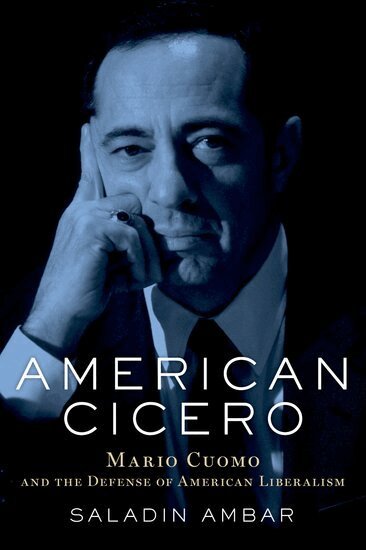
American Cicero
525 kr
Beställningsvara. Skickas inom 3-6 vardagar. Fri frakt över 249 kr.
Beskrivning
Mario Cuomo is in many respects one of the most significant liberal politicians in the postwar era: a three-term governor of one the nation's largest states and an eloquent defender of the Democratic Party's progressive legacy during a period of conservative ascendancy. Yet in other respects he never lived up to his supporters' hopes. His gubernatorial record was spotty, and when he had the chance to seek the presidency, he equivocated, Hamlet-like, before deciding against it and crushing the hopes of the party's progressive wing. His mixed record has made it very difficult for scholars and biographers to clarify his legacy. Was he a symbol of liberalism's long decline in twentieth-century American politics, or was he a prophet in the wilderness, heralding the rise of a new progressivism?Saladin Ambar's American Cicero weaves elements of biography, political history, and political theory into a novel interpretation of Cuomo's life and legacy. Tracing his life from the streets of an immigrant neighborhood in Queens to his final years in Albany, Ambar argues that Cuomo kept the spent embers of liberalism alive in an era when it seemed that conservatism was approaching full-spectrum dominance-even within the Democratic Party itself. In a series of important speeches over the course of the 1980s, Cuomo drew upon his singular oratorical powers to offer a progressive vision that revived and expanded upon the policymaking legacy of the New Deal and Great Society. At a time when pessimism about presidential electoral prospects reigned in the Democratic Party, his voice-buttressed by a string of electoral victories in New York-provided succor to the liberal faithful. Unsurprisingly, party professionals saw him as the next great Democratic presidential candidate. Yet when he had the chance to run-in 1988 and 1992-he decided not to. His political career ended in 1994, when he was voted out of office in New York in a nationwide Republican wave. To explain puzzling Cuomo's career trajectory, American Cicero begins with his background in New York City politics before shifting to his record as governor and his forays into presidential politics. Ambar traveled to Italy in search of answers to lingering questions about Cuomo, chiefly why he never ran for president. Conversations in Cuomo's ancestral land revealed concerns about an assassination attempt--his mother admonished him, "remember what happened to the last Catholic president"--and even proto-"birther" rumors that Cuomo had been born in Italy. Whatever clenched his decision not to run, Cuomo was nevertheless the nation's most articulate advocate for a progressive agenda at liberalism's ebb tide. His vision has had a measurable impact on twenty-first century Democratic progressives, most notably Barack Obama. American Cicero promises to not only re-establish Cuomo's central place in modern American liberalism, but also force readers to reassess liberalism's fortunes following the close of the New Deal era.
Produktinformation
- Utgivningsdatum: 2017-11-30
- Mått: 163 x 236 x 22 mm
- Vikt: 476 g
- Format: Inbunden
- Språk: Engelska
- Antal sidor: 224
- Förlag: OUP USA
- ISBN: 9780190658946
Utforska kategorier
Betyg & recensioner
0 recensioner
Inga recensioner tillgängliga.