
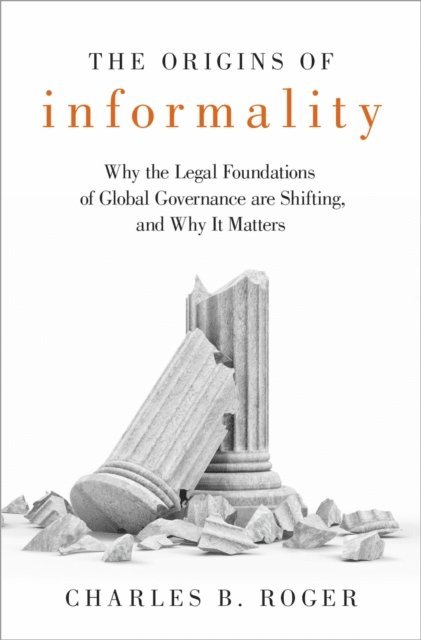
The Origins of Informality
Why the Legal Foundations of Global Governance are Shifting, and Why It Matters
Inbunden, Engelska, 2020
1 332 kr
Beställningsvara. Skickas inom 5-8 vardagar. Fri frakt över 249 kr.
Beskrivning
The legal foundations of global governance are shifting. In addition to traditional instruments for resolving cross-border problems, such as treaties and formal international organizations, policy-makers are turning increasingly to informal agreements and organizations like the Group of Twenty, the Financial Stability Board, and the Asia Pacific Economic Cooperation. A growing number of policy-makers view such weakly-legalized organizations as promising new tools of governance, arguing that informal bodies are faster and more flexible than their formal counterparts, and better-suited to the complex problems raised by deepening interdependence. Yet, equally, political scientists have puzzled over these international organizations. At present, we still know relatively little about these bodies, why they have become so important, and whether they are indeed capable of addressing the immense challenges faced by the global community.In The Origins of Informality, Charles Roger offers a new way of thinking about informal organizations, presents new data revealing their extraordinary growth over time and across regions, and advances a novel theory to explain these patterns. In contrast with existing approaches, he locates the drivers of informality within the internal politics of states, explaining how major shifts within the domestic political arenas of the great powers have projected outwards and reshaped the legal structure of the global system. Informal organizations have been embraced because they allow bureaucrats in powerful states to maintain autonomy over their activities, and can help politicians to circumvent domestic opponents of their foreign policies. Drawing on original quantitative data, interviews, and archival research, the book analyzes some of the most important institutions governing the global economy, showing how informality has helped domestic actors to achieve their narrow political goals-even when this comes at the expense of the institutions they eventually create. Ultimately, Roger claims, the shift towards informality has allowed the number of multilateral institutions to rapidly increase in response to global problems. But, at the same time, it has coincided with a decline in their quality, leaving us less prepared for the next global crisis.
Produktinformation
Utforska kategorier
Mer om författaren
Recensioner i media
Innehållsförteckning
Hoppa över listan
Mer från samma författare
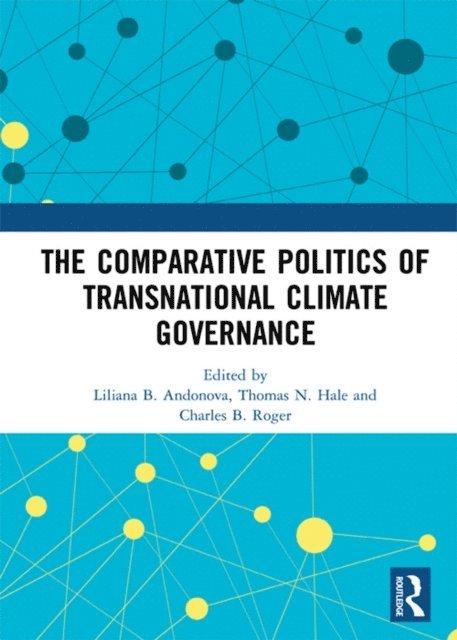
Comparative Politics of Transnational Climate Governance
Liliana B. Andonova, Thomas N. Hale, Charles B. Roger
Häftad, 2021
681 kr
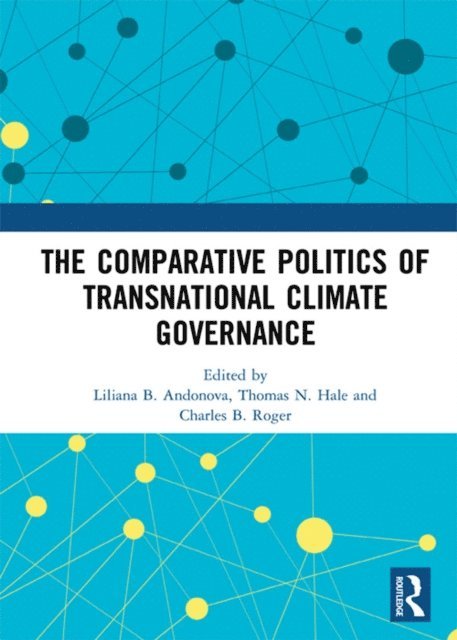
Comparative Politics of Transnational Climate Governance
Liliana B. Andonova, Thomas N. Hale, Charles B. Roger
Inbunden, 2018
2 473 kr
Comparative Politics of Transnational Climate Governance
Charles B. Roger, Thomas N. Hale, Liliana B. Andonova
E-bok
2019796 kr
Comparative Politics of Transnational Climate Governance
Charles B. Roger, Thomas N. Hale, Liliana B. Andonova
E-bok
2019796 kr
Hoppa över listan



Du kanske också är intresserad av
Comparative Politics of Transnational Climate Governance
Charles B. Roger, Thomas N. Hale, Liliana B. Andonova
E-bok
2019796 kr
Comparative Politics of Transnational Climate Governance
Charles B. Roger, Thomas N. Hale, Liliana B. Andonova
E-bok
2019796 kr
Comparative Politics of Transnational Climate Governance
Liliana B. Andonova, Thomas N. Hale, Charles B. Roger
Häftad, 2021
681 kr
Comparative Politics of Transnational Climate Governance
Liliana B. Andonova, Thomas N. Hale, Charles B. Roger
Inbunden, 2018
2 473 kr
- Nyhet
Del 11
- Signerad!
Del 3
- -19%
- -19%