• Fri frakt över 249 kr
  • •
  • Snabba leveranser
  • •
  • Billiga böcker
Kundservice

Du är på sajten för privatpersoner.

Företag, bibliotek eller offentlig verksamhet?

Du handlar på classic.bokus.com, där alla dina funktioner finns intakta.
Till classic.bokus.com
Bokus logotyp. Gå till startsidan.
  • Erbjudanden
  • Student
  • Topplistor
  • Barn & ungdom
  • Bokus Play
  • E-böcker
  • Ljudböcker
  • Pocketböcker
  • Spel och pussel

5% studentrabatt – använd koden KURSBOK27 →

Sidfot

Mina sidor

    Hjälp

    • Kundservice
    • Vanliga frågor och svar
    • Frakt och leverans
    • Retur vid ångerrätt
    • Reklamera vara
    • Betalning
    • Köpvillkor
    • Allmänna villkor
    • Information om webbplatsens tillgänglighet

    Om Bokus

    • Om oss
    • Pressrum
    • För studenter
    • För företag
    • För bibliotek och offentlig verksamhet
    • För leverantörer
    • Hållbarhet

    Populärt

    • Aktuella erbjudanden
    • Presentkort
    • Studentlitteratur
    • Nya böcker
    • Topplistor
    • Signerade böcker
    • Engelska böcker

    Inspiration

    • Boktips
    • BookTok
    • Barnbokskaraktärer
    • Populära författare
    Logotyp för Bokus
    Följ oss på Facebook (extern länk)Följ oss på Instagram (extern länk)Följ oss på YouTube (extern länk)Följ oss på TikTok (extern länk)
    bokus @ CookiesAnpassa cookiesIntegritetspolicyKöpvillkor
    Till Citymail hemsida (extern länk)Till Budbee hemsida (extern länk)Till Postnord hemsida (extern länk)Till Schenker hemsida (extern länk)Till Early Bird hemsida (extern länk)Till Walleys hemsida (extern länk)
    1. Juridik
    2. Rättsvetenskap
    3. Juridik: metod och teori

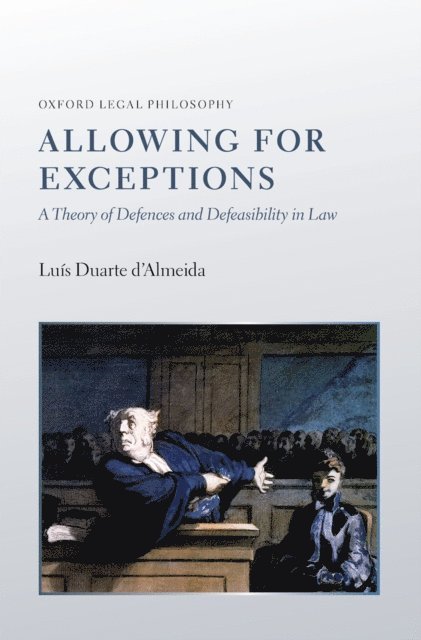
    Allowing for Exceptions

    A Theory of Defences and Defeasibility in Law

    AvLuis Duarte d'Almeida

    E-bok
    PDF, Engelska, 2015

    1 261 kr

    Läs direkt i Bokus Reader – eller ladda ned till din enhet (PDF kräver ofta zoom och scroll på små skärmar).

    Fler format och utgåvor

    E-bok

    1 261 kr

    Inbunden

    1 965 kr

    Beskrivning

    You find yourself in a court of law, accused of having hit someone. What can you do to avoid conviction? You could simply deny the accusation: ''No, I didn''t do it''. But suppose you did do it. You may then give a different answer. ''Yes, I hit him'', you grant, ''but it was self-defence''; or ''Yes, but I was acting under duress''. To answer in this way-to offer a ''Yes, but. . .'' reply-is to hold that your particular wrong was committed in exceptionalcircumstances. Perhaps it is true that, as a rule, wrongdoers ought to be convicted. But in your case the court should set the rule aside. You should be acquitted.Within limits, the law allows for exceptions. Or so we tend to think. In fact, the line between rules and exceptions is harder to draw than it seems. How are we to determine what counts as an exception and what as part of the relevant rule? The distinction has important practical implications. But legal theorists have found the notion of an exception surprisingly difficult to explain. This is the longstanding jurisprudential problem that this book seeks to solve.The book is divided into three parts. Part I, Defeasibility in Question, introduces the topic and articulates the core puzzle of defeasibility in law. Part II, Defeasibility in Theory, develops a comprehensive proof-based account of legal exceptions. Part III, Defeasibility in Action, looks more closely into the workings of exceptions in accusatory contexts, including the criminal trial.

    Produktinformation

    • Utgivningsdatum:2015-03-26
    • Språk:Engelska
    • Filformat:PDF
    • Kopieringsskydd:LCP
    • ISBN:9780191508981
    • Förlag:Oxford University Press

    Utforska kategorier

    • Juridik: metod och teori inom Juridik
    • Filosofiska discipliner inom Filosofi och religion