• Fri frakt över 249 kr
  • •
  • Snabba leveranser
  • •
  • Billiga böcker
Kundservice

Du är på sajten för privatpersoner.

Företag, bibliotek eller offentlig verksamhet?

Du handlar på classic.bokus.com, där alla dina funktioner finns intakta.
Till classic.bokus.com
Bokus logotyp. Gå till startsidan.
  • Erbjudanden
  • Nyheter
  • Student
  • Topplistor
  • Barn & ungdom
  • Bokus Play
  • E-böcker
  • Pocketböcker
  • Spel & pussel

10% rabatt på allt med kod: NYSTART10 →

Sidfot

Mina sidor

    Hjälp

    • Kundservice
    • Vanliga frågor och svar
    • Frakt och leverans
    • Retur vid ångerrätt
    • Reklamera vara
    • Betalning
    • Köpvillkor
    • Allmänna villkor
    • Information om webbplatsens tillgänglighet

    Om Bokus

    • Om oss
    • Pressrum
    • För studenter
    • För företag
    • För bibliotek och offentlig verksamhet
    • För leverantörer
    • Hållbarhet

    Populärt

    • Aktuella erbjudanden
    • Presentkort
    • Studentlitteratur
    • Nya böcker
    • Topplistor
    • Signerade böcker
    • Engelska böcker

    Inspiration

    • Boktips
    • BookTok
    • Populära bokserier
    • Barnbokskaraktärer
    • Populära författare
    Logotyp för Bokus
    Följ oss på Facebook (extern länk)Följ oss på Instagram (extern länk)Följ oss på YouTube (extern länk)Följ oss på TikTok (extern länk)
    bokus @ CookiesAnpassa cookiesIntegritetspolicyKöpvillkor
    Till Citymail hemsida (extern länk)Till Budbee hemsida (extern länk)Till Postnord hemsida (extern länk)Till Schenker hemsida (extern länk)Till Early Bird hemsida (extern länk)Till Walleys hemsida (extern länk)
    1. Skönlitteratur
    2. Romaner
    3. Moderna och samtida romaner

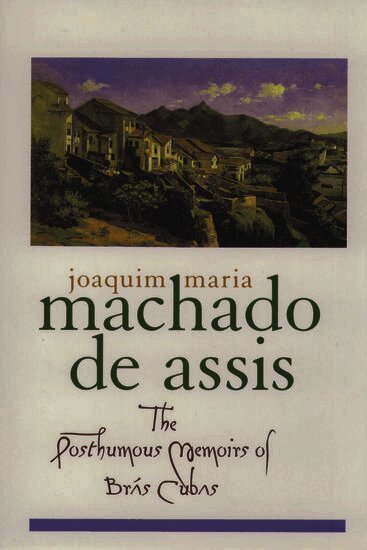
    The Posthumous Memoirs of Brás Cubas

    AvJoachim Maria Machado de Assis,Enylton de Sá Rego

    Inbunden, Engelska, 1998

    Del i serien Library of Latin America

    770 kr

    Beställningsvara. Skickas inom 7-10 vardagar. Fri frakt över 249 kr.

    Fler format och utgåvor

    Häftad

    585 kr

    Beskrivning

    "Be aware that frankness is the prime virtue of a dead man," writes the extraordinary narrator of The Posthumous Memoirs of Bras Cubas. "The gaze of public opinion, that sharp and judgmental gaze, loses its virtue the moment we tread the territory of death. I'm not saying that it doesn't reach here and examine and judge us, but we don't care about the examination or the judgment. My dear living gentlemen and ladies, there's nothing as incommensurable asthe disdain of the deceased." Indeed, writing his memoirs from the other world gives Bras Cubas a certain freedom from both social and literary conventions. And while he may be dead, he is surely one of the liveliest characters in fiction, a product of one of the most remarkable imaginations in all ofliterature, Brazil's greatest novelist of the nineteenth century, Joaquim Maria Machado de Assis. Famous in his lifetime and still revered throughout Latin America, Machado de Assis has remained little known in the English-speaking world. He represents an important antecedent for the experimental fictions of Borges, Cortazar, Fuentes, and others. In this wildly inventive book, de Assis is, in fact, much closer to such postmodern masters as Calvino, Kundera, and Marquez thanto the conventions of the nineteenth century realist and romantic novel, which the narrator continually and hilariously mocks. Irrepressibly whimsical, irreverent, chatty, and charmingly self-absorbed, Bras Cubas is forever intruding into his narrative, questioning, lecturing, and elbowing thereader, commenting on his writing and its highly unusual style--"this book and my style are like drunkards, they stagger left and right, they walk and stop, mumble, yell, cackle, shake their fists at the sky, stumble, and fall"--congratulating himself on particular chapters, wondering whether to cut others out, and interrupting his life story with all manner of digressions, from a philosophical discourse on the purpose of the nose to a visionary ride on the back of a rhinoceros to find theorigin of the centuries. Along the way we're treated to a marvelous cast of characters, including the outlandish philosopher Quincas Borcas, who asserts that "asceticism is the perfection of human idiocy," and Virgilia, the beautiful married woman with whom Bras Cubas carries on a passionate andnot-so-secret love affair. By turns flippant and profound, The Posthumous Memoirs of Bras Cubas is the story of an unheroic man with half-hearted political ambitions, a harebrained idea for curing the world of melancholy, and a thousand quixotic theories unleashed from beyond the grave. It is a novel that has influenced generations of Latin American writers but remains refreshingly and unforgettably unlike anything written before or after it. Newly translated byGregory Rabassa and superbly edited by Enylton de Sá Rego and Gilberto Pinheiro Passos, who provide an insightful introduction and afterword, this edition inaugurates Oxford's Library of Latin America series, and brings to English-speaking readers a literary delight of the highest order.

    Produktinformation

    • Utgivningsdatum:1998-02-19
    • Mått:147 x 211 x 27 mm
    • Vikt:386 g
    • Format:Inbunden
    • Språk:Engelska
    • Serie:Library of Latin America
    • Antal sidor:240
    • Förlag:OUP USA
    • Medarbetare:GilbertoPinheiro Passos
    • ISBN:9780195101690
    • Översättare:Gregory Rabassa

    Utforska kategorier

    • Moderna och samtida romaner inom Skönlitteratur

    Mer om författaren

    Gregory Rabassa is the highly acclaimed translator of One Hundred Years of Solitude and many other works of Latin American fiction. Enylton de Sá Rego is a Professor in the Department of Spanish and Portuguese at the University of Texas at Austin. Gilberto Pinheiro Passos is a Professor of Comparative Literature at the University of São Paulo.

    Recensioner i media

    [comment for series] "With the Library of Latin America, Oxford has opened up a new frontier that may prove as exciting and enigmatic as the continent itself."--The Herald, South Carolina"The wit and irony of the Brazilian classic are palpable."--Thomas E. Skidmore"Language has always been a barrier to our unity as the Americas, and most especially to our reading of each other's literatures. Now with this new series by Oxford University Press, the library of Latin America is literally open to North Americans and to English speakers everywhere. This is an important series for anyone who is prevented from knowing the classics of the southern half of this hemisphere because of not knowing the language. Bienvenidos to thesenew readers!"--Julia Alvarez"With a masterful translation by Rabassa and a contextual foreword and afterword that tell us that the work anticipates Calvino and Garcia Marquez, this book is recommended for collections rich in Latin American and literary holdings."--Library Journal"Machado de Assis wrote some of the most deliriously adventurous fiction of the last century."--Sarah Kerr, Lingua Franca"The lightning bolts flung down at us by the gods are meant to wound. What reach us from Machado's Parnassus are, instead, flashes of truth that make the darkness recede."--Lauren Weiner, The New Criterion"Written at the same moment of literary history when Henry James was writing its aesthetic opposite, The Portrait of a Lady, Machado de Assis's novel...belongs to a long line of brilliantly odd and (realtively) outrageous works like Laurence Stern's Tristam Shandy and Xavier de Maistre's Voyage Around My Room.... A very great novel indeed."--Gary Amdahl, The Nation"Although Machado has been available before in the U.S....he, like many of the others represented in LoLA, have not been given the recognition they deserve. One hopes that these beautifully designed, carefully translated volumes will rectify that."--Publishers Weekly"Machado offers the infectious pleasures of a 19th-century writer who is more modern than some of our so-called moderns.... The mystery of Machado is that he combines distanced irony with intimations of encroaching darkness, self-reflexive antics with soul."--Bill Marx, Boston Globe"Machado de Assis is Brazil's greatest novelist, and ranks high among the most appealing writers in the world.... Though he lived mainly in the 19th century, Machado possesses an almost postmodern sensibility--playful, ironic and tricky."--Book World