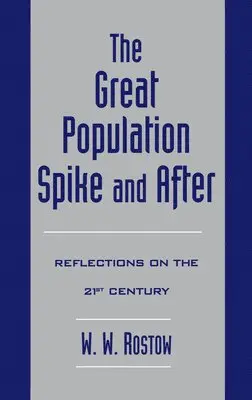
The Great Population Spike and After
Reflections on the 21st Century
1 234 kr
Beställningsvara. Skickas inom 5-8 vardagar. Fri frakt över 249 kr.
Beskrivning
Produktinformation
- Utgivningsdatum:1998-08-20
- Mått:160 x 236 x 25 mm
- Vikt:544 g
- Format:Inbunden
- Språk:Engelska
- Antal sidor:240
- Förlag:OUP USA
- ISBN:9780195116915
Utforska kategorier
Mer om författaren
W. W. Rostow is Professor Emeritus of Political Economy at the University of Texas at Austin. The author of numerous books and articles on economic theory, history, and public policy, he has taught at Cambridge, Columbia, Massachusetts Institute of Technology, and Oxford, and was a consultant to the Eisenhower Administration before serving in those of Kennedy and Johnson.
Recensioner i media
"Walt Rostow is always brilliant in discerning the 'big picture.' The Great Population Spike and After is no exception, arguing that the social and economic tides unleashed by below-replacement fertility will force countries to confront the necessity of inventing forms of political economy never before devised. An impressive tour de force in the scope and reach of its policy-relevant analyses, this book makes it clear that the United Statesabandons a world leadership role at its own peril."--Frank D. Bean, University of Texas at Austin"Let me just say a few words about W. W. Rostow and his place in American scholarship. He is a unique figure, not only for his contributions to knowledge and understanding, but for his practical experience in matters of policy and government. I know of no one else--in the social sciences, at least--who has managed to take years away from the university and return to serious research and writing. Not memoirs, but independent scholarship. This marriage shows inhis power of analysis and imagination in this new book. His personal awareness and experience of the problems that have confronted us in the second half of the 20th century enrich and legitimate hisvision of things to come. My only concern is that he is an indefatigable optimist, but since that is what it takes to face hard and difficult things, I can forgive his rosy hopes and confidence. All in all, we are richer for Walt Rostow's presence on the intellectual scene. What a warrior!"--David S. Landes, Harvard University (Emeritus)"Walt Rostow is always brilliant in discerning the 'big picture.' The Great Population Spike and After is no exception, arguing that the social and economic tides unleashed by below-replacement fertility will force countries to confront the necessity of inventing forms of political economy never before devised. An impressive tour de force in the scope and reach of its policy-relevant analyses, this book makes it clear that the United Statesabandons a world leadership role at its own peril."--Frank D. Bean, University of Texas at Austin"Let me just say a few words about W. W. Rostow and his place in American scholarship. He is a unique figure, not only for his contributions to knowledge and understanding, but for his practical experience in matters of policy and government. I know of no one else--in the social sciences, at least--who has managed to take years away from the university and return to serious research and writing. Not memoirs, but independent scholarship. This marriage shows inhis power of analysis and imagination in this new book. His personal awareness and experience of the problems that have confronted us in the second half of the 20th century enrich and legitimate hisvision of things to come. My only concern is that he is an indefatigable optimist, but since that is what it takes to face hard and difficult things, I can forgive his rosy hopes and confidence. All in all, we are richer for Walt Rostow's presence on the intellectual scene. What a warrior!"--David S. Landes, Harvard University (Emeritus)
Innehållsförteckning
- 1. The Framework ; 2. Population and the Stages of Growth ; 3. Technology and Investment ; 4. Relative Prices ; 5. Cycles ; 6. Limits to Growth ; 7. The Role of the United States in the Post-Cold War World ; 8. The Critical Margin and America's Inner Cities ; 9. Conclusions