• Fri frakt över 249 kr
  • •
  • Snabba leveranser
  • •
  • Billiga böcker
Kundservice

Du är på sajten för privatpersoner.

Företag, bibliotek eller offentlig verksamhet?

Du handlar på classic.bokus.com, där alla dina funktioner finns intakta.
Till classic.bokus.com
Bokus logotyp. Gå till startsidan.
  • Erbjudanden
  • Nyheter
  • Student
  • Topplistor
  • Barn & ungdom
  • Bokus Play
  • E-böcker
  • Pocketböcker
  • Spel & pussel

10% rabatt på allt med kod: NYSTART10 →

Sidfot

Mina sidor

    Hjälp

    • Kundservice
    • Vanliga frågor och svar
    • Frakt och leverans
    • Retur vid ångerrätt
    • Reklamera vara
    • Betalning
    • Köpvillkor
    • Allmänna villkor
    • Information om webbplatsens tillgänglighet

    Om Bokus

    • Om oss
    • Pressrum
    • För studenter
    • För företag
    • För bibliotek och offentlig verksamhet
    • För leverantörer
    • Hållbarhet

    Populärt

    • Aktuella erbjudanden
    • Presentkort
    • Studentlitteratur
    • Nya böcker
    • Topplistor
    • Signerade böcker
    • Engelska böcker

    Inspiration

    • Boktips
    • BookTok
    • Populära bokserier
    • Barnbokskaraktärer
    • Populära författare
    Logotyp för Bokus
    Följ oss på Facebook (extern länk)Följ oss på Instagram (extern länk)Följ oss på YouTube (extern länk)Följ oss på TikTok (extern länk)
    bokus @ CookiesAnpassa cookiesIntegritetspolicyKöpvillkor
    Till Citymail hemsida (extern länk)Till Budbee hemsida (extern länk)Till Postnord hemsida (extern länk)Till Schenker hemsida (extern länk)Till Early Bird hemsida (extern länk)Till Walleys hemsida (extern länk)
    1. Språk och ordböcker
    2. Språkvetenskap och lingvistik

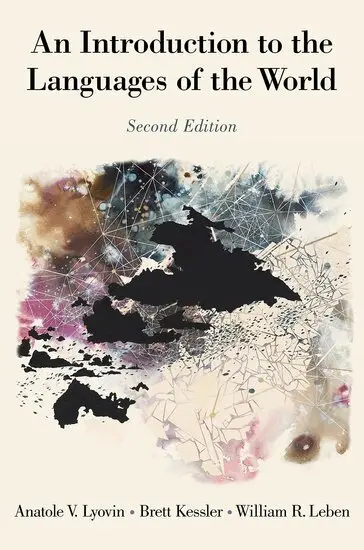
    An Introduction to the Languages of the World

    AvAnatole Lyovin,Brett Kessler

    Häftad, Engelska, 2017

    1 130 kr

    Beställningsvara. Skickas inom 5-8 vardagar. Fri frakt över 249 kr.

    Beskrivning

    The only textbook of its kind, An Introduction to the Languages of the World is designed to introduce beginning linguistics students, who now typically start their study with little background in languages, to the variety of the languages of the world. It is ideal for use in courses where students have mastered the basic principles of linguistics but lack background in the broad range of language phenomena found in the world's languages, such as vowel harmony and ergative constructions. It offers students an opportunity to explore, at various levels, structures of very different, highly interesting languages without necessarily possessing a speaking or reading knowledge of these languages.Lyovin explains the classification of languages, discussing not only genetic classification but typological and sociolinguistic classification as well. He follows this with an explication of writing systems. A chapter is devoted to each of the world's continents, with in-depth analyses of representative languages of Europe, Asia, Africa, Oceania, and America, and a separate chapter covers pidgins and creoles. Helpful features include an appendix of nineteen maps, student exercises, and suggestions for further reading.

    Produktinformation

    • Utgivningsdatum:2017-01-19
    • Mått:231 x 155 x 30 mm
    • Vikt:794 g
    • Format:Häftad
    • Språk:Engelska
    • Antal sidor:544
    • Upplaga:2
    • Förlag:OUP USA
    • ISBN:9780195149883

    Utforska kategorier

    • Språkvetenskap och lingvistik inom Språk och ordböcker

    Mer om författaren

    Born of Russian emigre parents in Leskovac, Serbia, Yugoslavia, in 1938. In 1950 left Yugoslavia, and after one year spent in refugee camps in Italy and Germany immigrated to Canada. Finished high school in Toronto, Canada, and received a scholarship to study at Princeton University in New Jersey. Also studied at the Taiwan National University for one year before completing AB at Princeton. After graduating from Princeton, studied at University of California, Berkeley, for a doctorate in linguistics. Appointed Assistant Professor of Linguistics at the University of Hawaii at Manoa in the fall of 1968. Retired as an associate professor from that institution in 2000. Taught in Burma, Korea, Japan, and Russia. (Russia and Korea were on a Fulbright.) Presently serving as the rector of the Holy Theotokos of Iveron Russian Orthodox Church, Honolulu, Hawaii, with the rank of an archpriest.

    Recensioner i media

    "This book is an important pedagogical resource, presenting in succinct form information on the classification of the world's languages into language families and on the major structural types with regard to a wide range of phonological, morphological, and syntactic phenomena, as well as detailed presentations of languages selected to illustrate interaction of structural features as they occur in texts." --Bernard Comrie, Distinguished Professor of Linguistics,University of California, Santa Barbara"The second edition of An Introduction to the Languages of the World is a leap forward. I welcome the chapter on writing systems and the language sketches. The book stresses the diversity of the world's languages and is well balanced across the globe. The decision to use ISO coding for language names, now the standard nomenclature for languages, is also welcome. Altogether, a fine achievement." --Mark Aronoff, Distinguished Professor of Linguistics,Stony Brook University

    Innehållsförteckning

    • List of TablesList of FiguresSymbols and Abbreviations 1 Classification of Languages 1.1 Genetic classification 1.2 Typological classification of languages 1.3 Exercises 1.4 Suggested readings 2 Classification of Writing Systems 2.1 Typological classification of writing systems 2.2 Genetic classification of writing systems 2.3 Exercises 2.4 Suggested readings 3 Europe 3.1 Indo-European 3.2 Uralic 3.3 Caucasus area 3.4 Basque 3.5 Sketch of Russian 3.6 Sketch of Finnish 3.7 Exercises 3.8 Suggested readings 4 Asia 4.1 Altaic area 4.2 Paleosiberian area 4.3 Sino-Tibetan 4.4 Hmong-Mien 4.5 Tai-Kadai 4.6 Austroasiatic 4.7 Dravidian 4.8 Burushaski 4.9 Other languages in Asia 4.10 Sketch of Mandarin Chinese 4.11 Sketch of Classical Tibetan 4.12 Exercises 4.13 Suggested readings 5 Africa 5.1 Afro-Asiatic 5.2 Nilo-Saharan 5.3 Niger-Congo 5.4 Khoisan area 5.5 Other languages in Africa 5.6 Sketch of Modern Standard Arabic 5.7 Sketch of Swahili 5.8 Exercises 5.9 Suggested readings 6 Oceania 6.1 Austronesian 6.2 Papuan area 6.3 Australian area 6.4 Sketch of Hawaiian 6.5 Sketch of Dyirbal 6.6 Exercises 6.7 Suggested readings 7 The Americas North American area 7.1 Eskimo-Aleut 7.2 Na-Dene 7.3 Algic 7.4 Muskogean 7.5 Siouan 7.6 Iroquoian 7.7 Caddoan 7.8 Yuman 7.9 Sahaptian 7.10 Tsimshianic7.11 Kiowa-Tanoan 7.12 Uto-Aztecan 7.13 Salishan Mesoamerican area 7.14 Oto-Manguean 7.15 Totonacan 7.16 Mixe-Zoquean 7.17 Mayan South American area 7.18 Intermediate area 7.19 Western Amazonia 7.20 Northern foothills 7.21 Andes region 7.22 Southern foothills 7.23 South 7.24 Central Amazonia 7.25 Northern Amazonia 7.26 Sketch of Central Alaskan Yup?ik 7.27 Sketch of Ayacucho Quechua 7.28 Exercises 7.29 Suggested readings 8 Language Birth, Death, and Revitalization 8.1 Mixed languages8.2 Constructed languages 8.3 Pidgins 8.4 Creoles 8.5 Sign languages 8.6 Language endangerment and renewal 8.7 Sketch of Tok Pisin 8.8 Exercises 8.9 Suggested readings References Language Index Subject Index