• Fri frakt över 249 kr
  • •
  • Snabba leveranser
  • •
  • Billiga böcker
Kundservice

Du är på sajten för privatpersoner.

Företag, bibliotek eller offentlig verksamhet?

Du handlar på classic.bokus.com, där alla dina funktioner finns intakta.
Till classic.bokus.com
Bokus logotyp. Gå till startsidan.
  • Erbjudanden
  • Student
  • Topplistor
  • Barn & ungdom
  • Bokus Play
  • E-böcker
  • Ljudböcker
  • Pocketböcker
  • Spel och pussel

Pocketfynda! Hundratals böcker för 49 kr/st →

Sidfot

Mina sidor

    Hjälp

    • Kundservice
    • Vanliga frågor och svar
    • Frakt och leverans
    • Retur vid ångerrätt
    • Reklamera vara
    • Betalning
    • Köpvillkor
    • Allmänna villkor
    • Information om webbplatsens tillgänglighet

    Om Bokus

    • Om oss
    • Pressrum
    • För studenter
    • För företag
    • För bibliotek och offentlig verksamhet
    • För leverantörer
    • Hållbarhet

    Populärt

    • Aktuella erbjudanden
    • Presentkort
    • Studentlitteratur
    • Nya böcker
    • Topplistor
    • Signerade böcker
    • Engelska böcker

    Inspiration

    • Boktips
    • BookTok
    • Barnbokskaraktärer
    • Populära författare
    Logotyp för Bokus
    Följ oss på Facebook (extern länk)Följ oss på Instagram (extern länk)Följ oss på YouTube (extern länk)Följ oss på TikTok (extern länk)
    bokus @ CookiesAnpassa cookiesIntegritetspolicyKöpvillkor
    Till Citymail hemsida (extern länk)Till Budbee hemsida (extern länk)Till Postnord hemsida (extern länk)Till Schenker hemsida (extern länk)Till Early Bird hemsida (extern länk)Till Walleys hemsida (extern länk)
    1. Samhälle och politik
    2. Politik och statsskick
    3. Statsvetenskap och politisk teori

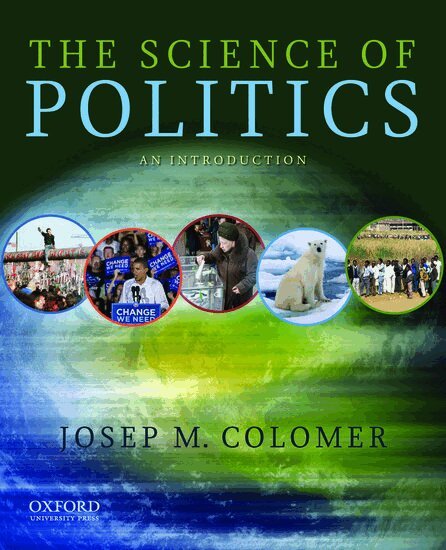
    The Science of Politics

    An Introduction

    AvJosep M. Colomer

    Häftad, Engelska, 2010

    3 806 kr

    Beställningsvara. Skickas inom 5-8 vardagar. Fri frakt över 249 kr.

    Beskrivning

    A broad, accessible, and rigorous overview of politics, The Science of Politics: An Introduction introduces students to the most substantive and important issues in the field. Josep M. Colomer takes a unique approach to the study of politics, addressing it from two points of departure: as a fundamental human activity to pursue the common interests of the members of a community (i.e., the "public good") and as the subject of systematic and reliable knowledge (i.e., science). This method helps to bridge a persistent gap between developments in research and actual teaching in the discipline. It provides students with the best possible foundation to build upon as they move into more advanced study in the field.FEATURES* Presents thirty principles that have been established through research over the years* Gives students the methodological tools to explore, study, and understand questions and issues that they may encounter* Discusses a variety of key issues including action, representation, government, and policy * Incorporates a number of pedagogical devices including summaries, key concepts, review questions, problems and applications, comparative case studies, and special features explaining classic research contributions

    Produktinformation

    • Utgivningsdatum:2010-09-16
    • Mått:190 x 231 x 15 mm
    • Vikt:522 g
    • Format:Häftad
    • Språk:Engelska
    • Antal sidor:320
    • Förlag:OUP USA
    • ISBN:9780195397741

    Utforska kategorier

    • Statsvetenskap och politisk teori inom Samhälle och politik
    • Internationella relationer inom Samhälle och politik

    Mer om författaren

    Josep M. Colomer is a life member of the American Political Science Association and an elected member of the Academia Europaea. He has taught political science in New York, Washington, and Mexico and is currently a Research Professor at the Higher Council for Scientific Research (CSIC) in Barcelona. He is the author of more than thirty books, which have been published in six languages.

    Recensioner i media

    "I don't think that anyone has tried to write something like this before. If one wants to give an overview of political science, then this is about the only book there is!"--James A. Robinson, Harvard University"At long last, a text that puts science back into political science; at the same time, it is not an 'American government and politics' text masquerading as an introduction to political science. I am delighted with it. The central concept of the 'public good' lends coherence to the organization of the book and allows Josep M. Colomer to integrate a vast amount of material encompassing all levels of analysis. The product is a remarkable achievement."--AbdallaBattah, Minnesota State University, Mankato"The Science of Politics: An Introduction aims to do something that no other political science textbook currently does: to lay out the key 'things we know' about politics that satisfy the criteria of simplicity, practicality, and historical relevance. It is very well written, with an authoritative style that clearly demonstrates an impressive sweep of historical knowledge and understanding. . . . It has an analytical coherence which is consistentthroughout the book, in line with the goal to be 'scientific'. This style completely distinguishes this text from others in the field and is a key selling point for students. I would recommend it to others withouthesitation."--Helen Margetts, University of Oxford

    Innehållsförteckning

    • INTRODUCTIONWhat's Politics?Why Science?The Book SOME THINGS WE KNOWThirty Propositions in Political Science I. ACTION 1. THE PUBLIC GOODPublic GoodsIndivisibility Externalities Source 1.1: Private Goods and Public GoodsTypes of Public GoodsPure Public GoodsClub GoodsThe Commons Source 1.2: The Tragedy of the CommonsThe Politics of Public GoodsRedistribution FightsThe Growth of Public Expenditure Box 1.1: Measuring Government's Action 2. COLLECTIVE ACTIONThe Individual LogicWeighed Benefits and Costs The Free RiderSelective IncentivesExit and Voice Case 2.1: Benefits and Costs of Voting Sources 2.1: The Individual Logic of Collective ActionThe Size of the GroupTypes of GroupsCollective Identity Exploitation of the Large by the Small Sources 2.2: Small Groups Get Better Organized 3. COOPERATION AND CONFLICTThe Prisoner's DilemmaCooperate and DefectOther Political Dilemmas Box 3.1: Going for the Blonde Case 3.1: Prisoner's Dilemma in the Opera Sources 3.1: Theory of GamesThe Evolution of CooperationTit for TatIndefinite PlaysFavorable ContextsOther Games of Collective ActionChickenStag Hunt Box 3.2: Basic Games Sources 3.2: Chickens and Stags 4. LEADERSHIPWhat is a Leader?Leaders' Benefits and Opportunity CostsLeaders' Personal SkillsCases 4.1: Some Top Leaders Sources 4.1: Effective LeadershipLeaders and FollowersThe Chain ReactionThe Tipping Game Box 4.1: Tipping Game of LeadershipInstitutions for LeadershipWilling LeadersReluctant LeadersGroup AsymmetriesIllustrationPublic Expenditure, 1870-2005 II. POLITY 5. COMMUNITYMultilevel GovernanceThe Scale of Public GoodsComplex Institutions Box 5.1: The Subsidiarity Criterion Case 5.1: Local Self-Government in Renaissance Italy Sources 5.1: Small is DemocraticSovereigntyState-Building and Nation-BuildingState-War MakingState-Failure Sources 5.2: National and Multinational StatesCity, State, EmpireCityStateEmpire 6. FEDERATIONThe Size of The CommunityDemocratic BenefitsEconomic EfficiencySize and DemocracyUnionEthnic VarietyDivided InstitutionsThe Choice of Federalism Box 6.1: Measuring Ethnic Variety Case 6.1: Consensual Switzerland Case 6.2: The Soviet DisunionSources 6.1: Self-Government and Union 7. DICTATORSHIPForms of DictatorshipTotalitarianismDespotismAuthoritarianism Cases 7.1: The Dictator's Succession Sources 7.1: Authoritarian and Totalitarian DictatorshipsThe Fall of DictatorshipsRevolution and Civil War Democratization Case 7.2: Must Islam Be Associated with Dictatorship? 8. DEMOCRACYWhat's Democracy?Overthrowing the RulersConsolidation Box 8.1: Measuring Democracy Box 8.2: Democracy and Dictatorship in the World Sources 8.1: Civic CultureDemocracy and DevelopmentDevelopment Favors DemocracyDemocracy Favors Development Box 8.3: Economic Wealth and Political Regime Cases 8.1: Democratic India, Dictatorial China Sources 8.2: Socio-Economic Correlations with Political DemocratizationDemocratic PeacePeace for VotesPeace Favors DemocracyIllustrationCountry-Building, 1870-2008Democracy and Dictatorship, 1870-2008 III. ELECTION 9. POLITICAL PARTIESWhy PartiesFormation of Political PartiesFunctions of PartiesTypes of PartiesParty Members Two-Level GamesParty Types Box 9.1: Extreme Activists Case 9.1: How the UK's Labour Choose Candidates Source 9.1: The Political Oligarchy 10. ELECTORAL COMPETITIONThe VotersIndividual PreferencesThe Voter's Utility FunctionCollective Distributions of Preferences Box 10.1: Party Voting and Issue VotingSources 10.1: Elections as MarketsConvergence on the Median VoterElectoral EquilibriumThe Efficient Median Voter Sources 10.2: The Median Voter Maximizes Social UtilityThe Incumbent's AdvantageGovernments Win and Lose ElectionsParty Identification Box 10.2: Measuring Electoral Change Box 10.3: Mathematics of Voting 11. AGENDA FORMATIONMultiple IssuesIndividual IndifferencesThe Winning Set Case 11.1: Electoral Competition in the United States Sources 11.1: Multidimensional InstabilitySetting The AgendaParty Advantage on IssuesElectoral CampaignsCumulative Policy Making Cases 11.2: Electoral Issues in TV Ads Sources 11.2: Political Arguments 12. PARTY SYSTEMSNumber of PartiesNumbers of Issues and PartiesIdeologyWhat's an Ideology?The Left-Right Ideological DimensionPolarization vs. Consensus Box 12.1: Measuring Party Systems Case 12.1: Swing Political Parties Source 12.1: Types of Party SystemsIllustrationGovernment Parties, 1945-2005 IV. GOVERNMENT 13. CHOOSING PRESIDENTSUnanimityUnanimous ConsentAdvantage of the Status-QuoMajorityThe Median Voter's MajorityMajority-RunoffPlurality Comparing Majority Runoff and Plurality RulesThe Choice of Majority RulesBox 13.1: The 'Impossibility' to Be Fair Box 13.2: Majority Procedures Case 13.1: Divide and Win in Black and White Sources 13.1: The Majority is the Whole 14. ELECTING ASSEMBLIESAssembly SizeLarge Countries, Large AssembliesSeat-ApportionmentPersons and PartiesCommunity VotingSingle-Seat DistrictsProportional RepresentationElectoral RepresentationParty RepresentationPersonal Representation Box 14.1: Proportional Quotas Box 14.2: Measuring Proportionality Case 14.1: Protective Proportional Representation Cases 14.2. Single-Seat and Multi-Seat Ballots Sources 14.1: The Chicken and the Egg 15. DIVISION OF POWERSAssemblies and PresidentsParliamentary RegimePresidential Regime Box 15.1: Three AssembliesParliamentary RegimeSingle-Party ParliamentarismMultiparty Parliamentarism Case 15.1: Ceremonial Chief of StatePresidential RegimeChecks and BalancesPresidentialismSemi-Presidentialism Box 15.2: Concentration of Power Sources 15.1: The Presidentialist Temptation 16. PARTY GOVERNMENTSingle-Party and Multi-Party GovernmentAppointing the GovernmentOffice and PolicyPower DistributionCabinet Duration Box 16.1: Forming a Winning Coalition Case 16.1: The Importance of Being Not Too ManyUnified and Divided GovernmentDivided ElectionsLegislative ProcessPresidential and Congressional DominanceMultiparty PresidentsIllustrationAssembly Electoral Systems, 1870-2008Political Regimes, 1870-2008 FINAL THOUGHTSFURTHER READINGKEY CONCEPTSPOLITICAL THINKERSCREDITSINDEX