• Fri frakt över 249 kr
  • •
  • Snabba leveranser
  • •
  • Billiga böcker
Kundservice

Du är på sajten för privatpersoner.

Företag, bibliotek eller offentlig verksamhet?

Du handlar på classic.bokus.com, där alla dina funktioner finns intakta.
Till classic.bokus.com
Bokus logotyp. Gå till startsidan.
  • Erbjudanden
  • Nyheter
  • Student
  • Topplistor
  • Barn & ungdom
  • Bokus Play
  • E-böcker
  • Pocketböcker
  • Spel & pussel

10% rabatt på allt med kod NYSTART10 →

Sidfot

Mina sidor

    Hjälp

    • Kundservice
    • Vanliga frågor och svar
    • Frakt och leverans
    • Retur vid ångerrätt
    • Reklamera vara
    • Betalning
    • Köpvillkor
    • Allmänna villkor
    • Information om webbplatsens tillgänglighet

    Om Bokus

    • Om oss
    • Pressrum
    • För studenter
    • För företag
    • För bibliotek och offentlig verksamhet
    • För leverantörer
    • Hållbarhet

    Populärt

    • Aktuella erbjudanden
    • Presentkort
    • Studentlitteratur
    • Nya böcker
    • Topplistor
    • Signerade böcker
    • Engelska böcker

    Inspiration

    • Boktips
    • BookTok
    • Populära bokserier
    • Barnbokskaraktärer
    • Populära författare
    Logotyp för Bokus
    Följ oss på Facebook (extern länk)Följ oss på Instagram (extern länk)Följ oss på YouTube (extern länk)Följ oss på TikTok (extern länk)
    bokus @ CookiesAnpassa cookiesIntegritetspolicyKöpvillkor
    Till Citymail hemsida (extern länk)Till Budbee hemsida (extern länk)Till Postnord hemsida (extern länk)Till Schenker hemsida (extern länk)Till Early Bird hemsida (extern länk)Till Walleys hemsida (extern länk)
    1. Kultur
    2. Musikböcker
    3. Musikinstrument

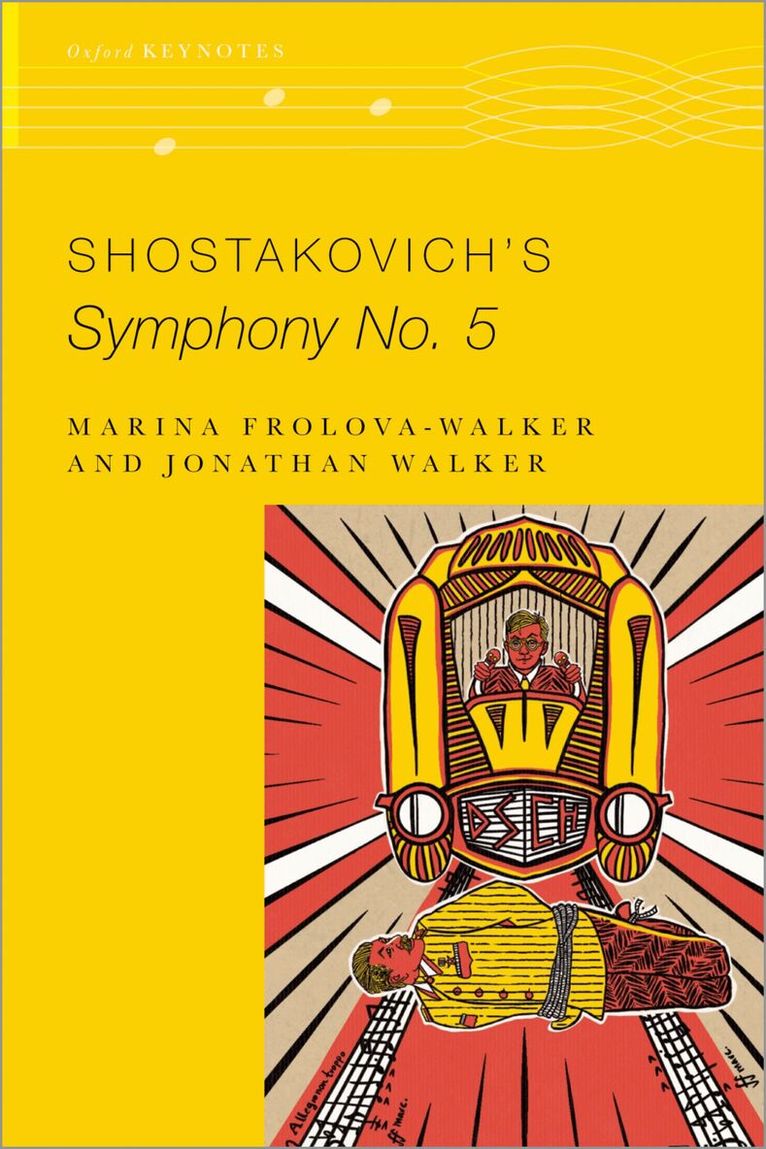
    Shostakovich's Symphony No. 5

    AvMarina Frolova-Walker,Jonathan Walker

    Häftad, Engelska, 2024

    Del i serien Oxford Keynotes

    213 kr

    Beställningsvara. Skickas inom 5-8 vardagar. Fri frakt över 249 kr.

    Fler format och utgåvor

    Inbunden

    860 kr

    Beskrivning

    The book is devoted to Shostakovich's most controversial symphony, composed at the height of Stalin's Purges. It rescued Shostakovich from official disfavour and deeply moved audiences. The critics recognized it as a masterpiece, but they were perplexed by its ambiguities, especially at the end of the Symphony: some imagined it as the joyful final victory of socialism, while others heard the triumph instead of a sinister and oppressive force. The second interpretation was pushed into the background, but the controversy persisted, with the further complication of two very different tempo markings for the closing section, both of which seemed to be approved by the composer. The authors give an authoritative account of the tempo controversy and the effect of the different tempos on the reception of the work in the West. Shostakovich's Symphony No. 5 delves into the history of the work's composition, the pressures Shostakovich experienced at the time, and the cultural environment from the time the composer began work on Symphony through to the settling of its official critical reception. At the center of this exploration is the musical score itself, which is full of secrets that have taken decades to uncover, the most colorful of which is the case for Shostakovich's extensive references to Bizet's Carmen, and the connection between these and Shostakovich's lover of the mid-30s, Lala Carmen (Elena Konstantinovskaya). The authors show how Shostakovich largely (but not entirely) set aside his influences from Mahler and German modernists, and in replacement absorbed Beethoven and Tchaikovsky with the same ingenuity as his previous influences. Shostakovich decided to make a virtue of a necessity, and created one of the richest of symphonic scores, allowing himself to retain his artistic pride while winning the official approval necessary for regaining his livelihood. These events all unfolded in the atmosphere of terror created by Stalin's "Great Purge". This book is the first to be devoted to this watershed symphony, and includes secrets of the score that took decades to uncover.

    Produktinformation

    • Utgivningsdatum:2024-03-07
    • Mått:142 x 211 x 5 mm
    • Vikt:231 g
    • Format:Häftad
    • Språk:Engelska
    • Serie:Oxford Keynotes
    • Antal sidor:194
    • Förlag:OUP USA
    • ISBN:9780197566336

    Utforska kategorier

    • Musikinstrument inom Kultur

    Mer om författaren

    Marina Frolova-Walker is Professor of Music History at the University of Cambridge and Fellow of Clare College. She is the author of Russian Music and Nationalism from Glinka to Stalin (2007), Stalin's Music Prize: Soviet Culture and Politics (2016), and co-author of Music and Soviet Power, 1917-32 (2012). Elected a Fellow of the British Academy in 2014, and the recipient of the RMA Dent Medal for her outstanding contribution to musicology, Professor Frolova-Walker is committed to sharing the insights gained from her research with a wider public through talks, radio and TV appearances, and publications. Jonathan Walker is a London-based freelance writer and private teacher of advanced piano and composition. He is co-author of Music and Soviet Power (2012). He studied at Edinburgh University, at the Liszt Academy, Budapest, and at Queen's University Belfast, where he defended his PhD dissertation on the musical-work concept. He has taught at Queen's University Belfast andCambridge University, performed on BBC2 television, given talks for BBC Radio 4, and published translations from French and Russian.

    Recensioner i media

    Marina Frolova-Walker and Jonathan Walker present a rich and thought-provoking look into Shostakovich's most popular symphony. The whole is immaculately researched and brilliantly presented, and any reader will come away with a deeper understanding of the man, the circumstances, and the work.

    Innehållsförteckning

    • AcknowledgementsAbout the Companion WebsiteNote on Transliteration List of Themes Prelude Chapter 1. From the Fourth to the Fifth"This is Chaos, Not Music"(Not) The Fourth SymphonyThe Birth of the FifthThree Streams of Reception Chapter 2. Musical ContextsBeethoven and TchaikovskyHindemith and MahlerShostakovich's "Eclecticism" Chapter 3. The Phantom Program Intelligentsia and Revolution"Maturation of Personality" Chapter 4. The Faulty Metronome Mravinsky vs BernsteinBetween the Two Poles Chapter 5. A Formula for TriumphThe Great CitizenThe Triumph FormulaThe Missing Theme Chapter 6 The End of the AffairA Secret UncoveredFirst MovementSecond MovementThird MovementFourth Movement Motto and MonogramOther Secrets Postlude Index