• Fri frakt över 249 kr
  • •
  • Snabba leveranser
  • •
  • Billiga böcker
Kundservice

Du är på sajten för privatpersoner.

Företag, bibliotek eller offentlig verksamhet?

Du handlar på classic.bokus.com, där alla dina funktioner finns intakta.
Till classic.bokus.com
Bokus logotyp. Gå till startsidan.
  • Erbjudanden
  • Nyheter
  • Student
  • Topplistor
  • Barn & ungdom
  • Bokus Play
  • E-böcker
  • Pocketböcker
  • Spel & pussel

10% rabatt på allt med kod: NYSTART10 →

Sidfot

Mina sidor

    Hjälp

    • Kundservice
    • Vanliga frågor och svar
    • Frakt och leverans
    • Retur vid ångerrätt
    • Reklamera vara
    • Betalning
    • Köpvillkor
    • Allmänna villkor
    • Information om webbplatsens tillgänglighet

    Om Bokus

    • Om oss
    • Pressrum
    • För studenter
    • För företag
    • För bibliotek och offentlig verksamhet
    • För leverantörer
    • Hållbarhet

    Populärt

    • Aktuella erbjudanden
    • Presentkort
    • Studentlitteratur
    • Nya böcker
    • Topplistor
    • Signerade böcker
    • Engelska böcker

    Inspiration

    • Boktips
    • BookTok
    • Populära bokserier
    • Barnbokskaraktärer
    • Populära författare
    Logotyp för Bokus
    Följ oss på Facebook (extern länk)Följ oss på Instagram (extern länk)Följ oss på YouTube (extern länk)Följ oss på TikTok (extern länk)
    bokus @ CookiesAnpassa cookiesIntegritetspolicyKöpvillkor
    Till Citymail hemsida (extern länk)Till Budbee hemsida (extern länk)Till Postnord hemsida (extern länk)Till Schenker hemsida (extern länk)Till Early Bird hemsida (extern länk)Till Walleys hemsida (extern länk)
    1. Samhälle och politik
    2. Politik och statsskick
    3. Internationella relationer

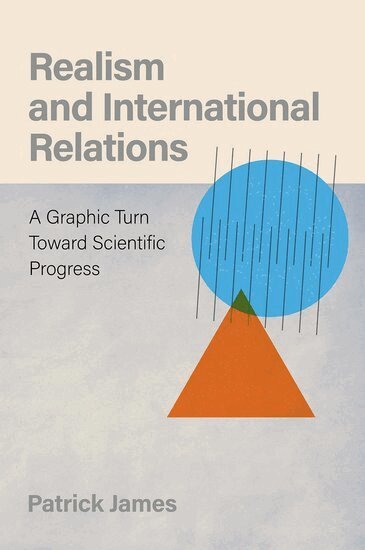
    Realism and International Relations

    A Graphic Turn Toward Scientific Progress

    AvPatrick James

    Inbunden, Engelska, 2022

    646 kr

    Beställningsvara. Skickas inom 5-8 vardagar. Fri frakt över 249 kr.

    Fler format och utgåvor

    E-bok

    475 kr

    E-bok

    474 kr

    Beskrivning

    Realism is one of the core theories within the field of international relations, and it generally posits a state system characterized by anarchy where states act in what they perceive to be their own self interests. It is a controversial theory, and it has many opponents. Yet effective debate among realists and those who identify with other schools of thought has diminished dramatically over time. As Patrick James argues in Realism and International Relations, scholars in the field have become dissatisfied with results from exchanges in words alone. He contends that translation of the vast amount of information in the field into knowledge requires a greater emphasis on communication beyond the use of text. Given the challenges posed by existing and intensifying information overload, he develops a new model that relies on the graphic representation of analytical arguments.As James explains, realist scholarship in the post-World War II era is the natural domain for the application of systemism, a graphic form of expression with straightforward rules for portrayal of analytical arguments, notably cause and effect within theories. Systemism goes beyond prior iterations of systems theory to offer a visualization technique borrowed and adapted from the philosophy of science. Systemist graphics reveal the shortcomings, contributions and potential of realism. These visualizations, which focus on realist theories about war, are intended to bring order out of what critics tend to describe, with some justification, as chaos. In sum, a graphic turn for realism in particular and international relations in general is essential in order to achieve the scientific progress that otherwise is likely to remain elusive. A major theoretical work by an eminent scholar, this will be of interest to all theorists focusing how the international system of states actually functions.

    Produktinformation

    • Utgivningsdatum:2022-12-21
    • Mått:239 x 163 x 47 mm
    • Vikt:1 093 g
    • Format:Inbunden
    • Språk:Engelska
    • Antal sidor:648
    • Förlag:OUP USA
    • ISBN:9780197645024

    Utforska kategorier

    • Internationella relationer inom Samhälle och politik

    Mer om författaren

    Patrick James is the author or editor of over 30 books and more than 170 articles and book chapters. Among his honors and awards are the Louise Dyer Peace Fellowship from the Hoover Institution at Stanford University, Official Visitor at Nuffield College of Oxford University, and the Governor-General's International Award in Canadian Studies. James has been Distinguished Scholar for the ISA in Foreign Policy Analysis, 2006-07, Ethnicity, Nationalism and Migration, 2009-10, and Active Learning and International Studies, 2021-22. He served as President of the ISA, 2018-19. James is the Editor-in-Chief of the Oxford Bibliographies in International Relations.

    Recensioner i media

    Rejecting the notion that there is no progress in realist theory, this study charts a path via the essential distinction between whether war causes systemic structural change or unexpected structural change causes war, and why. Using a new framework and style of presentation, this treatment examines individual theories and accompanying empirical test. Audacious and thought-stimulating, the discussion stirs debate. The book is a must-read for every student and scholar today.

    Innehållsförteckning

    • Preface Acknowledgments Part I Setting the Agenda Chapter 1 Realism, International Relations and the World TodayChapter 2 Progress in International Relations Part II Creating a Metatheory of Progress for International Relations Chapter 3 Introducing Components: Knowledge, Units and MethodsChapter 4 KnowledgeChapter 5 UnitsChapter 6 MethodsChapter 7 A Metatheory of Progress Part III Identifying Realism Chapter 8 The Nature of RealismChapter 9 Classifying Realist Theories of War Chapter 10 Classical Realism Part IV Realist Theories of War Chapter 11 Power Cycles Chapter 12 Structural RealismChapter 13 Balance of ThreatChapter 14 Balance of InterestsChapter 15 Defensive Realism Chapter 16 Dynamic DifferentialsChapter 17 Offensive RealismChapter 18 Predation Part V The Way Forward Chapter 19 Dialogue for Realist Theories of WarChapter 20 Realism and Progress in International Relations References