Inbunden, Engelska, 2024
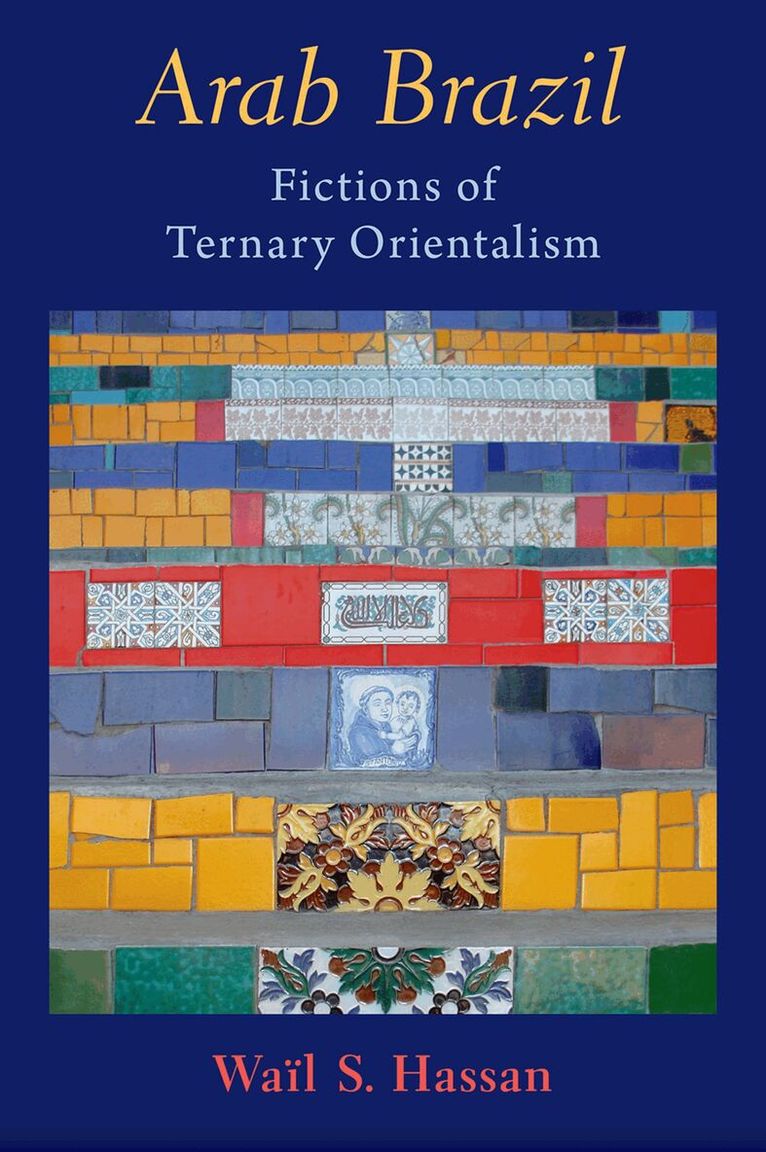
Arab Brazil
Fictions of Ternary Orientalism
1090 kr
Beställningsvara. Skickas inom 5-8 vardagar. Fri frakt över 249 kr.
Beskrivning
Produktinformation
- Utgivningsdatum: 2024-06-19
- Mått: 221 x 150 x 30 mm
- Vikt: 635 g
- Format: Inbunden
- Språk: Engelska
- Antal sidor: 342
- Förlag: OUP USA
- ISBN: 9780197688762
Utforska kategorier
Mer om författaren
Waïl S. S. Hassan is Professor of Comparative Literature at the University of Illinois Urbana-Champaign. Among other books, he is the author of Immigrant Narratives: Orientalism and Cultural Translation in Arab American and Arab British Literature, editor of The Oxford Handbook of Arab Novelistic Traditions, and Portuguese-to-Arabic translator of Alberto Mussa's Lughz al-qaf. Hassan is a past president of the American Comparative Literature Association.
Recensioner i media
Arab Brazil is a theoretically sophisticated and elegantly written assessment of what Brazilian and Arab-Brazilian writings and television tell us about how Brazilian culture understands the Arab world and how the presence of Brazilians of Arab origin highlights the limits of the Brazilian ideal of mistura. On the one hand, Hassan's study astutely explains Brazilian Orientalism as one that is ternary, in the sense that it is not based on binary opposition, but on a triangulation in which Europe and North America remain at the apex. On the other hand, this book demonstrates that many of the manifestations of Brazilian Arabness, whether mathematics textbooks, novels, or television series, due to their stereotyping and Islamophobia, point to the fact that mistura is still only aspirational.
Betyg & recensioner
0 recensioner
Inga recensioner tillgängliga.