• Fri frakt över 249 kr
  • •
  • Snabba leveranser
  • •
  • Billiga böcker
Kundservice

Du är på sajten för privatpersoner.

Företag, bibliotek eller offentlig verksamhet?

Du handlar på classic.bokus.com, där alla dina funktioner finns intakta.
Till classic.bokus.com
Bokus logotyp. Gå till startsidan.
  • Erbjudanden
  • Nyheter
  • Student
  • Topplistor
  • Barn & ungdom
  • Bokus Play
  • E-böcker
  • Pocketböcker
  • Spel & pussel

10% rabatt på allt med kod NYSTART10 →

Sidfot

Mina sidor

    Hjälp

    • Kundservice
    • Vanliga frågor och svar
    • Frakt och leverans
    • Retur vid ångerrätt
    • Reklamera vara
    • Betalning
    • Köpvillkor
    • Allmänna villkor
    • Information om webbplatsens tillgänglighet

    Om Bokus

    • Om oss
    • Pressrum
    • För studenter
    • För företag
    • För bibliotek och offentlig verksamhet
    • För leverantörer
    • Hållbarhet

    Populärt

    • Aktuella erbjudanden
    • Presentkort
    • Studentlitteratur
    • Nya böcker
    • Topplistor
    • Signerade böcker
    • Engelska böcker

    Inspiration

    • Boktips
    • BookTok
    • Populära bokserier
    • Barnbokskaraktärer
    • Populära författare
    Logotyp för Bokus
    Följ oss på Facebook (extern länk)Följ oss på Instagram (extern länk)Följ oss på YouTube (extern länk)Följ oss på TikTok (extern länk)
    bokus @ CookiesAnpassa cookiesIntegritetspolicyKöpvillkor
    Till Citymail hemsida (extern länk)Till Budbee hemsida (extern länk)Till Postnord hemsida (extern länk)Till Schenker hemsida (extern länk)Till Early Bird hemsida (extern länk)Till Walleys hemsida (extern länk)
    1. Filosofi och religion
    2. Filosofi

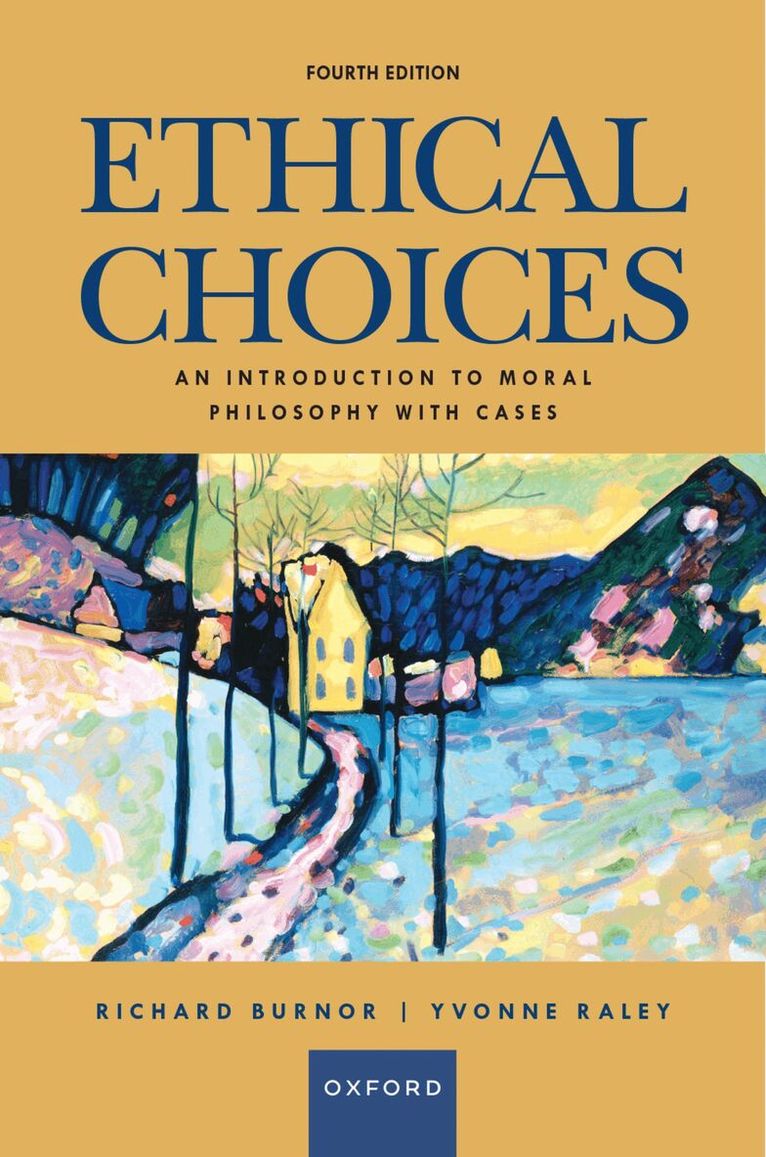
    Ethical Choices

    An Introduction to Moral Philosophy with Cases

    AvRichard Burnor,Yvonne Raley

    Häftad, Engelska, 2024

    939 kr

    Beställningsvara. Skickas inom 5-8 vardagar. Fri frakt över 249 kr.

    Fler format och utgåvor

    Häftad

    973 kr

    Beskrivning

    Ideal for students with little or no background in philosophy, Ethical Choices: An Introduction to Moral Philosophy with Cases provides a concise, balanced, and highly accessible introduction to ethics. Featuring an especially lucid and engaging writing style, the text surveys a wide range of ethical theories and perspectives, including consequentialist ethics, deontological ethics, natural and virtue ethics, the ethics of care, and ethics and religion.Each chapter of Ethical Choices also includes compelling case studies that are carefully matched with the theoretical material. Many of these cases address issues that students can relate directly to their own lives: student debt, healthcare costs, COVID-19 and vaccinations, grade inflation, generative AI, and video games. Other cases explore current topics like living wills, obesity, child marriage, factory farms, gambling addiction, and robot policing. The cases provide students with practice in addressing real-life moral choices, as well as opportunities to evaluate the usefulness and applicability of each ethical theory. Every case study concludes with a set of Thought Questions to guide students as they reflect upon the issues raised by that case.

    Produktinformation

    • Utgivningsdatum:2024-07-08
    • Mått:150 x 226 x 25 mm
    • Vikt:680 g
    • Format:Häftad
    • Språk:Engelska
    • Antal sidor:480
    • Upplaga:4
    • Förlag:OUP USA
    • ISBN:9780197768396

    Utforska kategorier

    • Filosofi inom Filosofi och religion

    Mer om författaren

    Richard Burnor is Professor of Philosophy and Chair of the Institutional Review Board at Felician College. Dr. Burnor has published articles in the philosophy of science, metaphysics, and teaching philosophy. Yvonne Raley was Associate Professor of Philosophy at Felician College.

    Recensioner i media

    This text is an excellent choice for an introductory course in the discipline."

    Innehållsförteckning

    • PrefaceAnalyzing a Case PART I. Metaethics: Theory and PracticeChapter 1. Morals and Values1.1 Extraordinary and Ordinary Morals1.2 Values1.3 The Moral and The Nonmoral1.4 Intrinsic and Instrumental Values1.5 Values and FoundationsValues ExerciseCase 1.1: Public BreastfeedingCase 1.2: The Student Debt RollercoasterCase 1.3: Uber Obstinacy Chapter 2. Moral Relativism2.1 Introduction2.2 Three Views of Ethics2.3 Evaluating Subjectivism2.4 Arguing about Relativism2.5 Against Relativism2.6 A Matter of Tolerance2.7 Beyond Cultural RelativismCase 2.1: Student RelativismCase 2.2: Arranged MarriageCase 2.3: An AccidentCase 2.4: Female Genital MutilationCase 2.5: Vaccine Exemptions Chapter 3. Autonomy, Moral Agency, and Self3.1 Introduction3.2 Personal Autonomy3.3 Implications of Autonomy3.4 Moral Agents3.5 Filling in Autonomy3.6 Developing the SelfCase 3.1: The Drunk DriverCase 3.2: Elizabeth BouviaCase 3.3: What Should the Drinking Age Be?Case 3.4: The Living WillCase 3.5: Determining Racial Identity Chapter 4. Making Moral Judgments4.1 Introduction4.2 Conflicts4.3 Moral Claims4.4 Moral Reasoning4.5 Moral ReflectionCase 4.1: How Bot to Write an EssayCase 4.2: Child MarriageCase 4.3: Who's Responsible for Obesity?Case 4.4: On Your Trail: AI and Robot Policing Chapter 5. Psychology and Morality5.1 Introduction5.2 Situationism and Moral Character5.3 Of Two Minds5.4 Emotion and Moral Thinking5.5 AltruismCase 5.1: A Kindly CompanionCase 5.2: Nudges and Choice ArchitectureCase 5.3: The Ethics of BeliefCase 5.4: Evaluating ExpertiseCase 5.5: A COVID Party PART II. Ethical Theories and PerspectivesChapter 6. Egoism6.1 Introduction6.2 Defending Ethical Egoism6.3 A Frequent Dilemma6.4 Assessing Ethical Egoism6.5 Where Does Egoism Go Wrong?Case 6.1: Declaring WagesCase 6.2: A Scratched BumperCase 6.3: Job CompetitionCase 6.4: MAD Chapter 7. Consequentialism: Act Utilitarianism7.1 Introduction7.2 Utility and Consequentialism7.3 Mill's Account7.4 Act Utilitarianism7.5 Advantages and Problems7.6 Beyond Classical UtilitarianismCase 7.1 Charity or XboxCase 7.2 Sponsoring a ChildCase 7.3 Should Your Next Car Be an EV?Case 7.4 Factory Farming and Animal SufferingCase 7.5 Torture Lite Chapter 8. Consequentialism: Rule Utilitarianism8.1 Introduction8.2 Rule Utilitarianism8.3 Rule versus Act Utilitarianism8.4 Problems with Rule Utilitarianism8.5 Justice and Rights RevisitedCase 8.1: Transgender Students and College AthleticsCase 8.2: Curbing Grade InflationCase 8.3: Mr. Tran and Wells FargoCase 8.4: Universal HealthcareCase 8.5: Human Trafficking Chapter 9. Deontology9.1 Introduction9.2 Ross's Ethics9.3 Kant's Good Will9.4 The Principle of Ends9.5 The Principle of Universal Law9.6 Attractions and Problems9.7 Autonomy and Kant's Kingdom of EndsCase 9.1: Internet Bride-Compliments of AsiaCase 9.2: A Demanding Honor CodeCase 9.3: The Ayala CaseCase 9.4: A Personal DecisionCase 9.5: Suicide Chapter 10. Natural Law10.1 Introduction10.2 Natural Law Theory10.3 Forfeiture10.4 Double Effect10.5 Assessing Natural Law TheoryCase 10.1: Pain and a Dying PatientCase 10.2: Birth ControlCase 10.3: Just War Theory and Killing NoncombatantsCase 10.4: Persistent Vegetative State: The Case of Terri Schiavo Chapter 11. Social Contracts and Rights11.1 Introduction11.2 Locke11.3 Hobbes11.4 Rawls11.5 Some Assessments11.6 More on Rights11.7 Structural ViolenceCase 11.1: Socrates's ImprisonmentCase 11.2: Lord of the FliesCase 11.3: Locke and Load: Lockean Rights and Gun Control Chapter 12. Virtue Ethics12.1 Introduction12.2 The Heart of Virtue Ethics12.3 Aristotle's Virtue Ethics12.4 Critiquing Principle-Based Ethics12.5 Classifying the Virtues12.6 Problems with Virtue EthicsCase 12.1: The Unlikely RescueCase 12.2: PC GamesCase 12.3: Compulsive Internet GamblingCase 12.4: Moral LuckCase 12.5: Democracy in Switzerland Chapter 13. Feminism and Care Ethics13.1 Introduction13.2 Feminist Ethics13.3 The Care Perspective13.4 Elements of Care Ethics13.5 Problems13.6 Care and Virtue13.7 New DevelopmentsCase 13.1: The Heinz DilemmaCase 13.2: The International Gemstone TradeCase 13.3: Parent Responsibility Toward Their In Utero ChildCase 13.4: Absolute Poverty Chapter 14. Religion and the Basis of Morality14.1 Introduction14.2 Divine Command Theory14.3 An Alternate Dependency Account14.4 Objections and Elaborations14.5 Religion, Individuals, and SocietyCase 14.1: By Divine Command?Case 14.2: Religious Symbols and Public SchoolsCase 14.3: A Question of AuthorityCase 14.4: Mountaintop Morality PART III. Applied EthicsChapter 15. Medical Futility15.1 Introduction15.2 ConflictsCase 15.1: Infant Medical FutilityCase 15.2: National TriageCase 15.3: Challenge Studies Chapter 16. Ethics and Food16.1 Introduction16.2 The American Farm Bill16.3 New Technologies16.4 Other Changes16.5 Food: Impossible?Case 16.1: Beefy Burgers and a Lean FutureCase 16.2: Lake Victoria and Nile PerchCase 16.3: The Real Price of Coffee Chapter 17. Optimizing a Planet17.1 Introduction17.2 Optimization and Conflicts17.3 Anthropocentrism and Ecocentrism17.4 Today's Planetary Environment17.5 A Morally Practical ResponseCase 17.1: National ParksCase 17.2: The Diesel DupeCase 17.3: The Triumph of the CommonsCase 17.4: All Washed UpCase 17.5: Deep Ocean Ecosystems Chapter 18. Obligations to Future Generations18.1 Introduction18.2 Can There Be Obligations Toward Nonexistent People?18.3 Can There Be Obligations Toward Indeterminate People?18.4 Is There an Obligation to Ensure a Future Humanity?18.5 Guiding PrinciplesCase 18.1: The InheritanceCase 18.2: Designer BabiesCase 18.3: Shock and AWSCase 18.4: Juggling Lives, Health, and the Economy Postscript: The Personal DimensionGlossaryIndex