
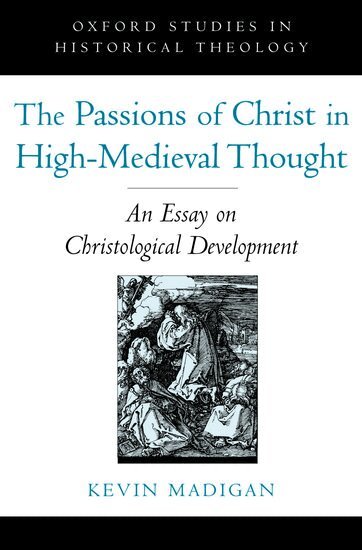
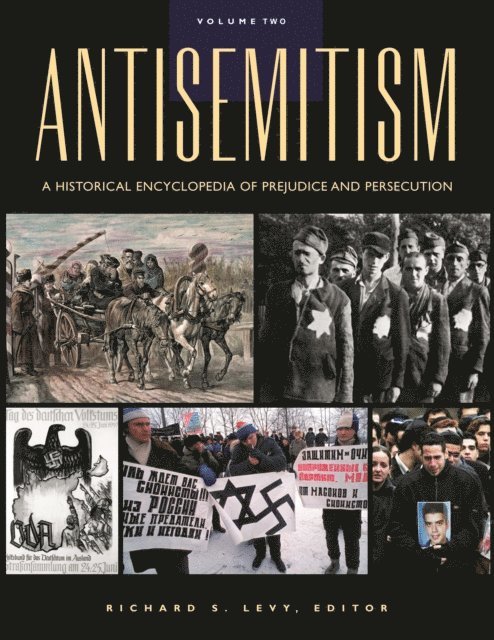
Passions of Christ in High-Medieval Thought
An Essay on Christological Development
E-bok
PDF, Engelska, 2007538 kr
Läs direkt i Bokus Reader – eller ladda ned till din enhet (PDF kräver ofta zoom och scroll på små skärmar).
Fler format och utgåvor
Beskrivning
Since the earliest days of the Church, theologians have struggled to understand how humanity and divinity coexisted in the person of Christ. Proponents of the Arian heresy, which held that Jesus could not have been fully divine, found significant scriptural evidence of their position: Jesus wondered, questioned, feared, suffered, and prayed. The defenders of orthodoxy, such as Hilary of Poitiers, Ambrose of Milan, Jerome, and Augustine, showed considerable ingenuity in explaining how these biblical passages could be reconciled with Christ''s divinity. Medieval theologians such as Peter Lombard, Thomas Aquinas, and Bonaventure, also grappled with these texts when confronting the rising threat of Arian heresy. Like their predecessors, they too faced the need to preserve Jesus'' authentic humanity and to describe a mode of experiencing the passions that cast no doubt upon the perfect divinity of the Incarnate Word. As Kevin Madigan demonstrates, however, they also confronted an additional obstacle. The medieval theologians had inherited from the Greek and Latin fathers a body of opinion on the passages in question, which by this time had achieved normative cultural status in the Christian tradition. However, the Greek and Latin fathers wrote in a polemical situation, responding to the threat to orthodoxy posed by the Arians. As a consequence, they sometimes found themselves driven to extreme and sometimes contradictory statements. These statements seemed to their medieval successors either to compromise the true divinity of Christ, his true humanity, or the possibility that the divine and human were in communication with or metaphysically linked to one another. As a result, medieval theologians also needed to demonstrate how two equally authoritative but apparently contradictory statements could be reconciled-to protect their patristic forebears from any doubt about their unanimity or the soundness of their orthodoxy. Examining the arguments that resulted from these dual pressures, Madigan finds that, under the guise of unchanging assimilation and transmission of a unanimous tradition, there were in fact many fissures and discontinuities between the two bodies of thought, ancient and medieval. Rather than organic change or development, he finds radical change, trial, novelty, and even heterodoxy.
Produktinformation
Utforska kategorier
Hoppa över listan
Mer från samma författare
Ordained Women in the Early Church
Kevin Madigan, Carolyn Osiek, Kevin Madigan, Carolyn Osiek
Häftad, 2011
401 kr
Antisemitism
Richard S. Levy, Dean Phillip Bell, William Collins Donahue, Kevin Madigan, Jonathan Morse, Amy Hill Shevitz, Norman A. Stillman
E-bok
20052 246 kr
Hoppa över listan
Du kanske också är intresserad av
Ordained Women in the Early Church
Kevin Madigan, Carolyn Osiek, Kevin Madigan, Carolyn Osiek
Häftad, 2011
401 kr
Antisemitism
Richard S. Levy, Dean Phillip Bell, William Collins Donahue, Kevin Madigan, Jonathan Morse, Amy Hill Shevitz, Norman A. Stillman
E-bok
20052 246 kr