• Fri frakt över 249 kr
  • •
  • Snabba leveranser
  • •
  • Billiga böcker
Kundservice

Du är på sajten för privatpersoner.

Företag, bibliotek eller offentlig verksamhet?

Du handlar på classic.bokus.com, där alla dina funktioner finns intakta.
Till classic.bokus.com
Bokus logotyp. Gå till startsidan.
  • Erbjudanden
  • Student
  • Topplistor
  • Barn & ungdom
  • Bokus Play
  • E-böcker
  • Ljudböcker
  • Pocketböcker
  • Spel och pussel

5% studentrabatt – använd koden KURSBOK27 →

Sidfot

Mina sidor

    Hjälp

    • Kundservice
    • Vanliga frågor och svar
    • Frakt och leverans
    • Retur vid ångerrätt
    • Reklamera vara
    • Betalning
    • Köpvillkor
    • Allmänna villkor
    • Information om webbplatsens tillgänglighet

    Om Bokus

    • Om oss
    • Pressrum
    • För studenter
    • För företag
    • För bibliotek och offentlig verksamhet
    • För leverantörer
    • Hållbarhet

    Populärt

    • Aktuella erbjudanden
    • Presentkort
    • Studentlitteratur
    • Nya böcker
    • Topplistor
    • Signerade böcker
    • Engelska böcker

    Inspiration

    • Boktips
    • BookTok
    • Barnbokskaraktärer
    • Populära författare
    Logotyp för Bokus
    Följ oss på Facebook (extern länk)Följ oss på Instagram (extern länk)Följ oss på YouTube (extern länk)Följ oss på TikTok (extern länk)
    bokus @ CookiesAnpassa cookiesIntegritetspolicyKöpvillkor
    Till Citymail hemsida (extern länk)Till Budbee hemsida (extern länk)Till Postnord hemsida (extern länk)Till Schenker hemsida (extern länk)Till Early Bird hemsida (extern länk)Till Walleys hemsida (extern länk)
    1. Samhälle och politik
    2. Politik och statsskick
    3. Internationella relationer

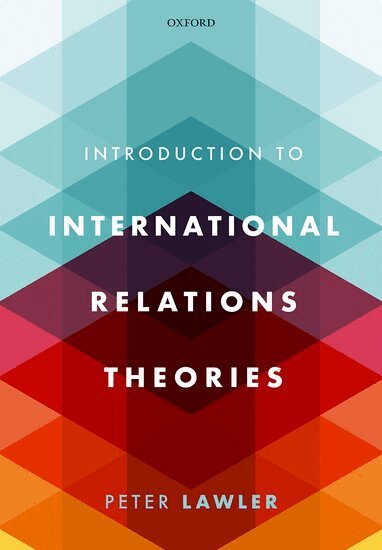
    International Relations Theories

    AvPeter Lawler

    Häftad, Engelska, 2024

    593 kr

    Beställningsvara. Skickas inom 5-8 vardagar. Fri frakt över 249 kr.

    Beskrivning

    A comprehensive and accessible introduction to international relations theories with a unique emphasis on positioning IR theories within their social, political, and historical contexts to help students fully understand IR theories and their influence. A comprehensive first introduction to international relations theories which encourages students to fully understand the purpose and function of IR theory. Readers are introduced to each IR theory and asked to consider the social, political, and historical context within which the theory emerged. Pedagogical features such as 'Think Critically' and 'Twisting the lens' provide the tools students need to apply IR theory to global issues.A comprehensive introduction to mainstream IR theories and critical approaches to IR, explained within the social, political, and historical context, to demonstrate that theory does not emerge from a vacuum.An expert authorial voice guides students through the required material in a gentle, reassuring pace, with an accessible and concise style, without shying away from the more complex theories and concepts.A clear and consistent structure and pedagogical framework of key terms, key concepts, key events, and key thinkers, to enable students with little or no knowledge of theory to develop a strong theoretical understanding, supported by easy-to-navigate points of reference.Critical reflection on new theoretical knowledge is encouraged by 'Think Critically' questions that are supported by hints and tips to guide avenues of thought.Opportunities to apply theory to today's events and issues and to practise using theory to analyse and interpret important societal concernsAvailable as an e-book enhanced with self-assessment activities and multi-media content to offer a fully immersive experience and extra learning support

    Produktinformation

    • Utgivningsdatum:2024-01-25
    • Mått:170 x 245 x 26 mm
    • Vikt:840 g
    • Format:Häftad
    • Språk:Engelska
    • Antal sidor:552
    • Förlag:OUP OXFORD
    • ISBN:9780198784890

    Utforska kategorier

    • Internationella relationer inom Samhälle och politik

    Mer om författaren

    Professor Peter Lawler retired in 2019 as Professor of international politics, at the University of Manchester, England. He has taught international politics for nearly 40 years, primarily in Australia and the UK but also on graduate and undergraduate programmes in Spain, Russia, Austria, India, Switzerland and Belgium. In the last few years of his career, Peter took a leading role in the design and development of interdisciplinary degree curricula at Manchester in cooperation with a range of British and European universities. Peter's early research was in peace research, centring on a critical theoretical analysis of the work of Johan Galtung, the founder of modern peace research. His subsequent research focussed primarily on the theoretical and practical relationship between ethics and the foreign policies of Western states, principally through exploration of the idea of "the Good State". This has led to a range of book chapters in edited collections and articles in journals.

    Recensioner i media

    This masterful textbook sets a new benchmark for introductions to International Relations theory. Lawler combines a comprehensive and insightful engagement with a broad spectrum of theories with a strong pedagogical sensibility. He works out from students lived experiences to introduce not only the importance of theory but also the nuances of particular theories, paying close attention to the historical contexts in which they emerged. In doing so, Lawler has crafted a work that will build student understanding and prompt established scholars to think afresh about the theories they teach, employ, and debate. It is an introduction without peers.

    Innehållsförteckning

    • 1: Introduction 2: The Liberal 'Idealist' Origins of the International Relations Discipline 3: Classical Realism and Neorealism 4: The English School of International Relations 5: Marxism and International Relations 6: Critical International Theory 7: Poststructuralism and International Relations 8: Constructivism and International Relations 9: Postcolonialism and International Relations 10: Feminisms, Gender, and International Relations 11: Green Perspectives and International Relations 12: Conclusion