• Fri frakt över 249 kr
  • •
  • Snabba leveranser
  • •
  • Billiga böcker
Kundservice

Du är på sajten för privatpersoner.

Företag, bibliotek eller offentlig verksamhet?

Du handlar på classic.bokus.com, där alla dina funktioner finns intakta.
Till classic.bokus.com
Bokus logotyp. Gå till startsidan.
  • Erbjudanden
  • Nyheter
  • Student
  • Topplistor
  • Barn & ungdom
  • Bokus Play
  • E-böcker
  • Pocketböcker
  • Spel & pussel

10% rabatt på allt med kod: NYSTART10 →

Sidfot

Mina sidor

    Hjälp

    • Kundservice
    • Vanliga frågor och svar
    • Frakt och leverans
    • Retur vid ångerrätt
    • Reklamera vara
    • Betalning
    • Köpvillkor
    • Allmänna villkor
    • Information om webbplatsens tillgänglighet

    Om Bokus

    • Om oss
    • Pressrum
    • För studenter
    • För företag
    • För bibliotek och offentlig verksamhet
    • För leverantörer
    • Hållbarhet

    Populärt

    • Aktuella erbjudanden
    • Presentkort
    • Studentlitteratur
    • Nya böcker
    • Topplistor
    • Signerade böcker
    • Engelska böcker

    Inspiration

    • Boktips
    • BookTok
    • Populära bokserier
    • Barnbokskaraktärer
    • Populära författare
    Logotyp för Bokus
    Följ oss på Facebook (extern länk)Följ oss på Instagram (extern länk)Följ oss på YouTube (extern länk)Följ oss på TikTok (extern länk)
    bokus @ CookiesAnpassa cookiesIntegritetspolicyKöpvillkor
    Till Citymail hemsida (extern länk)Till Budbee hemsida (extern länk)Till Postnord hemsida (extern länk)Till Schenker hemsida (extern länk)Till Early Bird hemsida (extern länk)Till Walleys hemsida (extern länk)
    1. Historia och arkeologi
    2. Arkeologi
    3. Arkeologiska perioder och områden

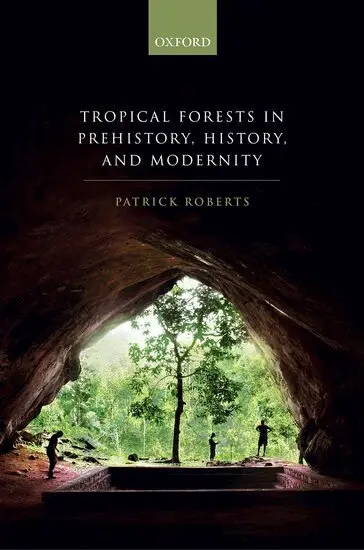
    Tropical Forests in Prehistory, History, and Modernity

    AvPatrick Roberts

    Inbunden, Engelska, 2019

    2 627 kr

    Beställningsvara. Skickas inom 5-8 vardagar. Fri frakt över 249 kr.

    Fler format och utgåvor

    E-bok

    1 828 kr

    E-bok

    1 828 kr

    Beskrivning

    In popular discourse, tropical forests are synonymous with 'nature' and 'wilderness'; battlegrounds between apparently pristine floral, faunal, and human communities, and the unrelenting industrial and urban powers of the modern world. It is rarely publicly understood that the extent of human adaptation to, and alteration of, tropical forest environments extends across archaeological, historical, and anthropological timescales. This book is the first attempt to bring together evidence for the nature of human interactions with tropical forests on a global scale, from the emergence of hominins in the tropical forests of Africa to modern conservation issues. Following a review of the natural history and variability of tropical forest ecosystems, this book takes a tour of human, and human ancestor, occupation and use of tropical forest environments through time. Far from being pristine, primordial ecosystems, this book illustrates how our species has inhabited and modified tropical forests from the earliest stages of its evolution. While agricultural strategies and vast urban networks emerged in tropical forests long prior to the arrival of European colonial powers and later industrialization, this should not be taken as justification for the massive deforestation and biodiversity threats imposed on tropical forest ecosystems in the 21st century. Rather, such a long-term perspective highlights the ongoing challenges of sustainability faced by forager, agricultural, and urban societies in these environments, setting the stage for more integrated approaches to conservation and policy-making, and the protection of millennia of ecological and cultural heritage bound up in these habitats.

    Produktinformation

    • Utgivningsdatum:2019-01-24
    • Mått:163 x 239 x 24 mm
    • Vikt:744 g
    • Format:Inbunden
    • Språk:Engelska
    • Antal sidor:368
    • Förlag:OUP OXFORD
    • ISBN:9780198818496

    Utforska kategorier

    • Arkeologiska perioder och områden inom Historia och arkeologi
    • Geografi inom Naturvetenskap och teknik

    Mer om författaren

    Patrick Roberts is Group Leader of the Stable Isotope Laboratory at the Department of Archaeology, Max Planck Institute for the Science of Human History. He has pioneered the use of stable isotope analysis of human fossils for reconstructing the tropical forest adaptations of our species during its dispersal beyond Africa. Patrick has a broader interest in studying the time-depth of human impacts on tropical forests - now the most threatened terrestrial ecosystems after the polar ice-caps - and how this has varied across space and time. He is committed to current UNESCO initiatives that bring together archaeologists and anthropologists to discuss potential solutions for the conservation of ecological and cultural heritage in tropical forests today.

    Recensioner i media

    The broad scope of this book will appeal to academics, policy activists, and the curious public alike ... Roberts' compelling prose and clever choice of epigrams carry the reader from cover to cover regardless of their background. Tropical forest researchers will find a treasure trove of references in the expansive, and exhaustive, bibliography. In the end, Roberts' synthesis of such a massive dataset is an unqualified success, and this work will make a profound contribution to every discipline focused on humanity's tropical history.

    Innehållsförteckning

    • 1: Introducing Tropical Forests in Prehistory, History, and Modernity 2: Tropical forests: Natural history, diversity, and potential as theatres of human adaptation and negotiation 3: Cradle under the canopy: The forest origins of our ape and hominin ancestors and the tropical forest forays of the genus Homo 4: Into the woods: Early Homo sapiens and tropical forest colonisation 5: Tropical bounties: The emergence of tropical forest agricultures 6: 'Ruins' of the forest: Social complexity and tropical cities 7: The last in a long line: Historical and ethnographic tropical forest encounters 8: The tropical 'Anthropocene': A modern battleground or long-term framework? 9: Forests of plenty?: Comparisons and conclusions