• Fri frakt över 249 kr
  • •
  • Snabba leveranser
  • •
  • Billiga böcker
Kundservice

Du är på sajten för privatpersoner.

Företag, bibliotek eller offentlig verksamhet?

Du handlar på classic.bokus.com, där alla dina funktioner finns intakta.
Till classic.bokus.com
Bokus logotyp. Gå till startsidan.
  • Erbjudanden
  • Nyheter
  • Student
  • Topplistor
  • Barn & ungdom
  • Bokus Play
  • E-böcker
  • Pocketböcker
  • Spel & pussel

10% rabatt på allt med kod: NYSTART10 →

Sidfot

Mina sidor

    Hjälp

    • Kundservice
    • Vanliga frågor och svar
    • Frakt och leverans
    • Retur vid ångerrätt
    • Reklamera vara
    • Betalning
    • Köpvillkor
    • Allmänna villkor
    • Information om webbplatsens tillgänglighet

    Om Bokus

    • Om oss
    • Pressrum
    • För studenter
    • För företag
    • För bibliotek och offentlig verksamhet
    • För leverantörer
    • Hållbarhet

    Populärt

    • Aktuella erbjudanden
    • Presentkort
    • Studentlitteratur
    • Nya böcker
    • Topplistor
    • Signerade böcker
    • Engelska böcker

    Inspiration

    • Boktips
    • BookTok
    • Populära bokserier
    • Barnbokskaraktärer
    • Populära författare
    Logotyp för Bokus
    Följ oss på Facebook (extern länk)Följ oss på Instagram (extern länk)Följ oss på YouTube (extern länk)Följ oss på TikTok (extern länk)
    bokus @ CookiesAnpassa cookiesIntegritetspolicyKöpvillkor
    Till Citymail hemsida (extern länk)Till Budbee hemsida (extern länk)Till Postnord hemsida (extern länk)Till Schenker hemsida (extern länk)Till Early Bird hemsida (extern länk)Till Walleys hemsida (extern länk)
    1. Medicin
    2. Andra medicinska specialiteter
    3. Neurologi och klinisk neurofysiologi

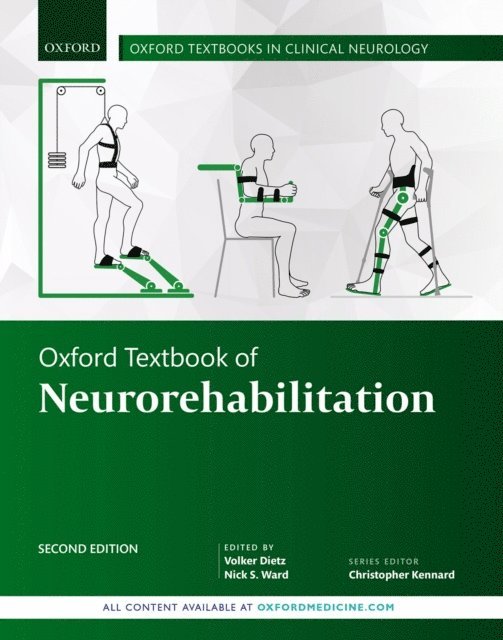
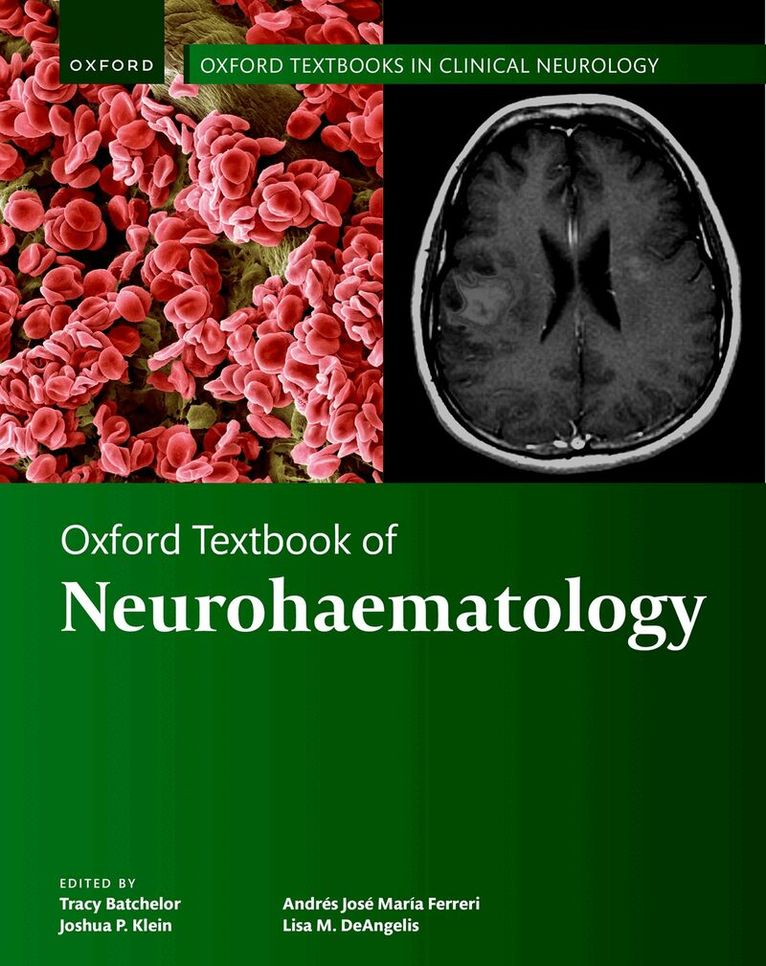
    Oxford Textbook of Neurorehabilitation

    AvWard Dietz,Volker Dietz

    Inbunden, Engelska, 2020

    Del i serien Oxford Textbooks in Clinical Neurology

    2 729 kr

    Beställningsvara. Skickas inom 5-8 vardagar. Fri frakt över 249 kr.

    Beskrivning

    Neurorehabilitation is an expanding field with an increasing clinical impact due to an ageing population. During the last 20 years, neurorehabilitation has developed from a discipline with little scientific background, separated from other medical centers, to a medical entity largely based on the principles of 'evidenced based medicine' with strong ties to basic research and clinical neurology. Today neurorehabilitation is still a work in progress and treatment standards are not yet established for all aspects of the field. There are very few books that address contemporary neurorehabilitation from this perspective. This new edition of the Oxford Textbook of Neurorehabilitation provides an understanding of the theoretical underpinnings of the subject as well as a clear perspective on how (and why) to approach treatment decisions on an individualized basis. The book has been thoroughly updated to reflect novel important developments in the field and includes new chapters on vocational rehabilitation, self-management strategies in neurorehabilitation, and music supported therapy in neurorehabilitation. This indispensable book will be of great interest to rehabilitation physicians, neurologists, and allied health care professionals who look after patients requiring neurorehabilitation.

    Produktinformation

    • Utgivningsdatum:2020-05-28
    • Mått:224 x 183 x 32 mm
    • Vikt:1 694 g
    • Format:Inbunden
    • Språk:Engelska
    • Serie:Oxford Textbooks in Clinical Neurology
    • Antal sidor:560
    • Upplaga:2
    • Förlag:OUP OXFORD
    • ISBN:9780198824954

    Utforska kategorier

    • Neurologi och klinisk neurofysiologi inom Medicin

    Mer om författaren

    Professor Dr Volker Dietz completed his medical training and specialisation in neurology and neurophysiology at the University of Freiburg, Germany. His research is predominantly focused on human neuronal control and movement disorders. Between 1977 and 1992, Professor Dietz was an Assistant Professor in the Department of Neurology and Neurophysiology at the University of Freiburg, after which he was appointed as Head of the Spinal Cord Injury Center at the University Hospital Balgrist and Chair of Paraplegiology at the University of Zurich. He is a Fellow of the Royal College of Physicians (FRCP) and a Consultant for the MRC Council, the German Research Council, the Danish National Research Foundation, the Swiss National Science Foundation, and the European Commission.A recipient of the German Research Council's Preis der Hoffnung Award in 1998, Professor Dietz has published over 280 peer-reviewed papers.Professor Dr Nick S. Ward is Reader in Clinical Neurology and an Honorary Consultant Neurologist at The National Hospital for Neurology and Neurosurgery. He trained in medicine at Charing Cross & Westminster Hospital, going on to obtain his postgraduate neurology training at The National Hospital for Neurology and Neurosurgery. He was awarded the first Clinical Fellowship in Stroke Medicine by the Stroke Association in 1999, after which he worked as a Wellcome Trust funded clinical research fellow at the Wellcome Trust Centre for Neuroimaging. In 2011, he was promoted to Reader in Clinical Neurology, and in 2017 to Professor of Clinical Neurology and Neurorehabilitation in the Sobell Department of Motor Neuroscience at UCL.A co-founder of the UCLP Centre for Neurorehabilitation and Associate Editor of the journals Neurorehabilitation and Neuronal Repair and Journal of Neurology, Neurosurgery and Psychiatry , Professor Ward's special clinical interest is stroke and neurorehabilitation.

    Recensioner i media

    This substantial text provides the most comprehensive review of contemporary research ... this is a great resource.

    Innehållsförteckning

    • SECTION I: General aspects of neurorehabilitation 1: Diane Playford: The International Classification of Functioning, Disability, and Health 2: Derick Wade: A teamwork approach to neurological rehabilitation 3: Rory J. O Connor: The economic benefits of rehabilitation for neurological conditions 4: Gert Kwakkel and Boudewijn Kollen: Predicting activities after stroke 5: Bruce Dobkin and Clarisa Martinez: Designing a clinical trial for neurorehabilitation 6: Markus Wirz and Louise Rutz-LaPitz: The influence of age on neurorehabilitation 7: John W. Krakauer: The applicability of motor learning to neurorehabilitation SECTION II: Physiological consequences of CNS damage 8: Michèle Hubli and Volker Dietz: Spinal neuronal dysfunction after deprivation of supraspinal input 9: Volker Dietz and Thomas Sinkjær: Secondary changes after damage of the central nervous system: Significance of spastic muscle tone in rehabilitation 10: Tom E. Nightingale, Ulrich Mehnert, Thomas M. Kessler, and Andrei Krassioukov: Autonomous nervous system dysfunction 11: Steffen Franz, Andreas Hug, and Norbert Weidner: Functional recovery in CNS disease: Impact of animal models SECTION III: Neuroplasticity and repair 12: Andreas R. Luft: Animal models of damage, repair, and plasticity in the brain 13: Patrick Freund, V. Reggie Edgerton, Roland R. Roy, Daniel C. Lu, and Yury Gerasimenko: Animal models of damage, repair and plasticity in the spinal cord 14: Sebastian Jessberger, Armin Curt, and Roger A. Barker: Stem cell application in neurorehabilitation 15: Nick S. Ward: The role of neuroimaging in understanding the impact of neuroplasticity after CNS damage 16: Orlando B. C. Swayne and John C. Rothwell: Enhancement of neuroplasticity by cortical stimulation 17: Ulf Ziemann: Enhancement of neuroplasticity by drug therapy SECTION IV: Clinical concepts 18: Jacques Duysens, Geert Verheyden, Firas Massaad, Pieter Meyns, Bouwien Smits-Engelsman, and Ilse Jonkers: Rehabilitation of gait and balance after CNS damage 19: William Huynh, Michael Lee, and Matthew C. Kiernan: Neurorehabilitation approaches for disorders of the peripheral nervous system 20: Nick S. Ward: Treatment of arm and hand dysfunction after CNS damage 21: Alex Leff and Jenny Crinion: Acquired disorders of language and their treatment 22: Radek Ptak and Armin Schnider: Neuropsychological rehabilitation of higher cortical functions after brain damage 23: Tom Hughes and Tom Richards: The clinical neurology of problems with oral feeding 24: Ulrich Mehnert and Thomas Kessler: Management of bladder, bowel, and sexual dysfunction 25: Eva Widerström-Noga: The assessment and treatment of pain syndromes in neurorehabilitation 26: Killian A. Welch and Mansur A. Kutlubaev: The impact of fatigue on neurorehabilitation 27: Andy Tyerman: Vocational Rehabilitation 28: Fiona Jones and Sara Demain: Self-management strategies in neurorehabilitation 29: Gail Eva, Jo Bayly, and Diane Playford: Neuropalliative rehabilitation: Managing neurological disability in the context of deteriorating illness 30: Lucia Ricciardi, Alan J. Carson, and Mark J. Edwards: Recognition and management of functional symptoms after traumatic brain injury SECTION V: Technical concepts 31: Eckart Altenmüller and Lauren Stewart: Music supported therapy in neurorehabilitation 32: Jacopo Carpaneto and Silvestro Micera: Application of orthoses and neurostimulation in neurorehabilitation 33: Arthur Prochazka: Technology to enhance arm and hand function 34: Rüdiger Rupp, Daniel Schließmann, Christian Schuld, and Norbert Weidner: Technology to enhance locomotor function 35: Émilie Raymond, Luc Noreau, Normand Boucher, Geoffrey Edwards, Patrick Fougeyrollas, Ernesto Morales, Francois Routhier, Claude Vincent, and G. Hubert Gascon: Enhancing independent community access and participation: Services, technologies, and policies 36: Mathias Bannwart and Robert Riener: Virtual reality for neurorehabilitation 37: Arun Jayaraman, Sheila Burt, and William Z. Rymer: Promises and challenges of neurorehabilitation technology