• Fri frakt över 249 kr
  • •
  • Snabba leveranser
  • •
  • Billiga böcker
Kundservice

Du är på sajten för privatpersoner.

Företag, bibliotek eller offentlig verksamhet?

Du handlar på classic.bokus.com, där alla dina funktioner finns intakta.
Till classic.bokus.com
Bokus logotyp. Gå till startsidan.
  • Erbjudanden
  • Nyheter
  • Student
  • Topplistor
  • Barn & ungdom
  • Bokus Play
  • E-böcker
  • Pocketböcker
  • Spel & pussel

Må bättre, för mindre! Upp till 50% rabatt på hälsoböcker

Sidfot

Mina sidor

    Hjälp

    • Kundservice
    • Vanliga frågor och svar
    • Frakt och leverans
    • Retur vid ångerrätt
    • Reklamera vara
    • Betalning
    • Köpvillkor
    • Allmänna villkor
    • Information om webbplatsens tillgänglighet

    Om Bokus

    • Om oss
    • Pressrum
    • För studenter
    • För företag
    • För bibliotek och offentlig verksamhet
    • För leverantörer
    • Hållbarhet

    Populärt

    • Aktuella erbjudanden
    • Presentkort
    • Studentlitteratur
    • Nya böcker
    • Topplistor
    • Signerade böcker
    • Engelska böcker

    Inspiration

    • Boktips
    • BookTok
    • Populära bokserier
    • Barnbokskaraktärer
    • Populära författare
    Logotyp för Bokus
    Följ oss på Facebook (extern länk)Följ oss på Instagram (extern länk)Följ oss på YouTube (extern länk)Följ oss på TikTok (extern länk)
    bokus @ CookiesAnpassa cookiesIntegritetspolicyKöpvillkor
    Till Citymail hemsida (extern länk)Till Budbee hemsida (extern länk)Till Postnord hemsida (extern länk)Till Schenker hemsida (extern länk)Till Early Bird hemsida (extern länk)Till Walleys hemsida (extern länk)
    1. Historia och arkeologi
    2. Historia
    3. Forntidens historia

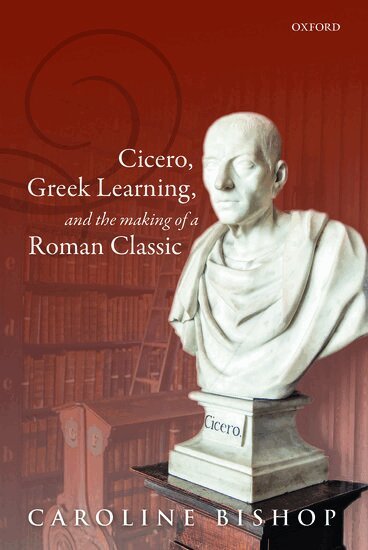
    Cicero, Greek Learning, and the Making of a Roman Classic

    AvCaroline Bishop

    Inbunden, Engelska, 2019

    2 620 kr

    Beställningsvara. Skickas inom 5-8 vardagar. Fri frakt över 249 kr.

    Fler format och utgåvor

    E-bok

    1 756 kr

    E-bok

    1 756 kr

    Beskrivning

    The Roman statesman, orator, and author Marcus Tullius Cicero is the embodiment of a classic: his works have been read continuously from antiquity to the present, his style is considered the model for classical Latin, and his influence on Western ideas about the value of humanistic pursuits is both deep and profound. However, despite the significance of subsequent reception in ensuring his canonical status, Cicero, Greek Learning, and the Making of a Roman Classic demonstrates that no one is more responsible for Cicero's transformation into a classic than Cicero himself, and that in his literary works he laid the groundwork for the ways in which he is still remembered today. The volume presents a new way of understanding Cicero's career as an author by situating his textual production within the context of the growth of Greek classicism: the movement had begun to flourish shortly before his lifetime and he clearly grasped its benefits both for himself and for Roman literature more broadly. By strategically adapting classic texts from the Greek world, and incorporating into his adaptations the interpretations of the Hellenistic philosophers, poets, rhetoricians, and scientists who had helped enshrine those works as classics, he could envision and create texts with classical authority for a parallel Roman canon. Ranging across a variety of genres - including philosophy, rhetoric, oratory, poetry, and letters - this close study of Cicero's literary works moves from his early translation of Aratus' poetry (and its later reappearance through self-quotation) to Platonizing philosophy, Aristotelian rhetoric, Demosthenic oratory, and even a planned Greek-style letter collection. Juxtaposing incisive analysis of how Cicero consciously adopted classical Greek writers as models and predecessors with detailed accounts of the reception of those figures by Greek scholars of the Hellenistic period, the volume not only offers ground-breaking new insights into Cicero's ascension to canonical status, but also a salutary new account of Greek intellectual life and its effect on Roman literature.

    Produktinformation

    • Utgivningsdatum:2019-01-10
    • Mått:163 x 241 x 28 mm
    • Vikt:712 g
    • Format:Inbunden
    • Språk:Engelska
    • Antal sidor:372
    • Förlag:OUP OXFORD
    • ISBN:9780198829423

    Utforska kategorier

    • Forntidens historia inom Historia och arkeologi
    • Litteraturvetenskap inom Skönlitteratur

    Mer om författaren

    Caroline Bishop is Assistant Professor of Classics at Texas Tech University. She specializes in Greek and Roman intellectual history, Cicero and Latin prose, and the mechanics of reception in the ancient world, with a particular focus on classicism, canon formation, and cultural exchange from Greece to Rome. Her current research centres on questions of reading and interpretation in antiquity, and the ways in which ancient intellectual culture intersected with ancient literary production.

    Recensioner i media

    All readers of Cicero will find value in this book, as will anyone interested in the impact of Greek intellectual culture on Roman literature. There is a wealth of detail, and Bishop offers a host of fresh insights into the care and effort Cicero took to make his works into Roman "classics."

    Innehållsförteckning

    • Frontmatter Texts and Abbreviations 0: Introduction 0.1: Cicero's intellectual politics: textual production as a new man 0.2: Greek intellectual culture and Roman classicism 0.3: iGraecus et scholasticus: Roman ambivalence towards Greek culture 0.4: Intellectual and scholastic culture in Republican Rome 0.5: Conclusion and chapter summary 1: Aratus 1.1: Cicero and the virtues of translation 1.2: Aratus' Phaenomena 1.3: The Phaenomena in Hellenistic Greece 1.4: Cicero's Aratea 1.5: Conclusion 2: Plato 2.1: The features of Cicero's Plato 2.2: Plato in Philo's Academy 2.3: Plato in Antiochus' Academy 2.4: Scepticism and syncretism in Cicero's Timaeus 2.5: Conclusion 3: Aristotle 3.1: The features of Cicero's Aristotle 3.2: Aristotle, Philo, and in utramque partem debate 3.3: Aristotle in Cicero's rhetorical works 3.4: Conclusion 4: Demosthenes 4.1: Demosthenes' Hellenistic reputation 4.2: Demosthenes in Cicero's early career 4.3: Demosthenes, tyranny, and Atticism in Cicero's late career 4.3.1: Brutus 4.3.2: De Optimo Genere Oratorum and Orator 4.3.3: The Philippics 5: Letters 5.1: Cicero and the world of Greek letters 5.1.1: Greek (and Roman) epistolary theory 5.1.2: Greek letter collections 5.2: Cicero's (planned) letter collection 5.3: Conclusion 6: Cicero 6.1: Modelling reception in the philosophical dialogues 6.2: Hellenistic philosophy and Roman poetry in the philosophical dialogues 6.3: The Aratea in De Natura Deorum 6.4: Cicero's poetry in De Divinatione 6.5: Conclusion 7: Conclusion Endmatter Bibliography Index