• Fri frakt över 249 kr
  • •
  • Snabba leveranser
  • •
  • Billiga böcker
Kundservice

Du är på sajten för privatpersoner.

Företag, bibliotek eller offentlig verksamhet?

Du handlar på classic.bokus.com, där alla dina funktioner finns intakta.
Till classic.bokus.com
Bokus logotyp. Gå till startsidan.
  • Erbjudanden
  • Nyheter
  • Student
  • Topplistor
  • Barn & ungdom
  • Bokus Play
  • E-böcker
  • Pocketböcker
  • Spel & pussel

10% studentrabatt med kod TERM26

Sidfot

Mina sidor

    Hjälp

    • Kundservice
    • Vanliga frågor och svar
    • Frakt och leverans
    • Retur vid ångerrätt
    • Reklamera vara
    • Betalning
    • Köpvillkor
    • Allmänna villkor
    • Information om webbplatsens tillgänglighet

    Om Bokus

    • Om oss
    • Pressrum
    • För studenter
    • För företag
    • För bibliotek och offentlig verksamhet
    • För leverantörer
    • Hållbarhet

    Populärt

    • Aktuella erbjudanden
    • Presentkort
    • Studentlitteratur
    • Nya böcker
    • Topplistor
    • Signerade böcker
    • Engelska böcker

    Inspiration

    • Boktips
    • BookTok
    • Populära bokserier
    • Barnbokskaraktärer
    • Populära författare
    Logotyp för Bokus
    Följ oss på Facebook (extern länk)Följ oss på Instagram (extern länk)Följ oss på YouTube (extern länk)Följ oss på TikTok (extern länk)
    bokus @ CookiesAnpassa cookiesIntegritetspolicyKöpvillkor
    Till Citymail hemsida (extern länk)Till Budbee hemsida (extern länk)Till Postnord hemsida (extern länk)Till Schenker hemsida (extern länk)Till Early Bird hemsida (extern länk)Till Walleys hemsida (extern länk)
    1. Historia och arkeologi
    2. Historia
    3. Allmän historia och världshistoria

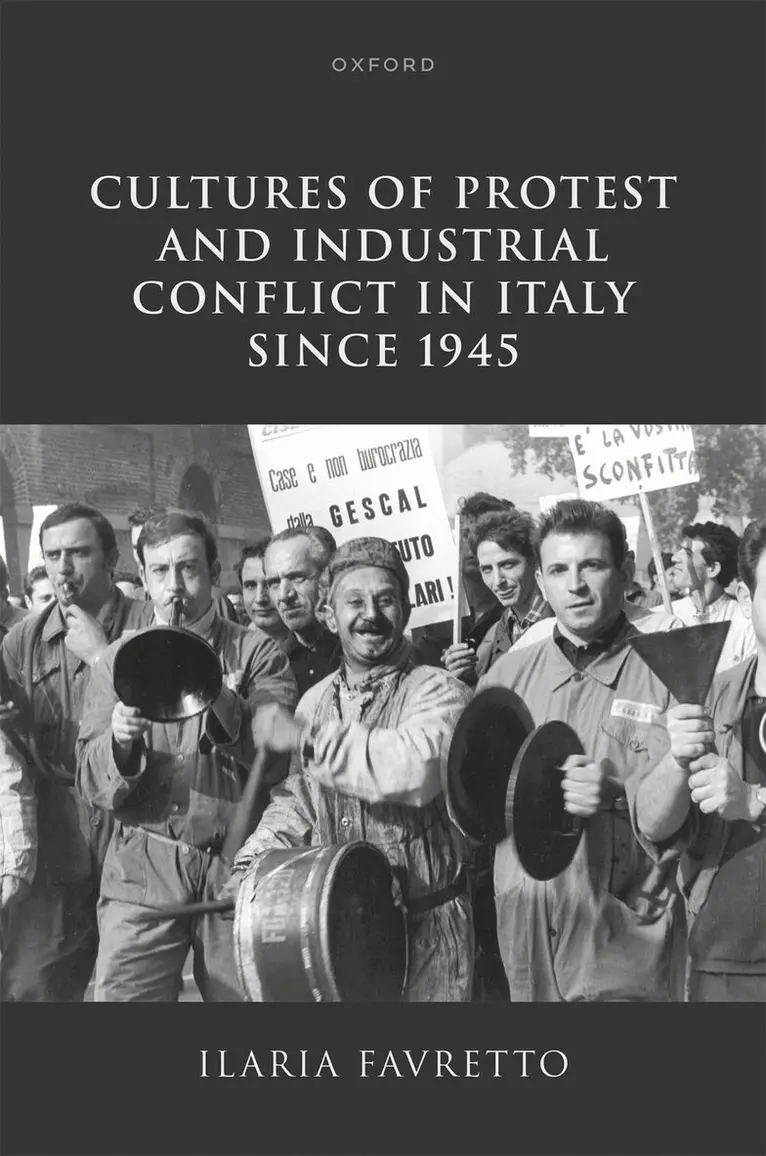
    Cultures of Protest and Industrial Conflict in Italy since 1945

    AvIlaria Favretto

    Inbunden, Engelska, 2025

    1 699 kr

    Beställningsvara. Skickas inom 5-8 vardagar. Fri frakt över 249 kr.

    Fler format och utgåvor

    E-bok

    1 517 kr

    E-bok

    1 517 kr

    Beskrivning

    The history of the twentieth century in Italy is marked by industrial unrest. And yet, our knowledge of the cultures that informed those protests and, equally important, of the forms they took is still limited, leaving important questions unanswered on their meanings, functions, mechanisms of transmission, continuities, and discontinuities with earlier waves of mobilization and global connections. In this illuminating and thought-provoking book, Favretto explores the protest methods and the underpinning protest cultures of Italian industrial workers from the collapse of Fascism to the present day. Challenging common portrayals of the labour movement as unimaginative and conventional in its tactics, the book demonstrates the variety of forms of industrial protest, encompassing actions such as sit-ins, protest camps, and hunger strikes, which are typically not associated with industrial conflict. Transcending the boundaries of contemporary history, the book also uncovers the persistence and reinvention of tactics commonly identified with the pre-modern period, such as time wasting, sabotage, and theft, and it shows the influence of earlier cultures and carnivalesque practices of popular contention, such as charivari, known as rough music in Britain and scampanata and other names in Italy. By analysing tactics and cultures distinct from the official union protest repertoire that studies of post-1945 Italy and the labour movement often presume obsolete, the book provides a more profound understanding of workers' protest practices and underlying cultures and a better comprehension of their breadth and scope. It casts new light on the impact of internal migration on workers' protest rituals and practices, working-class women's participation in collective action, Communists' and Catholics' distinctive protest cultures, and, moving to recent decades, the effects of de-industrialisation on industrial conflict and its forms. The book fills an important gap in the study of the Italian labour movement and Italian history, enriching our understanding of the mechanisms behind the transmission and innovation of protest cultures and tactics. Its attention to the foreign experiences that shaped Italian labour industrial conflicts and analysis of tactics that have seen worldwide usage over extended periods also make it an essential contribution to a global history of protest.

    Produktinformation

    • Utgivningsdatum:2025-10-15
    • Mått:160 x 240 x 25 mm
    • Vikt:812 g
    • Format:Inbunden
    • Språk:Engelska
    • Antal sidor:400
    • Förlag:OUP OXFORD
    • ISBN:9780198853992
    • Utmärkelser:Winner, 2025 American Association for Italian Studies Book Prize History, Society and Politics

    Utforska kategorier

    • Allmän historia och världshistoria inom Historia och arkeologi
    • Revolutioner och uppror inom Historia och arkeologi
    • Industrialismen och industrihistoria inom Historia och arkeologi

    Mer om författaren

    Ilaria Favretto is a cultural and intellectual historian of modern and contemporary Europe with three main areas of expertise: protest and social movements; memory and identity; and left-wing parties' political ideas, cultures, and practices in the post-1945 period. She obtained her first degree in Milan and then a PhD at Queen Mary College (University of London). After a post-doctoral fellowship at St Antony's College, Oxford, she worked at the University of Milan and then Kingston University (London).

    Recensioner i media

    ...a remarkably informative and insightful book...will transform our understanding of a period of Italian history filled with industrial conflict... an important counterbalance to the institutional focus of much Italian labour history... the book succeeds in providing an empirically based account of the variety of protest actions in industrial conflict, as well as making the case that such conflict is somewhat different to what we often encounter in the historiography: it is more worker-led than union-led, embracing both the premodern and the modern, and open to the influence of political protest in other parts of the world.

    Innehållsförteckning

    • Introduction 1: 'Red' and Catholic Protest Cultures in the 1940s and 1950s 2: Jibes in the Jakes: Protest at a Time of Acquiescence 3: 1960s: The Resurgence of Industrial Action between Tradition and Innovation 4: Marching with Donkeys: Folk Traditions, Charivari, and the 1960s and 1970s Protests 5: Sit-Ins, Protest Camps, Factory Occupations, and Self-Management 6: Refusal to Work, Absenteeism, and Sabotage 7: Reinventing Marches 8: Striking Women: Gender, Union Politics, and Protest 9: The Post-1980s Retreat: Factory Workers 'Go to the Roof' Conclusion