• Fri frakt över 249 kr
  • •
  • Snabba leveranser
  • •
  • Billiga böcker
Kundservice

Du är på sajten för privatpersoner.

Företag, bibliotek eller offentlig verksamhet?

Du handlar på classic.bokus.com, där alla dina funktioner finns intakta.
Till classic.bokus.com
Bokus logotyp. Gå till startsidan.
  • Erbjudanden
  • Nyheter
  • Student
  • Topplistor
  • Barn & ungdom
  • Bokus Play
  • E-böcker
  • Pocketböcker
  • Spel & pussel

10% rabatt på allt med kod NYSTART10 →

Sidfot

Mina sidor

    Hjälp

    • Kundservice
    • Vanliga frågor och svar
    • Frakt och leverans
    • Retur vid ångerrätt
    • Reklamera vara
    • Betalning
    • Köpvillkor
    • Allmänna villkor
    • Information om webbplatsens tillgänglighet

    Om Bokus

    • Om oss
    • Pressrum
    • För studenter
    • För företag
    • För bibliotek och offentlig verksamhet
    • För leverantörer
    • Hållbarhet

    Populärt

    • Aktuella erbjudanden
    • Presentkort
    • Studentlitteratur
    • Nya böcker
    • Topplistor
    • Signerade böcker
    • Engelska böcker

    Inspiration

    • Boktips
    • BookTok
    • Populära bokserier
    • Barnbokskaraktärer
    • Populära författare
    Logotyp för Bokus
    Följ oss på Facebook (extern länk)Följ oss på Instagram (extern länk)Följ oss på YouTube (extern länk)Följ oss på TikTok (extern länk)
    bokus @ CookiesAnpassa cookiesIntegritetspolicyKöpvillkor
    Till Citymail hemsida (extern länk)Till Budbee hemsida (extern länk)Till Postnord hemsida (extern länk)Till Schenker hemsida (extern länk)Till Early Bird hemsida (extern länk)Till Walleys hemsida (extern länk)
    1. Ekonomi och Ledarskap
    2. Nationalekonomi
    3. Internationell ekonomi

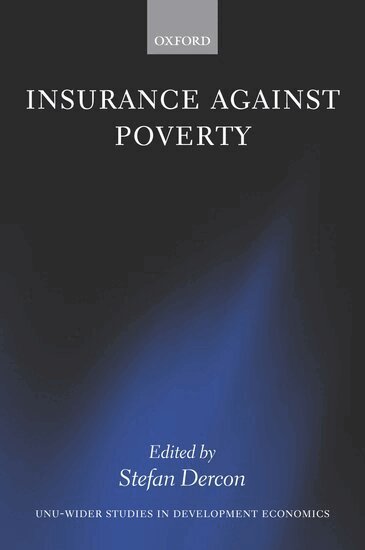
    Insurance Against Poverty

    AvStefan Dercon

    Inbunden, Engelska, 2004

    Del i serien WIDER Studies in Development Economics

    3 486 kr

    Beställningsvara. Skickas inom 5-8 vardagar. Fri frakt över 249 kr.

    Beskrivning

    Poor people in developing countries are often affected by droughts, floods, illness, crop failure, job loss, and economic downturns. Much of their energy goes into coping with these shocks and into day-to-day survival. While insurance and credit markets, combined with widespread social security, provide an important cushion against poverty in rich countries, the need for immediate survival may lock the poor into persistent poverty in developing countries.The poor in developing countries do have informal mechanisms to cope with risk and misfortune. These are based on income diversification, risk avoidance, self-insurance by saving together with family, and community-based mutual assistance. Nevertheless, the scope of these mechanisms remains limited. Repeated individual-specific shocks such as illness or pests, or covariate risks associated with drought, flood, or recession, undermine the ability of individuals and their families to cope with risk.We now know much more about vulnerability to risk and how poor people cope. Even more importantly, we have learned much about the large long-term consequences of these risks, which condemns many to persistent poverty and excludes them from economic growth. But there is much that can be done. The micro-level studies that underpin this book offer new insights on how effective public action could be more effective in protecting the vulnerable against persistent poverty. Policy should focus on providing a comprehensive menu of ex-ante and post-crisis protection mechanisms, including new forms of insurance, savings, safety nets, and the means to strengthen the poor's asset base. Local communities have a big role to play: public funds should not be used to replace indigenous community-based support networks; rather they should be used to build on the strengths of these networks to ensure broader and more effective protection.With numerous thematic chapters and case studies of both best practice and of failure, from a mix of low-income and middle-income countries across the developing world, this book evaluates alternatives in widening insurance and protection provision, and makes an important contribution to the topical field of insurance and risk.

    Produktinformation

    • Utgivningsdatum:2004-11-11
    • Mått:162 x 240 x 30 mm
    • Vikt:869 g
    • Format:Inbunden
    • Språk:Engelska
    • Serie:WIDER Studies in Development Economics
    • Antal sidor:488
    • Förlag:OUP OXFORD
    • ISBN:9780199276837

    Utforska kategorier

    • Internationell ekonomi inom Ekonomi och Ledarskap
    • Sociala och etiska frågor inom Samhälle och politik
    • Finansiering inom Ekonomi och Ledarskap

    Mer om författaren

    Stefan Dercon is a University Lecturer at the University of Oxford, and has been Professor in Development Economics at the Katholieke Universiteit Leuven, Belgium, a Research Officer at the centre of the Study of African Economies, a Research Fellow at Nuffield College, Oxford, and a Visiting Professor at the University of Addis Ababa, Ethiopia.

    Recensioner i media

    "To conclude, this book provides a set of useful answers on crucial policy questions and deserves wide reading. It also points to the potential for a rich agenda of research questions for development economists to address"

    Innehållsförteckning

    • Overview ; RISK AND INSURANCE: EVIDENCE ; 1. Risk, Insurance and Poverty: a review ; 2. Consumption Smoothing Across Space: Testing Theories of Risk-Sharing in the ICRISAT Study Region of South India ; RISK AND POVERTY: THEORY ; 3. The Two Poverties ; 4. Inequality and Risk ; RISK AND POVERTY PERSISTENCE ; 5. Household Income Dynamics in Rural China ; 6. Health, Shocks and Poverty Persistence ; 7. The Macroeconomic Repercussions of Agricultural Shocks and their Implications for Insurance ; IDENTIFYING THE VULNERABLE ; 8. Measuring Vulnerability to Poverty ; 9. Targeting and Informal Insurance ; RISK AND SOCIAL INSTITUTIONS ; 10. Risk-Sharing and Endogenous Network Formation ; 11. Is a Friend in Need a Friend Indeed? Inclusion and Exclusion in Mutual Insurance Networks in Southern Ghana ; 12. The Gradual Erosion of the Social Security Function of Customary Land Tenure Arrangements in Lineage-Based Societies ; SAFETY NETS AND SOCIAL INSTITUTIONS ; 13. Do Public Transfers Crowd Out Private Transfers? Evidence from a Randomized Experiment in Mexico ; 14. Food Aid and Informal Insurance ; 15. Why isn't there more Financial Intermediation in Developing Countries? ; DEVELOPING BETTER PROTECTION FOR THE POOR ; 16. Can Food-for-Work Programmes Reduce Vulnerability? ; 17. Learning from Visa(R)? Incorporating Insurance Provisions in Microfinance Contracts ; 18. Can Financial Markets be Tapped to Help Poor People Cope with Weather Risks? ; CONCLUSION ; 19. Risk, Poverty, and Public Action