• Fri frakt över 249 kr
  • •
  • Snabba leveranser
  • •
  • Billiga böcker
Kundservice

Du är på sajten för privatpersoner.

Företag, bibliotek eller offentlig verksamhet?

Du handlar på classic.bokus.com, där alla dina funktioner finns intakta.
Till classic.bokus.com
Bokus logotyp. Gå till startsidan.
  • Erbjudanden
  • Nyheter
  • Student
  • Topplistor
  • Barn & ungdom
  • Bokus Play
  • E-böcker
  • Pocketböcker
  • Spel & pussel

10% rabatt på allt med kod: NYSTART10 →

Sidfot

Mina sidor

    Hjälp

    • Kundservice
    • Vanliga frågor och svar
    • Frakt och leverans
    • Retur vid ångerrätt
    • Reklamera vara
    • Betalning
    • Köpvillkor
    • Allmänna villkor
    • Information om webbplatsens tillgänglighet

    Om Bokus

    • Om oss
    • Pressrum
    • För studenter
    • För företag
    • För bibliotek och offentlig verksamhet
    • För leverantörer
    • Hållbarhet

    Populärt

    • Aktuella erbjudanden
    • Presentkort
    • Studentlitteratur
    • Nya böcker
    • Topplistor
    • Signerade böcker
    • Engelska böcker

    Inspiration

    • Boktips
    • BookTok
    • Populära bokserier
    • Barnbokskaraktärer
    • Populära författare
    Logotyp för Bokus
    Följ oss på Facebook (extern länk)Följ oss på Instagram (extern länk)Följ oss på YouTube (extern länk)Följ oss på TikTok (extern länk)
    bokus @ CookiesAnpassa cookiesIntegritetspolicyKöpvillkor
    Till Citymail hemsida (extern länk)Till Budbee hemsida (extern länk)Till Postnord hemsida (extern länk)Till Schenker hemsida (extern länk)Till Early Bird hemsida (extern länk)Till Walleys hemsida (extern länk)
    1. Medicin
    2. Andra medicinska specialiteter
    3. Psykiatri

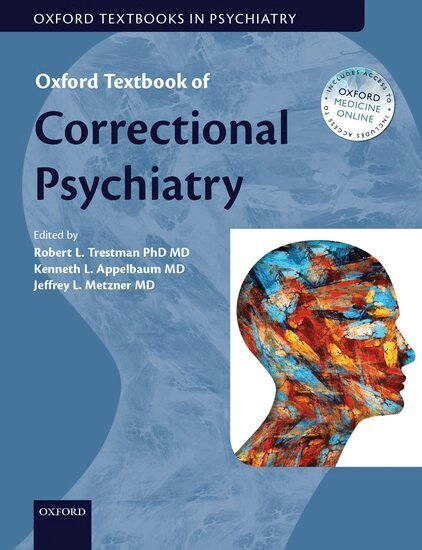
    Oxford Textbook of Correctional Psychiatry

    AvRobert Trestman,Robert Trestman

    Inbunden, Engelska, 2015

    Del i serien Oxford Textbooks in Psychiatry

    2 281 kr

    Skickas . Fri frakt över 249 kr.

    Beskrivning

    Correctional psychiatry has received increasing recognition as an area of practice with unique skills and knowledge. The Oxford Textbook of Correctional Psychiatry brings together American and international experts to provide a comprehensive overview of the field. Students and psychiatric residents will find basic information that prepares them for clinical rotations, and psychiatrists working in jails and prisons will find a detailed review of the complex issues that arise in these settings.The Oxford Textbook of Correctional Psychiatry contains 73 chapters divided into 14 sections. The first three sections address history, structure, and processes including chapters on case law, human rights, ethics, organization and funding of systems, and stages of patient management that cover initial assessments through re-entry. The next three sections review in turn a broad array of management issues, emergencies, and psychopharmacology topics. Among other topics, these sections include chapters on sleep, detoxification, reassessment of community diagnoses and treatments, diversion programs, levels of care, malingering, substance use within facilities, and formulary management. Section seven has chapters on common psychiatric disorders, relevant medical disorders, and pain management. Sections eight through ten focus on psychotherapeutic options, suicide risk management, and addictions treatment. Chapters on aggression, self-injury, and other behavioral challenges appear in Section eleven. Section twelve reviews unique assessment and treatment needs of many distinct population groups. Special topics such as forensics, psychological testing, sexual assaults, quality improvement, training, and research, appear in Section thirteen, followed by a section devoted to current resources in correctional healthcare. The range of topics covered and the number of prominent contributors set this book apart from other available resources. Readers at all stages of their careers will gain the depth of understanding and practical information they need to approach all of the common clinical, organizational, and ethical challenges they face.This print edition of Oxford Textbook of Correctional Psychiatry comes with a year's access to the online version on Oxford Medicine Online. By activating your unique access code, you can read and annotate the full text online, follow links from the references to primary research materials, and view, enlarge and download all the figures and tables. Oxford Medicine Online is mobile optimized for access when and where you need it.

    Produktinformation

    • Utgivningsdatum:2015-07-09
    • Mått:221 x 286 x 26 mm
    • Vikt:1 365 g
    • Format:Inbunden
    • Språk:Engelska
    • Serie:Oxford Textbooks in Psychiatry
    • Antal sidor:468
    • Förlag:OUP USA
    • ISBN:9780199360574

    Utforska kategorier

    • Psykiatri inom Medicin
    • Rättsordning inom Juridik

    Mer om författaren

    Robert L. Trestman is a Professor of Medicine, Psychiatry and Nursing at UCONN, and heads UConn Health Correctional Managed Health Care. He received his PhD in Psychology and MD from the University of Tennessee, and trained in psychiatry and neurobiology at the Mt. Sinai School of Medicine. Dr. Trestman has studied the neurobiology and treatment of people with severe mood and personality disorders, and conducts translational research on correctional health.Kenneth Appelbaum is a Clinical Professor of Psychiatry and Director of Correctional Mental Health Policy and Research in Commonwealth Medicine (CWM), the health care consulting division of the University of Massachusetts Medical School. From 1998 - 2007 he served as Director of Mental Health for the CWM correctional health program with responsibility for mental health services provided to all inmates in Massachusetts Department of Correction facilities, including Bridgewater State Hospital. He currently provides consultations on staffing, programming, policy, and safety for state and federal mental health and prison mental health systems.Jeffrey L. Metzner received his M.D. from the University of Maryland Medical School in 1975 and completed his psychiatric residency at the University of Colorado's Department of Psychiatry during 1979. He is a Clinical Professor of Psychiatry at the University of Colorado School of Medicine in Denver, Colorado, where he is also Associate Director of the forensic fellowship program.Dr. Metzner has written extensively on the psychiatric care of prison populations. He has provided consultation to judges, special masters, monitors, state departments of corrections, city and county jails, U.S. Department of Justice, the National Prison Project, and others involved in the field of correctional psychiatry in over 36 states.

    Recensioner i media

    With its wide coverage, excellent authors, and up-to-date practical guidance, this text is a very valuable reference for psychiatrists working in corrections and for those interested in the ways in which correctional psychiatry differs from general psychiatry.

    Innehållsförteckning

    • Introduction ; Section 1: Context and Perspective ; 1. History of Imprisonment, Bruce Arrigo and S. Loren Trull ; 2. Mental Illness Management in Corrections, Charles Scott and Brian Falls ; 3. Formative Case Law and Litigation, Mohamedu F. Jones ; 4. Human Rights, Jamie Fellner ; 5. From the Inside Out: Perspectives of Past offenders, Brad Bogue and Robert L. Trestman ; Section 2: Organization, Structure and Function of correctional Institutions ; 6. Jails & Prisons, Joel Dvoskin and Melody C. Brown ; 7. Working Inside The Walls, Bruce C. Gage, ; 8. Ethics, Philip Candilis and Eric Huttenbach ; 9. Communication, Dean Aufderheide ; 10. Funding of Correctional Healthcare and Its Implications, Robert L. Trestman ; Section 3: Patient Management Processes ; 11. Screening and Assessments, Michael Maloney, Jeffrey Metzner and Joel Dvoskin ; 12. Conducting Interviews, Li-Wen Lee ; 13. Population Management, Robert L. Trestman and Kenneth L. Appelbaum ; 14. Disciplinary Infractions and Restricted Housing, Mary Perrien and Maureen L. O'Keefe ; 15. Community Re-Entry Preparation/ Coordination, Henry Dlugacz ; Section 4: Common Management Issues ; 16. Sleep, Bernice S Elger ; 17. Detoxification or Supervised Withdrawal, Rebecca Lubelczyk ; 18. Adjustment Disorders, Graham Glancy and Stefan Treffers ; 19. Transition of Pharmacology From Community To Corrections, Robert L. Trestman ; 20. Diagnostic Review and Revision, Sohrab Zahedi ; 21. Diversion Programs and Alternatives To Incarceration, Merrill Rotter and Virginia Barber-Rioja ; 22. Levels of Care, Jeffrey L. Metzner and Kenneth L. Appelbaum ; 23. Evaluation of Malingering In Corrections, James L. Knoll ; 24. Intoxication and Drugs in Facilities, Jason Ourada and Kenneth L. Appelbaum ; Section 5: Emergencies ; 25. Crisis Assessment and Management, Reena Kapoor ; 26. Use of Restraint and Emergency Medication, Gerard Gagne ; 27. Hospitalization, Michael Norko, Craig Burns and Charles Dike ; Section 6: General Pharmacology Issues ; 28. Formulary Management/ Pharmacy and Therapeutics Committees, Robert Berger, Robyn Wahl Phar and Paul Chaplin ; 29. Hypnotic Agents and Controlled Substances, Ingrid Li, Arthur Brewer, and Rusty Reeves ; 30. Medication Administration and Management: Directly Observed Therapy, Catherine Knox ; 31. Prescribed Medication Abuse: Limitless Creativity, Tony Tamburello ; Section 7: Disorders and Syndromes ; 32. Diagnostic Prevalence and Comorbidity, Stuart Thomas, ; 33. Psychotic Disorders, Johann Brink and Todd Tomita ; 34. Mood Disorders, Jayesh Kamath and Ajay Shay ; 35. Anxiety Disorders Including Post Traumatic Stress Disorder (PTSD), Catherine Lewis ; 36. Personality Disorders, Sundeep Virdi and Robert L Trestman ; 37. Attention Deficit Disorders, Kenneth L Appelbaum and Kevin Murphy ; 38. General Medical Disorders With Psychiatric Implications, Warren J Fergusson and Erik Garcia ; 39. Psychiatric Aspects of Pain Management, Robert L Trestman ; Section 8: Psychotherapeutic Options ; 40. Applicability of the Recovery Model in Corrections, Debra A Pinals and Joel T Andrade ; 41. Individual Psychotherapy, James Knoll ; 42. Group Psychotherapy, Shama Chaiken and Brittany Brizendine ; Section 9: Suicide Risk Management ; 43. Suicide Risk Management, Jeffrey L Metzner and Kerry Hughes ; Section 10: Addictions Treatment ; 44. Programming, Patrece Hairston and Ingrid A Binswanger ; 45. Dual Diagnosis: Coordination between Disciplines, Faye S T Axman ; 46. Pharmacotherapy For Substance Use Disorders Within Correctional Facilities, Sarah Wakeman and Josiah D Rich ; 47. Transition to The Community, Jamie Meyer and Frederick Altice ; Section 11: Aggression, Self-Injury and Misconduct ; 48. Aggression, Robert L. Trestman ; 49. Self-Injurious Behaviors, Kenneth L Appelbaum ; 50. Behavior Management Plans, Henry Schmidt III and Andre M Ivanoff ; Section 12: Distinct Populations ; 51. Gender-Specific Treatment, Catherine Lewis ; 52. Developmental Disabilities, Barbara E McDermott ; 53. Traumatic Brain Injuries, Pamela Diamond ; 54. Veterans, James F DeGroot ; 55. Lesbian, Gay, Bisexual, Transsexual and Intersex Issues, Randi Kaufman, Kevin Kapila and Kenneth L Appelbaum ; 56. Juveniles, Carl C Bell ; 57. Geriatrics, Kristin G Cloyes and Kathy Burns ; 58. Gangs, Annette Hanson ; 59. Sex offenders, Fabian M Saleh, Albert Grudzinskas and H. Martin Malin ; 60. Cultural Competence, Reena Kapoor and Ezra Griffith ; Section 13: Special Topics ; 61. Forensic Issues, Erik Roskes and Donna Vanderpool ; 62. Psychological Testing, Ira Packer and Tasha Phillips ; 63. Standards and Accreditation for Jails, Prisons, and Juvenile Facilities, Joseph Penn ; 64. Hunger Strikes, Emily Keram ; 65. Sexual Assaults, Robert W Dumond and Doris A. Dumond ; 66. Systems Monitoring and Quality Improvement, Jeffrey L Metzner ; 67. Leadership, Training and Educational Opportunities, Ray F Patterson ; 68. Role of Clinical Trainees, Charles Scott and Brian Holoyda ; 69. International Perspectives and Practice Differences, Lindsay Dg Thomson ; 70. Research and Program Evaluation, Nancy Wolff ; 71. The Future of Correctional Psychiatry: Evolving and Recommended Standards, Kenneth L Appelbaum, Jeffrey L Metzner and Robert L Trestman ; Appendix 1: Resources, Stacey K Rich and Robert L Trestman