• Fri frakt över 249 kr
  • •
  • Snabba leveranser
  • •
  • Billiga böcker
Kundservice

Du är på sajten för privatpersoner.

Företag, bibliotek eller offentlig verksamhet?

Du handlar på classic.bokus.com, där alla dina funktioner finns intakta.
Till classic.bokus.com
Bokus logotyp. Gå till startsidan.
  • Erbjudanden
  • Nyheter
  • Student
  • Topplistor
  • Barn & ungdom
  • Bokus Play
  • E-böcker
  • Pocketböcker
  • Spel & pussel

10% rabatt på allt med kod: NYSTART10 →

Sidfot

Mina sidor

    Hjälp

    • Kundservice
    • Vanliga frågor och svar
    • Frakt och leverans
    • Retur vid ångerrätt
    • Reklamera vara
    • Betalning
    • Köpvillkor
    • Allmänna villkor
    • Information om webbplatsens tillgänglighet

    Om Bokus

    • Om oss
    • Pressrum
    • För studenter
    • För företag
    • För bibliotek och offentlig verksamhet
    • För leverantörer
    • Hållbarhet

    Populärt

    • Aktuella erbjudanden
    • Presentkort
    • Studentlitteratur
    • Nya böcker
    • Topplistor
    • Signerade böcker
    • Engelska böcker

    Inspiration

    • Boktips
    • BookTok
    • Populära bokserier
    • Barnbokskaraktärer
    • Populära författare
    Logotyp för Bokus
    Följ oss på Facebook (extern länk)Följ oss på Instagram (extern länk)Följ oss på YouTube (extern länk)Följ oss på TikTok (extern länk)
    bokus @ CookiesAnpassa cookiesIntegritetspolicyKöpvillkor
    Till Citymail hemsida (extern länk)Till Budbee hemsida (extern länk)Till Postnord hemsida (extern länk)Till Schenker hemsida (extern länk)Till Early Bird hemsida (extern länk)Till Walleys hemsida (extern länk)
    1. Samhälle och politik
    2. Krig och försvar
    3. Vapen och utrustning
    4. Kärnvapen

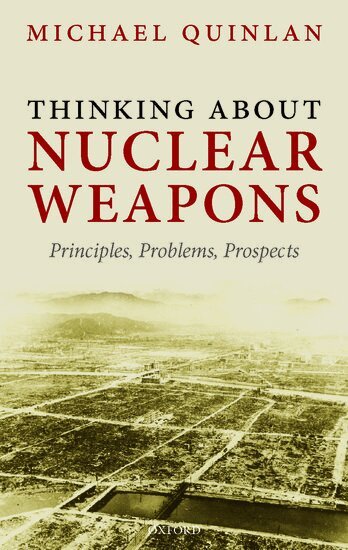
    Thinking About Nuclear Weapons

    Principles, Problems, Prospects

    AvMichael Quinlan

    Inbunden, Engelska, 2009

    1 382 kr

    Beställningsvara. Skickas inom 5-8 vardagar. Fri frakt över 249 kr.

    Fler format och utgåvor

    E-bok

    870 kr

    Beskrivning

    The book reflects the author's experience across more than forty years in assessing and forming policy about nuclear weapons, mostly at senior levels close to the centre both of British governmental decision-making and of NATO's development of plans and deployments, with much interaction also with comparable levels of United States activity in the Pentagon and the State department. Part I of the book seeks to distill, from this exceptional background of practical experience, basic conceptual ways of understanding the revolution brought about by nuclear weapons. It also surveys NATO's progressive development of thinking about nuclear deterrence, and then discusses the deep moral dilemmas posed - for all possible standpoints - by the existence of such weapons. Part II considers the risks and costs of nuclear-weapon possession, including proliferation dangers, and looks at both successful and unsuccessful ideas about how to manage them. Part III illustrates specific issues by reviewing the history and current policies of one long-established possessor, the United Kingdom, and two more recent ones, India and Pakistan. Part IV turns to the future, examines the goal of eventually abolishing all nuclear armouries, and then discusses the practical agenda, short of such a goal, which governments can usefully tackle in reducing the risks of proliferation and other dangers while not surrendering prematurely the war-prevention benefits which nuclear weapons have brought since 1945.This book is a project of the Oxford Leverhulme Programme on the Changing Character of War.

    Produktinformation

    • Utgivningsdatum:2009-02-12
    • Mått:140 x 216 x 18 mm
    • Vikt:386 g
    • Format:Inbunden
    • Språk:Engelska
    • Antal sidor:218
    • Förlag:OUP OXFORD
    • ISBN:9780199563944

    Utforska kategorier

    • Kärnvapen inom Samhälle och politik
    • Internationella relationer inom Samhälle och politik

    Mer om författaren

    Michael Quinlan entered the UK Home Civil Service in 1954. He was Private Secretary to the Parliamentary Under-Secretary of State for Air 1956-58, and to the Chief of the Air Staff 1962-65. From 1968 to 1970 he was one of the Directors of Defence Policy in the Ministry of Defence and from 1970 to 1973 Defence Counsellor in the UK Delegation to NATO in Brussels. After a spell in the Cabinet Office he returned to the Ministry of Defence as Deputy Under-Secretary of State from 1977 to 1981. After service as a Deputy Secretary in the Treasury and then as Permanent Secretary in the Department of Employment he returned to the Ministry of Defence as Permanent Under-Secretary of State from 1988 to 1992. From 1992 to 1999 he was Director of the Ditchley Foundation, which runs a wide-ranging and high-level programme of international conferences. In 2007 he co-authored with General Lord Guthrie a short book on the Just War tradition for Bloomsbury.

    Recensioner i media

    Quinlans reflections on nuclear weapons are thought-provoking and informative...Eloquent and thought-provoking, this is a book that should be enjoyed by a wide audience...This is an excellent book that students of history and international security would do well to consider.

    Innehållsförteckning

    • Foreword ; Preface ; Introduction ; PART I - THE SIGNIFICANCE OF NUCLEAR WEAPONS ; 1. The Nuclear Revolution ; 2. The Tools of Thinking ; 3. Deterrence ; 4. Nuclear Deterrence in NATO ; 5. The Ethics of Nuclear Weapons ; PART II - MANAGING NUCLEAR WEAPONS ; 6. Risks ; 7. Proliferation ; 8. Arms Racing, Costs, and Arms Control ; 9. Easements and Escape Routes ; NATIONAL NUCLEAR-WEAPON POSTURES AND POLICIES: BRITAIN, INDIA, PAKISTAN ; 10. United Kingdom Doctrine and Policy ; 11. Nuclear Weapons in South Asia ; PART IV - THE PATH AHEAD ; 12. The Abolition of Nuclear Armouries? ; 13. The Practical Agenda ; Appendix 1: Nuclear weapons and preventing war ; Appendix 2: The strategic use of nuclear weapons ; Index