• Fri frakt över 249 kr
  • •
  • Snabba leveranser
  • •
  • Billiga böcker
Kundservice

Du är på sajten för privatpersoner.

Företag, bibliotek eller offentlig verksamhet?

Du handlar på classic.bokus.com, där alla dina funktioner finns intakta.
Till classic.bokus.com
Bokus logotyp. Gå till startsidan.
  • Erbjudanden
  • Nyheter
  • Student
  • Topplistor
  • Barn & ungdom
  • Bokus Play
  • E-böcker
  • Pocketböcker
  • Spel & pussel

10% rabatt på allt med kod: NYSTART10 →

Sidfot

Mina sidor

    Hjälp

    • Kundservice
    • Vanliga frågor och svar
    • Frakt och leverans
    • Retur vid ångerrätt
    • Reklamera vara
    • Betalning
    • Köpvillkor
    • Allmänna villkor
    • Information om webbplatsens tillgänglighet

    Om Bokus

    • Om oss
    • Pressrum
    • För studenter
    • För företag
    • För bibliotek och offentlig verksamhet
    • För leverantörer
    • Hållbarhet

    Populärt

    • Aktuella erbjudanden
    • Presentkort
    • Studentlitteratur
    • Nya böcker
    • Topplistor
    • Signerade böcker
    • Engelska böcker

    Inspiration

    • Boktips
    • BookTok
    • Populära bokserier
    • Barnbokskaraktärer
    • Populära författare
    Logotyp för Bokus
    Följ oss på Facebook (extern länk)Följ oss på Instagram (extern länk)Följ oss på YouTube (extern länk)Följ oss på TikTok (extern länk)
    bokus @ CookiesAnpassa cookiesIntegritetspolicyKöpvillkor
    Till Citymail hemsida (extern länk)Till Budbee hemsida (extern länk)Till Postnord hemsida (extern länk)Till Schenker hemsida (extern länk)Till Early Bird hemsida (extern länk)Till Walleys hemsida (extern länk)
    1. Juridik
    2. Särskilda rättsområden
    3. Rättsordning

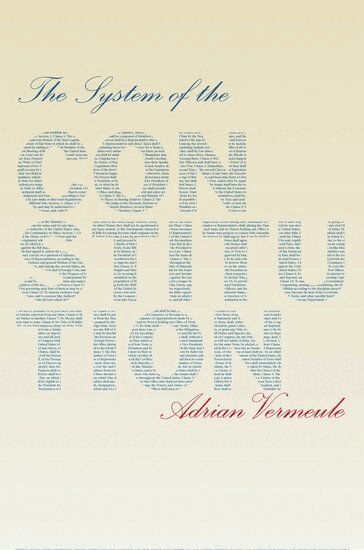
    The System of the Constitution

    AvAdrian Vermeule

    Inbunden, Engelska, 2012

    945 kr

    Beställningsvara. Skickas inom 5-8 vardagar. Fri frakt över 249 kr.

    Beskrivning

    A constitutional order is a system of systems. It is an aggregate of interacting institutions, which are themselves aggregates of interacting individuals. In The System of the Constitution, Adrian Vermeule analyzes constitutionalism through the lens of systems theory, originally developed in biology, computer science, political science and other disciplines. Systems theory illuminates both the structural constitution and constitutional judging, and reveals that standard views and claims about constitutional theory commit fallacies of aggregation and are thus invalid. By contrast, Vermeule explains and illustrates an approach to constitutionalism that considers the systemic interactions of legal and political institutions and of the individuals who act within them.

    Produktinformation

    • Utgivningsdatum:2012-01-12
    • Mått:163 x 236 x 22 mm
    • Vikt:431 g
    • Format:Inbunden
    • Språk:Engelska
    • Antal sidor:232
    • Förlag:OUP USA
    • ISBN:9780199838455

    Utforska kategorier

    • Rättsordning inom Juridik
    • Författningsrätt och förvaltningsrätt inom Juridik

    Mer om författaren

    Adrian Vermeule is Professor of Law at Harvard Law School. He is the author of Mechanisms of Democracy (OUP 2007) and Law and the Limits of Reason (OUP 2008), and co-author with Eric Posner of Terror in the Balance (OUP 2006) and The Executive Unbound (OUP 2011).

    Recensioner i media

    "In this iconoclastic and provocative book, Adrian Vermeule brings a sharp understanding of institutional dynamics and processes to bear on central issues in constitutional analysis. In doing so he unsettles much received wisdom and shows how many arguments in constitutional theory have relied on static or fallacious models of how actors respond in ongoing constitutional systems. This is clarifying and important work at the intersection of political science andlaw, and deserves to be widely read in both fields."--Jacob T. Levy, McGill University

    Innehållsförteckning

    • Introduction: A System of Systems ; 1. Systemic Analysis ; 2. The Structural Constitution ; 3. Dilemmas of the Invisible Hand ; 4. Systemic Feedback Through Selection ; 5. Constitutional Judging ; Conclusion: Two Degrees of Aggregation