• Fri frakt över 249 kr
  • •
  • Snabba leveranser
  • •
  • Billiga böcker
Kundservice

Du är på sajten för privatpersoner.

Företag, bibliotek eller offentlig verksamhet?

Du handlar på classic.bokus.com, där alla dina funktioner finns intakta.
Till classic.bokus.com
Bokus logotyp. Gå till startsidan.
  • Erbjudanden
  • Nyheter
  • Student
  • Topplistor
  • Barn & ungdom
  • Bokus Play
  • E-böcker
  • Pocketböcker
  • Spel & pussel

Må bättre, för mindre! Upp till 50% rabatt på hälsoböcker

Sidfot

Mina sidor

    Hjälp

    • Kundservice
    • Vanliga frågor och svar
    • Frakt och leverans
    • Retur vid ångerrätt
    • Reklamera vara
    • Betalning
    • Köpvillkor
    • Allmänna villkor
    • Information om webbplatsens tillgänglighet

    Om Bokus

    • Om oss
    • Pressrum
    • För studenter
    • För företag
    • För bibliotek och offentlig verksamhet
    • För leverantörer
    • Hållbarhet

    Populärt

    • Aktuella erbjudanden
    • Presentkort
    • Studentlitteratur
    • Nya böcker
    • Topplistor
    • Signerade böcker
    • Engelska böcker

    Inspiration

    • Boktips
    • BookTok
    • Populära bokserier
    • Barnbokskaraktärer
    • Populära författare
    Logotyp för Bokus
    Följ oss på Facebook (extern länk)Följ oss på Instagram (extern länk)Följ oss på YouTube (extern länk)Följ oss på TikTok (extern länk)
    bokus @ CookiesAnpassa cookiesIntegritetspolicyKöpvillkor
    Till Citymail hemsida (extern länk)Till Budbee hemsida (extern länk)Till Postnord hemsida (extern länk)Till Schenker hemsida (extern länk)Till Early Bird hemsida (extern länk)Till Walleys hemsida (extern länk)
    1. Data och IT
    2. Programmeringsböcker

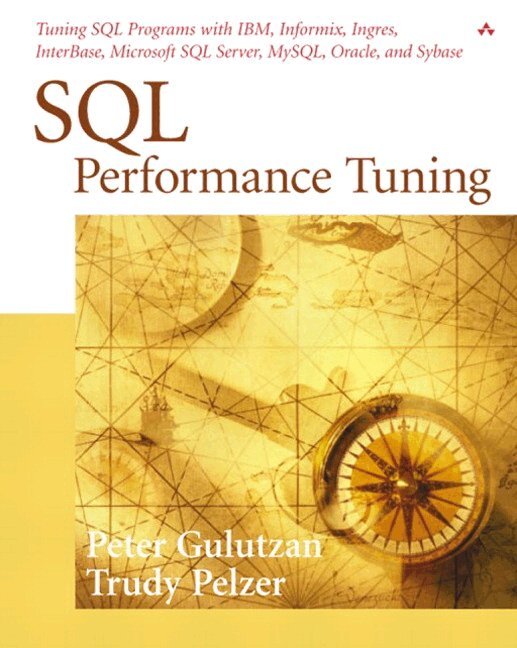
    SQL Performance Tuning

    AvMary O'Brien,Peter Gulutzan

    Häftad, Engelska, 2002

    414 kr

    Beställningsvara. Skickas inom 7-10 vardagar. Fri frakt över 249 kr.

    Beskrivning

    A poorly performing database application can cost each user time, and have an impact on other applications running on the same computer or the same network. This book will help DBA's and programmers improve the performance of their databases. It is not an introduction to SQL, nor is it a tuning manual for a particular SQL implementation. It is a guide for users and programmers who want to improve SQL performance no matter what brand of SQL they use. It will provide tuning tips for common situations, such as how to change a query so it will go faster and how to shift work from the server to the client. All the ideas have been tested against the eight leading DBMS applications. Almost all large organizations and companies today run more than one type of database. This is the only book to cover database tuning for them.

    Produktinformation

    • Utgivningsdatum:2002-09-26
    • Mått:189 x 236 x 26 mm
    • Vikt:810 g
    • Format:Häftad
    • Språk:Engelska
    • Förlag:Pearson Education Limited
    • ISBN:9780201791693

    Utforska kategorier

    • Programmeringsböcker inom Data och IT
    • Databaser inom Data och IT

    Mer om författaren

    Peter Gulutzan is a principal of Ocelot Computer Services Inc. in Alberta, Canada. Peter is a technical writer and computer programmer who has worked with SQL since 1986. With Trudy Pelzer, he has written three books, Optimizing SQL (CMP Books, 1994), Optimizing C with Assembly Code (CMP Books, 1995), and SQL-99 Complete, Really (CMP Books, 1999).Trudy Pelzer is a principal of Ocelot Computer Services Inc. in Alberta, Canada. Trudy is a technical writer and computer programmer who has worked with SQL since 1986. With Peter Gulutzan, she has written three books, Optimizing SQL (CMP Books, 1994), Optimizing C with Assembly Code (CMP Books, 1995), and SQL-99 Complete, Really (CMP Books, 1999). 0201791692AB07012002

    Innehållsförteckning

    • Preface. You Don't Know that Your DBMS Is Good…. You Know that Even Good Tools Work Better in Skilled Hands…. Acknowledgments. 1. Facilis Descensus Averni. This Subject Is Important. The Big Eight. Installation Parameters. Test Results. Portability. Terminology and Expectations. Conventions. Generalities. 2. Simple Searches. General Tuning. Code for Points. Constant Propagation. Dead Code Elimination. Ensure You Use the Right DBMS. Constant Folding. Case-Insensitive Searches. Sargability. The Bottom Line: General Tuning. Specific Tuning. AND. OR. AND Plus OR. NOT. IN. LIKE. SIMILAR. UNION. EXCEPT. INTERSECT. CASE. The Bottom Line: Specific Tuning. Style Notes. Parting Shots. 3. ORDER BY. General Sort Considerations. The ORDER BY Clause. To Sort or Not to Sort. The Bottom Line: General Sorts. Character Sorts. Character Sort Support. Collations. The Bottom Line: Character Sorts. Other Options. Sort Keys. Encouraging Index Use. Preordering. The Bottom Line: Other Options. Parting Shots. 4. GROUP BY. Refresher. Optimal GROUP BY Clauses. HAVING. Alternatives to GROUP BY. The Bottom Line: Optimal GROUP BY Clauses. Sorting. Indexes. The Bottom Line: Sorting. Set Functions and Summary Aggregates. COUNT. SUM Trouble. Multiple Aggregation Levels. Expressions. The Bottom Line: Aggregates. Parting Shots. 5. Joins. Join Plan Strategies. Nested-Loop Joins. Sort-Merge Joins. Hash Joins. Avoid the Join Strategies Join Indexes. Composite Tables. The Bottom Line: Avoiding Joins. Three-Way Joins and Beyond. Old Style versus ANSI Style. Outer Joins. Parting Shots. 6. Subqueries. Refresher. Join versus Subquery. Flattening. The Bottom Line: Join versus Subquery. Syntax Choices. IN. DISTINCT. EXISTS. IN or EXISTS? Double INs. TOP. ALL. Set Operations. The Bottom Line: Syntax Choices. Parting Shots. 7. Columns. How Big Is the Size Factor? Fixed or Variable? The Bottom Line: The Size Factor. Characters. Length Specification. Variant Character Sets. The Bottom Line: Characters. Temporals. The Bottom Line: Temporals. Numbers. Integers. Floats. Decimals. Serials. The Bottom Line: Numbers. Bits. The Bottom Line: Bits. Large Objects. The Bottom Line: LOBs. NULLs. The Bottom Line: NULLs. Column Order Within Rows. The Bottom Line: Column Order. Parting Shots. 8. Tables. The Storage Hierarchy. Pages. Extents. Files. Partitions. Tablespaces. The Bottom Line: Storage Hierarchy. Heaps. ROWID. Migration. Fragmentation. Free Page Space. The Bottom Line: Heaps. Clusters. The Bottom Line: Clusters. The Normal Forms. Breaking Normalization Rules. The Bottom Line: Normalization. Views. Bottom Line: Views. Parting Shots. 9. Indexes. Refresher. B-trees. Searching a B-tree. Inserting into a B-tree. Deleting from a B-tree. Fragmentation. Rebuilding a B-tree. The Bottom Line: B-trees. Types of Indexes. Compound Indexes. Covering Indexes. Unique Indexes. Clustered Indexes. The Bottom Line: Types of Indexes. Bitmap Indexes. The Bottom Line: Bitmap Indexes. Other Index Variations. Index Key Values. The Bottom Line: Index Key Values. Parting Shots. 10. Constraints. NOT NULL. NULL Indicators. The Bottom Line: NOT NULL Constraints. CHECK. The Bottom Line: CHECK Constraints. FOREIGN KEY. The Bottom Line: FOREIGN KEY Constraints. PRIMARY KEY. The Bottom Line: PRIMARY KEY Constraints. UNIQUE. The Bottom Line: UNIQUE Constraints. Triggers. The Bottom Line: Triggers. Disabling Constraints. Defer. Disable. Drop. The Bottom Line: Disabling Constraints. Client Validations. The Bottom Line: Client Validations. Redundant SELECT Clauses. The Bottom Line: Redundant SELECTs. Parting Shots. 11. Stored Procedures. Refresher. Determinism. Advantages of Stored Procedures. Less Traffic. Semiprecompilation. Parameters. Other Tips. The Bottom Line: Stored Procedures. Parting Shots. 12. ODBC. Refresher. Tracing MS Query. SQLPrepare. The Bottom Line: SQLPrepare. Fetch Loops. The Bottom Line: Fetch Loops. Data-Change Statements. The Bottom Line: Data-Change Statements. Catalog Functions. The Bottom Line: Catalog Functions. Parting Shots. 13. JDBC. Connections. Connection Pooling. Connection Settings. Connections and DBMS Info. The Bottom Line: Connections. Query Prepping. Query Statement. Query Syntax. getBestRowIdentifier. ResultSetMetaData. Query Settings The Bottom Line: Query Prepping. Result Sets. How Many Rows? getXXX methods. Close. The Bottom Line: Result Sets. Data Changes. The Bottom Line: Data Changes. Parting Shots. 14. Data Changes. Logs. The Bottom Line: Logs. INSERT. Bulk INSERT. The Bottom Line: INSERT. UPDATE. Dependent UPDATE. Batch UPDATE. The Bottom Line: UPDATE. DELETE. The Bottom Line: DELETE. Ugly Updates. The Bottom Line: Ugly Updates. FETCH and Data Changes. The Bottom Line: FETCH and Data Changes. COMMIT and ROLLBACK. The Bottom Line: COMMIT and ROLLBACK. Parting Shots. 15. Locks. What Is a Lock? Lock Modes. Granularity. Escalation. Intent Locks. The Bottom Line: Locks. Isolation Levels. Concurrency Problems and Isolation Levels. READ UNCOMMITTED Transactions. READ COMMITTED Transactions. REPEATABLE READ Transactions. SERIALIZABLE Transactions. READ ONLY or FOR UPDATE. Deadlocks. The Bottom Line: Isolation Levels. Index Locks. The Bottom Line: Index Locks. Hot Spots. The Bottom Line: Hot Spots. Optimistic Locking. The Bottom Line: Optimistic Locking. The Scan Trick. Parting Shots. 16. Clients and Servers. Middleware. The Bottom Line: Middleware. Server Processes and Threads. System Processes/Threads. Per-Client Processes/Threads. Separateness and Parallelism. The Bottom Line: Server Processes and Threads. What Should the Client Do? Client Model. The Bottom Line: Client Tips. Parting Shots. 17. Cost-Based Optimizers. Cost. Statistics and Histograms. Analyzing Statistics. EXPLAIN. Hints. Parting Shots. Appendix A. Further Reading. Appendix B. Glossary. Index. 0201791692T08272002