• Fri frakt över 249 kr
  • •
  • Snabba leveranser
  • •
  • Billiga böcker
Kundservice

Du är på sajten för privatpersoner.

Företag, bibliotek eller offentlig verksamhet?

Du handlar på classic.bokus.com, där alla dina funktioner finns intakta.
Till classic.bokus.com
Bokus logotyp. Gå till startsidan.
  • Erbjudanden
  • Nyheter
  • Student
  • Topplistor
  • Barn & ungdom
  • Bokus Play
  • E-böcker
  • Pocketböcker
  • Spel & pussel

10% rabatt på allt med kod NYSTART10 →

Sidfot

Mina sidor

    Hjälp

    • Kundservice
    • Vanliga frågor och svar
    • Frakt och leverans
    • Retur vid ångerrätt
    • Reklamera vara
    • Betalning
    • Köpvillkor
    • Allmänna villkor
    • Information om webbplatsens tillgänglighet

    Om Bokus

    • Om oss
    • Pressrum
    • För studenter
    • För företag
    • För bibliotek och offentlig verksamhet
    • För leverantörer
    • Hållbarhet

    Populärt

    • Aktuella erbjudanden
    • Presentkort
    • Studentlitteratur
    • Nya böcker
    • Topplistor
    • Signerade böcker
    • Engelska böcker

    Inspiration

    • Boktips
    • BookTok
    • Populära bokserier
    • Barnbokskaraktärer
    • Populära författare
    Logotyp för Bokus
    Följ oss på Facebook (extern länk)Följ oss på Instagram (extern länk)Följ oss på YouTube (extern länk)Följ oss på TikTok (extern länk)
    bokus @ CookiesAnpassa cookiesIntegritetspolicyKöpvillkor
    Till Citymail hemsida (extern länk)Till Budbee hemsida (extern länk)Till Postnord hemsida (extern länk)Till Schenker hemsida (extern länk)Till Early Bird hemsida (extern länk)Till Walleys hemsida (extern länk)
    1. Språk och ordböcker
    2. Språkvetenskap och lingvistik

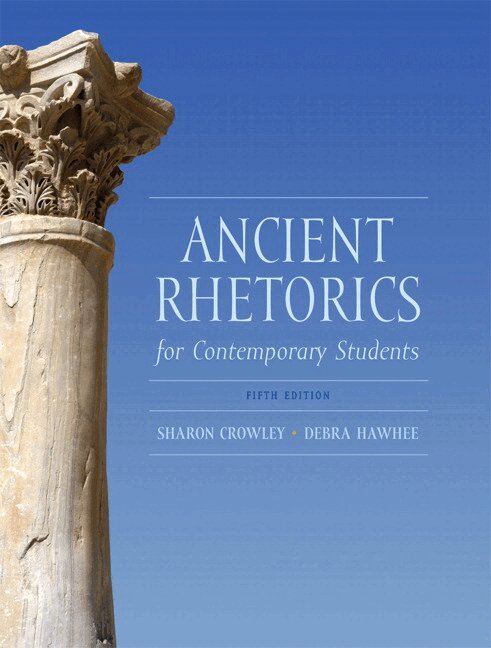
    Ancient Rhetorics for Contemporary Students

    AvSharon Crowley,Debra Hawhee

    Inbunden, Engelska, 2011

    3 247 kr

    Beställningsvara. Skickas inom 3-6 vardagar. Fri frakt över 249 kr.

    Beskrivning

    Revives the classical strategies of ancient Greek and Roman rhetoricians and adapts them to the needs of contemporary writers and speakers.

    Produktinformation

    • Utgivningsdatum:2011-12-22
    • Mått:100 x 100 x 100 mm
    • Vikt:100 g
    • Format:Inbunden
    • Språk:Engelska
    • Antal sidor:424
    • Upplaga:5
    • Förlag:Pearson Education (US)
    • ISBN:9780205175482

    Utforska kategorier

    • Språkvetenskap och lingvistik inom Språk och ordböcker
    • Litteraturvetenskap inom Skönlitteratur

    Innehållsförteckning

    • Table of Contents  Preface  Part One: Invention  Chapter 1: Ancient Rhetorics: Their Differences and the Differences They MakeAncient Rhetorics: The BeginningsComparing Ancient and Contemporary RhetoricsExtrinsic and Intrinsic ProofsThat's Just Your OpinionOn Ideology and the CommonplacesLanguage as Power; Language as ActionPractice, Practice, PracticeProgymnasmataProgymnasmata I: Fable Composing FablesProgymnasmata II: TaleComposing Tales NotesWorks Cited  Chapter 2: Kairos and the Rhetorical Situation: Seizing the MomentAncient Depictions of KairosKairos, Change, and Rhetorical SituationsKairos as a Means of InventionHow Urgent or Immediate is the Issue?Arguments and InterestsThe trigger and the damage doneFreedom, yes, but which one?Power Dynamics in a Rhetorical SituationA Web of Related IssuesRhetorical ActivitiesProgymnasmata II: Chreia Progymnasmata: Chreia Works Cited  Chapter 3: Achieving Stasis by Asking the Right QuestionsOn Inventing: How to ProceedThe Importance of Achieving StasisTheoretical Versus Practical QuestionsThe Four QuestionsA Simple ExampleExpanding the QuestionsQuestions of Quality: Simple or ComplexQuestions of PolicyUsing the StasesRhetorical ActivitiesPro-life ArgumentsPro-choice ArgumentsProgymnasmata III: ProverbProverbRhetorical Exercises: ProverbNotesWorks Cited  Chapter 4: The Common Topics and the Commonplaces: Finding the Available MeansAristotle's Topical SystemThe Common TopicsThe Common Topic of Past and Future Fact (Conjecture)The Common Topic of Greater/Lesser (Degree)The Common Topic of Possible/ImpossibleCommonplaces and IdeologyCommonplaces in American Political RhetoricUsing Common Topics and Commonplaces to Invent ArgumentsRhetorical ActivitiesProgymnasmata IV: Common-placeRhetorical Activities for Progymnasmata: Common-placeNotesWorks Cited  Chapter 5: Logical Proof: Reasoning in RhetoricProbabilitiesAristotle on Reasoning in RhetoricDeductionInductionEnthymemesRhetorical ExamplesHistorical Examples - Brief and ExtendedFictional ExampleAnalogySimilar and Contrary ExamplesUsing ExamplesMaximsSignsRhetorical ActivitiesProgymnasmata V: Confirmation and RefutationExercises in Progymnasmata: Confirmation and RefutationWorks Cited  Chapter 6: Ethical Proof: Arguments from CharacterEthos in Ancient RhetoricsInvented EthosDemonstrating Intelligence by Doing the HomeworkEstablishing Good CharacterSecuring Good WillSituated EthosRhetorical ActivitiesProgymnasmata VI: CharacterProgymnasmata: CharacterWorks Cited  Chapter 7: Pathetic Proof: Passionate AppealsAncient Teachers on the EmotionsEmotions as Rhetorical ProofsThe Characters of Audiences and RhetorsComposing Passionate ProofsEnargeiaHonorific and Pejorative LanguageRhetorical ActivitiesProgymnasmata VII: Encomium and Invective, DescriptionExercises: Encomium and InvectiveDescriptionExercises: DescriptionWorks Cited    Chapter 8: Extrinsic Proofs: Arguments Waiting to Be UsedExtrinsic Proofs in Ancient RhetoricsTestimonyCommunity AuthoritiesEvaluating Community AuthoritiesProximate AuthoritiesDataEvaluating DataRhetorical ActivitiesNotesProgymnasmata VIII: Introduction of LawAn Opposition of a Law That Permits Assault WeaponsRhetorical Activities: Introduction of LawWorks Cited  Part Two: Arrangement  Chapter 9: Arrangement: Getting It TogetherAncient Teachings about ArrangementThe Exordium, or BeginningIntroductionsTopics for Making Audiences Attentive and ReceptiveInsinuationsThe Narrative (Statement of the Case)The PartitionThe Arguments: Confirmation and RefutationThe Peroration (Conclusion)Composing a SummaryExciting Indignation Toward an Opponent Or the Opposing PositionEnhancing EthosAn Extended ExampleRhetorical ActivitiesProgymnasmata IX: ThesisRhetorical Activities: ThesisNotesWorks Cited  Part Three: Style, Memory, and Delivery  Chapter 10: Style: Composition and OrnamentCorrectnessClarityAppropriateness: Kairos and StyleOrnamentSentence CompositionParatactic and Periodic StylesFigurative LanguageFigures that Interrupt Normal Word OrderFigures of RepetitionFigures of ThoughtFigures of Thought That Enhance EthosFigures of Thought That Involve AudienceFigures of Thought That Arouse EmotionFigures of Thought Borrowed from Invention and ArrangementOnomatopoeiaAntonomasiaMetonomy PeriphrasisHyperbatonHyperboleSynecdocheCatachresisMetaphorAllegoryVoice and Rhetorical DistanceRhetorical ExercisesNotesWorks Cited  Chapter 11: ImitationImitation I: Reading Aloud and CopyingImitation Exercise I: Reading Aloud and CopyingImitation II: Inhabiting through PracticeImitation Exercises II: ImitationImitation III: Translation and ParaphraseTranslationParaphraseParaphrasing PoetryExamples of ParaphraseParaphrase ExercisesWorks Cited  Chapter 12: Delivery and Memory: Attending to Eyes and EarsAncient Commentary on DeliveryDelivery of Oral DiscourseAncient Memory Ancient Memory SystemsDelivery of Written DiscourseCorrectnessCorrectness: Traditional Grammar and UsageVisual RhetoricOcular DemonstrationTextual PresentationKlavika: A sans for the 21st centuryPicture TheoryDigital RhetorsRhetorical ActivitiesNotesWorks Cited    GlossaryAppendix: Signposts in Ancient RhetoricsBibliographySuggestions for Further ReadingsCreditsIndex