• Fri frakt över 249 kr
  • •
  • Snabba leveranser
  • •
  • Billiga böcker
Kundservice

Du är på sajten för privatpersoner.

Företag, bibliotek eller offentlig verksamhet?

Du handlar på classic.bokus.com, där alla dina funktioner finns intakta.
Till classic.bokus.com
Bokus logotyp. Gå till startsidan.
  • Erbjudanden
  • Nyheter
  • Student
  • Topplistor
  • Barn & ungdom
  • Bokus Play
  • E-böcker
  • Pocketböcker
  • Spel & pussel

10% rabatt på allt med kod: NYSTART10 →

Sidfot

Mina sidor

    Hjälp

    • Kundservice
    • Vanliga frågor och svar
    • Frakt och leverans
    • Retur vid ångerrätt
    • Reklamera vara
    • Betalning
    • Köpvillkor
    • Allmänna villkor
    • Information om webbplatsens tillgänglighet

    Om Bokus

    • Om oss
    • Pressrum
    • För studenter
    • För företag
    • För bibliotek och offentlig verksamhet
    • För leverantörer
    • Hållbarhet

    Populärt

    • Aktuella erbjudanden
    • Presentkort
    • Studentlitteratur
    • Nya böcker
    • Topplistor
    • Signerade böcker
    • Engelska böcker

    Inspiration

    • Boktips
    • BookTok
    • Populära bokserier
    • Barnbokskaraktärer
    • Populära författare
    Logotyp för Bokus
    Följ oss på Facebook (extern länk)Följ oss på Instagram (extern länk)Följ oss på YouTube (extern länk)Följ oss på TikTok (extern länk)
    bokus @ CookiesAnpassa cookiesIntegritetspolicyKöpvillkor
    Till Citymail hemsida (extern länk)Till Budbee hemsida (extern länk)Till Postnord hemsida (extern länk)Till Schenker hemsida (extern länk)Till Early Bird hemsida (extern länk)Till Walleys hemsida (extern länk)
    1. Historia och arkeologi
    2. Historia
    3. Amerikas historia

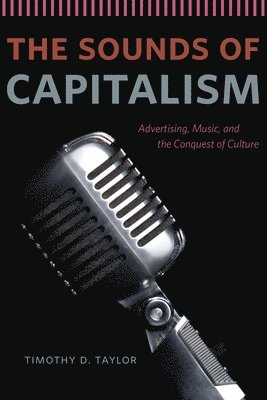
    Sounds of Capitalism

    Advertising, Music, and the Conquest of Culture

    AvTimothy D. Taylor

    Häftad, Engelska, 2014

    268 kr

    Beställningsvara. Skickas inom 5-8 vardagar. Fri frakt över 249 kr.

    Fler format och utgåvor

    E-bok

    586 kr

    Inbunden

    Tillf. slut

    Beskrivning

    From the early days of radio through the rise of television after World War II to the present, music has been used more and more to sell goods and establish brand identities. And since the 1920s, songs originally written for commercials have become popular songs, and songs written for a popular audience have become irrevocably associated with specific brands and products. Today, musicians move flexibly between the music and advertising worlds, while the line between commercial messages and popular music has become increasingly blurred. Timothy D. Taylor tracks the use of music in American advertising for nearly a century, from variety shows like The Clicquot Club Eskimos to the rise of the jingle, the postwar upsurge in consumerism, and the more complete fusion of popular music and consumption in the 1980s and after. The Sounds of Capitalism is the first book to tell truly the history of music used in advertising in the United States and is an original contribution to this little-studied part of our cultural history.

    Produktinformation

    • Utgivningsdatum:2014-02-24
    • Mått:15 x 23 x 2 mm
    • Vikt:539 g
    • Format:Häftad
    • Språk:Engelska
    • Antal sidor:368
    • Förlag:The University of Chicago Press
    • ISBN:9780226151625

    Utforska kategorier

    • Amerikas historia inom Historia och arkeologi
    • Reklam inom Ekonomi och Ledarskap
    • Media och underhållning inom Ekonomi och Ledarskap

    Mer om författaren

    Timothy D. Taylor is professor in the Department of Ethnomusicology and Musicology at the University of California, Los Angeles. He is the author of Global Pop: World Music, World Markets; Strange Sounds: Music, Technology, and Culture; and Beyond Exoticism: Western Music and the World.

    Recensioner i media

    "As Taylor shows in The Sounds of Capitalism, the links between American popular music and advertising are longstanding. While he briefly covers the 'prehistory' of the phenomenon in the cries of 13th-century street hawkers recorded in the Montpellier Codex, Taylor's real starting place is radio, which, he argues, is where the marriage between music and advertising was first truly consummated." (n+1)"