• Fri frakt över 249 kr
  • •
  • Snabba leveranser
  • •
  • Billiga böcker
Kundservice

Du är på sajten för privatpersoner.

Företag, bibliotek eller offentlig verksamhet?

Du handlar på classic.bokus.com, där alla dina funktioner finns intakta.
Till classic.bokus.com
Bokus logotyp. Gå till startsidan.
  • Erbjudanden
  • Nyheter
  • Student
  • Topplistor
  • Barn & ungdom
  • Bokus Play
  • E-böcker
  • Pocketböcker
  • Spel & pussel

10% rabatt på allt med kod NYSTART10 →

Sidfot

Mina sidor

    Hjälp

    • Kundservice
    • Vanliga frågor och svar
    • Frakt och leverans
    • Retur vid ångerrätt
    • Reklamera vara
    • Betalning
    • Köpvillkor
    • Allmänna villkor
    • Information om webbplatsens tillgänglighet

    Om Bokus

    • Om oss
    • Pressrum
    • För studenter
    • För företag
    • För bibliotek och offentlig verksamhet
    • För leverantörer
    • Hållbarhet

    Populärt

    • Aktuella erbjudanden
    • Presentkort
    • Studentlitteratur
    • Nya böcker
    • Topplistor
    • Signerade böcker
    • Engelska böcker

    Inspiration

    • Boktips
    • BookTok
    • Populära bokserier
    • Barnbokskaraktärer
    • Populära författare
    Logotyp för Bokus
    Följ oss på Facebook (extern länk)Följ oss på Instagram (extern länk)Följ oss på YouTube (extern länk)Följ oss på TikTok (extern länk)
    bokus @ CookiesAnpassa cookiesIntegritetspolicyKöpvillkor
    Till Citymail hemsida (extern länk)Till Budbee hemsida (extern länk)Till Postnord hemsida (extern länk)Till Schenker hemsida (extern länk)Till Early Bird hemsida (extern länk)Till Walleys hemsida (extern länk)
    1. Kultur
    2. Musikböcker

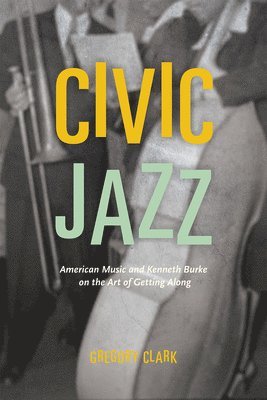
    Civic Jazz

    American Music and Kenneth Burke on the Art of Getting Along

    AvGregory Clark

    Häftad, Engelska, 2015

    279 kr

    Beställningsvara. Skickas inom 5-8 vardagar. Fri frakt över 249 kr.

    Fler format och utgåvor

    E-bok

    548 kr

    Beskrivning

    Jazz is born of collaboration, improvisation, and listening. In much the same way, the American democratic experience is rooted in the interaction of individuals. It is these two seemingly disparate, but ultimately thoroughly American, conceits that Gregory Clark examines in Civic Jazz. Melding Kenneth Burke's concept of rhetorical communication and jazz music's aesthetic encounters with a rigorous sort of democracy, this book weaves an innovative argument about how individuals can preserve and improve civic life in a democratic culture. Jazz music, Clark argues, demonstrates how this aesthetic rhetoric of identification can bind people together through their shared experience in a common project. While such shared experience does not demand agreement-indeed, it often has an air of competition-it does align people in practical effort and purpose. Similarly, Clark shows, Burke considered Americans inhabitants of a persistently rhetorical situation, in which each must choose constantly to identify with some and separate from others.Thought-provoking and path-breaking, Clark's harmonic mashup of music and rhetoric will appeal to scholars across disciplines as diverse as political science, performance studies, musicology, and literary criticism.

    Produktinformation

    • Utgivningsdatum:2015-02-25
    • Mått:16 x 23 x 1 mm
    • Vikt:340 g
    • Format:Häftad
    • Språk:Engelska
    • Antal sidor:208
    • Förlag:The University of Chicago Press
    • ISBN:9780226218212

    Utforska kategorier

    • Musikböcker inom Kultur
    • Populärmusik inom Kultur
    • Språkvetenskap och lingvistik inom Språk och ordböcker

    Mer om författaren

    Gregory Clark is university professor of English at Brigham Young University. He is the author of Rhetorical Landscapes in America: Variations on a Theme from Kenneth Burke and coeditor of Trained Capacities: John Dewey, Rhetoric, and Democratic Practice and Oratorical Culture in Nineteenth-Century America: Transformations in the Theory and Practice of Public Discourse.

    Recensioner i media

    "A provocative, well-written, original study of how Kenneth Burke and jazz musicians in performance both explore the complications of achieving e pluribus unum-the 'impossible American ought,' the many-in-one, the one-in-the-many." (Walton Muyumba, Indiana University)