• Fri frakt över 249 kr
  • •
  • Snabba leveranser
  • •
  • Billiga böcker
Kundservice

Du är på sajten för privatpersoner.

Företag, bibliotek eller offentlig verksamhet?

Du handlar på classic.bokus.com, där alla dina funktioner finns intakta.
Till classic.bokus.com
Bokus logotyp. Gå till startsidan.
  • Erbjudanden
  • Nyheter
  • Student
  • Topplistor
  • Barn & ungdom
  • Bokus Play
  • E-böcker
  • Pocketböcker
  • Spel & pussel

10% rabatt på allt med kod: NYSTART10 →

Sidfot

Mina sidor

    Hjälp

    • Kundservice
    • Vanliga frågor och svar
    • Frakt och leverans
    • Retur vid ångerrätt
    • Reklamera vara
    • Betalning
    • Köpvillkor
    • Allmänna villkor
    • Information om webbplatsens tillgänglighet

    Om Bokus

    • Om oss
    • Pressrum
    • För studenter
    • För företag
    • För bibliotek och offentlig verksamhet
    • För leverantörer
    • Hållbarhet

    Populärt

    • Aktuella erbjudanden
    • Presentkort
    • Studentlitteratur
    • Nya böcker
    • Topplistor
    • Signerade böcker
    • Engelska böcker

    Inspiration

    • Boktips
    • BookTok
    • Populära bokserier
    • Barnbokskaraktärer
    • Populära författare
    Logotyp för Bokus
    Följ oss på Facebook (extern länk)Följ oss på Instagram (extern länk)Följ oss på YouTube (extern länk)Följ oss på TikTok (extern länk)
    bokus @ CookiesAnpassa cookiesIntegritetspolicyKöpvillkor
    Till Citymail hemsida (extern länk)Till Budbee hemsida (extern länk)Till Postnord hemsida (extern länk)Till Schenker hemsida (extern länk)Till Early Bird hemsida (extern länk)Till Walleys hemsida (extern länk)
    1. Skönlitteratur
    2. Litteraturvetenskap
    3. Litteraturvetenskap

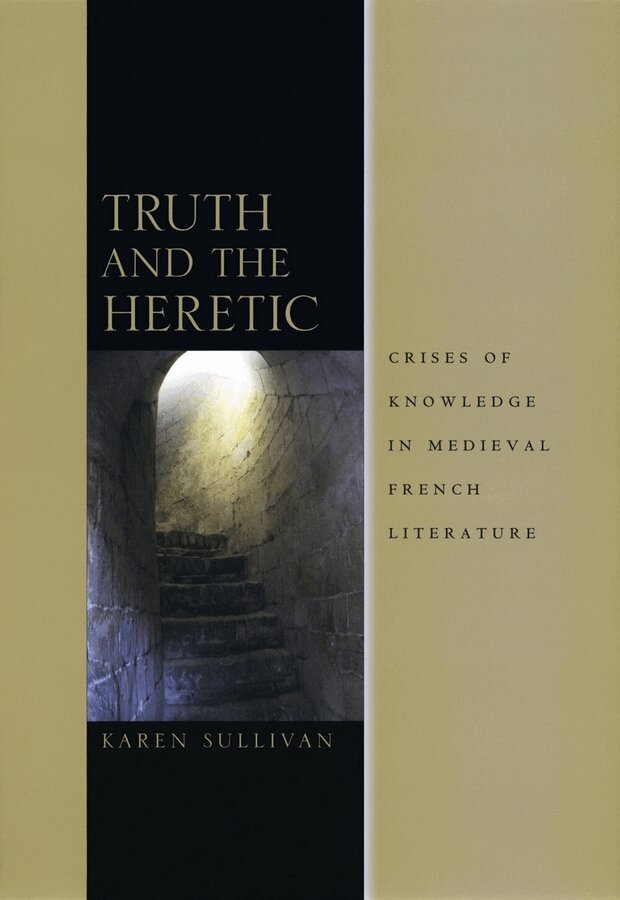
    Truth and the Heretic

    Crises of Knowledge in Medieval French Literature

    AvKaren Sullivan

    Inbunden, Engelska, 2005

    689 kr

    Skickas . Fri frakt över 249 kr.

    Beskrivning

    In the Middle Ages, the heretic, more than any other social or religious deviant, was experienced as an imaginary construct. Everyone believed heretics existed, but no one believed himself or herself to be a heretic, even if condemned as such by representatives of the Catholic Church. Those accused of heresy, meanwhile, maintained that they were the good Christians and their accusers were the false ones. Exploring the figure of the heretic in Catholic writings of the twelfth and thirteenth centuries as well as the heretic's characterological counterpart in troubadour lyrics, Arthurian romance, and comic tales, "Truth and the Heretic" seeks to understand why French literature of the period celebrated the very characters who were so persecuted in society at large. Karen Sullivan proposes that such literature allowed medieval culture a means by which to express truths about heretics and the epistemological anxieties they aroused.The first book-length study of the figure of the heretic in medieval French literature, "Truth and the Heretic" explores the relation between orthodoxy and deviance, authority and innovation, and will fascinate historians of ideas and literature as well as scholars of religion, critical theory, and philosophy.

    Produktinformation

    • Utgivningsdatum:2005-09-15
    • Mått:16 x 23 x 3 mm
    • Vikt:510 g
    • Format:Inbunden
    • Språk:Engelska
    • Antal sidor:288
    • Förlag:The University of Chicago Press
    • ISBN:9780226781693

    Utforska kategorier

    • Litteraturvetenskap inom Skönlitteratur

    Mer om författaren

    Karen Sullivan is associate professor of literature in the Division of Language and Literature at Bard College and the author of The Interrogation of Joan of Arc.

    Recensioner i media

    "This book should be widely recommended not only to scholars of heresy, but in many areas of medieval studies. One of its best qualities is that it makes use of vernacular literature in a way that historians should find both methodologically persuasive and socially and culturally illuminating. This is not only a work of high quality and readability, but one for whose particular place on the shelf there is no rival I know of." - R. I. Moore, University of Newcastle upon Tyne"