• Fri frakt över 249 kr
  • •
  • Snabba leveranser
  • •
  • Billiga böcker
Kundservice

Du är på sajten för privatpersoner.

Företag, bibliotek eller offentlig verksamhet?

Du handlar på classic.bokus.com, där alla dina funktioner finns intakta.
Till classic.bokus.com
Bokus logotyp. Gå till startsidan.
  • Erbjudanden
  • Nyheter
  • Student
  • Topplistor
  • Barn & ungdom
  • Bokus Play
  • E-böcker
  • Pocketböcker
  • Spel & pussel

10% rabatt på allt med kod: NYSTART10 →

Sidfot

Mina sidor

    Hjälp

    • Kundservice
    • Vanliga frågor och svar
    • Frakt och leverans
    • Retur vid ångerrätt
    • Reklamera vara
    • Betalning
    • Köpvillkor
    • Allmänna villkor
    • Information om webbplatsens tillgänglighet

    Om Bokus

    • Om oss
    • Pressrum
    • För studenter
    • För företag
    • För bibliotek och offentlig verksamhet
    • För leverantörer
    • Hållbarhet

    Populärt

    • Aktuella erbjudanden
    • Presentkort
    • Studentlitteratur
    • Nya böcker
    • Topplistor
    • Signerade böcker
    • Engelska böcker

    Inspiration

    • Boktips
    • BookTok
    • Populära bokserier
    • Barnbokskaraktärer
    • Populära författare
    Logotyp för Bokus
    Följ oss på Facebook (extern länk)Följ oss på Instagram (extern länk)Följ oss på YouTube (extern länk)Följ oss på TikTok (extern länk)
    bokus @ CookiesAnpassa cookiesIntegritetspolicyKöpvillkor
    Till Citymail hemsida (extern länk)Till Budbee hemsida (extern länk)Till Postnord hemsida (extern länk)Till Schenker hemsida (extern länk)Till Early Bird hemsida (extern länk)Till Walleys hemsida (extern länk)
    1. Skönlitteratur
    2. Litteraturvetenskap
    3. Litteraturvetenskap

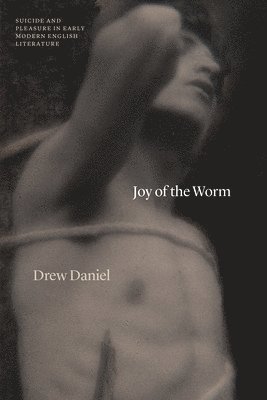
    Joy of the Worm

    Suicide and Pleasure in Early Modern English Literature

    AvDrew Daniel

    Häftad, Engelska, 2022

    Del i serien Thinking Literature

    289 kr

    Beställningsvara. Skickas inom 5-8 vardagar. Fri frakt över 249 kr.

    Fler format och utgåvor

    Inbunden

    1 178 kr

    E-bok

    567 kr

    Beskrivning

    Consulting an extensive archive of early modern literature, Joy of the Worm asserts that voluntary death in literature is not always a matter of tragedy.  In this study, Drew Daniel identifies a surprisingly common aesthetic attitude that he calls “joy of the worm,” after Cleopatra’s embrace of the deadly asp in Shakespeare’s play—a pattern where voluntary death is imagined as an occasion for humor, mirth, ecstatic pleasure, even joy and celebration. Daniel draws both a historical and a conceptual distinction between “self-killing” and “suicide.” Standard intellectual histories of suicide in the early modern period have understandably emphasized attitudes of abhorrence, scorn, and severity toward voluntary death. Daniel reads an archive of literary scenes and passages, dating from 1534 to 1713, that complicate this picture. In their own distinct responses to the surrounding attitude of censure, writers including Shakespeare, Donne, Milton, and Addison imagine death not as sin or sickness, but instead as a heroic gift, sexual release, elemental return, amorous fusion, or political self-rescue. “Joy of the worm” emerges here as an aesthetic mode that shades into schadenfreude, sadistic cruelty, and deliberate “trolling,” but can also underwrite powerful feelings of belonging, devotion, and love.

    Produktinformation

    • Utgivningsdatum:2022-05-02
    • Mått:152 x 229 x 20 mm
    • Vikt:399 g
    • Format:Häftad
    • Språk:Engelska
    • Serie:Thinking Literature
    • Antal sidor:288
    • Förlag:The University of Chicago Press
    • ISBN:9780226816500

    Utforska kategorier

    • Litteraturvetenskap inom Skönlitteratur

    Mer om författaren

    Drew Daniel is associate professor of English at Johns Hopkins University. He is the author of Twenty Jazz Funk Greats and The Melancholy Assemblage: Affect and Epistemology of the English Renaissance.

    Recensioner i media

    “The lucidity of Daniel’s razor-sharp prose is surpassed only by the boldness and sensitivity of his thought. Joy of the Worm resists the easy logic of secularization, whereby classical valorization and Christian condemnation of self-killing sequentially give way to a modern understanding of suicide as a cry for help. Instead, Daniel attunes us to materialist understandings and aesthetic representations of self-destruction in which cruelty and tenderness, sorrow and mirth, ugliness and beauty mingle conceptually and tonally. Daniel’s meticulous and humane readings attune us to a complex affective and social landscape surrounding suicide.”

    Innehållsförteckning

    • Introduction: Renaissance Self-FinishingChapter 1 Failed Seriousness in the Old Arcadia and GallatheaChapter 2 Slapstick and Synapothanumenon in Antony and CleopatraChapter 3 Trolling Decorum in Hamlet and Timon of AthensChapter 4 The Open Window in BiathanatosInterlude Inventing Suicide in Religio MediciChapter 5 A Cartoon about Suicide Prevention in Paradise LostChapter 6 Smiling at Daggers in Cato, a TragedyEpilogueAcknowledgmentsNotesIndex