• Fri frakt över 249 kr
  • •
  • Snabba leveranser
  • •
  • Billiga böcker
Kundservice

Du är på sajten för privatpersoner.

Företag, bibliotek eller offentlig verksamhet?

Du handlar på classic.bokus.com, där alla dina funktioner finns intakta.
Till classic.bokus.com
Bokus logotyp. Gå till startsidan.
  • Erbjudanden
  • Student
  • Topplistor
  • Barn & ungdom
  • Bokus Play
  • E-böcker
  • Ljudböcker
  • Pocketböcker
  • Spel och pussel

Pocketfynda! Hundratals böcker för 49 kr/st →

Sidfot

Mina sidor

    Hjälp

    • Kundservice
    • Vanliga frågor och svar
    • Frakt och leverans
    • Retur vid ångerrätt
    • Reklamera vara
    • Betalning
    • Köpvillkor
    • Allmänna villkor
    • Information om webbplatsens tillgänglighet

    Om Bokus

    • Om oss
    • Pressrum
    • För studenter
    • För företag
    • För bibliotek och offentlig verksamhet
    • För leverantörer
    • Hållbarhet

    Populärt

    • Aktuella erbjudanden
    • Presentkort
    • Studentlitteratur
    • Nya böcker
    • Topplistor
    • Signerade böcker
    • Engelska böcker

    Inspiration

    • Boktips
    • BookTok
    • Barnbokskaraktärer
    • Populära författare
    Logotyp för Bokus
    Följ oss på Facebook (extern länk)Följ oss på Instagram (extern länk)Följ oss på YouTube (extern länk)Följ oss på TikTok (extern länk)
    bokus @ CookiesAnpassa cookiesIntegritetspolicyKöpvillkor
    Till Citymail hemsida (extern länk)Till Budbee hemsida (extern länk)Till Postnord hemsida (extern länk)Till Schenker hemsida (extern länk)Till Early Bird hemsida (extern länk)Till Walleys hemsida (extern länk)
    1. Samhälle och politik
    2. Politik och statsskick
    3. Internationella relationer

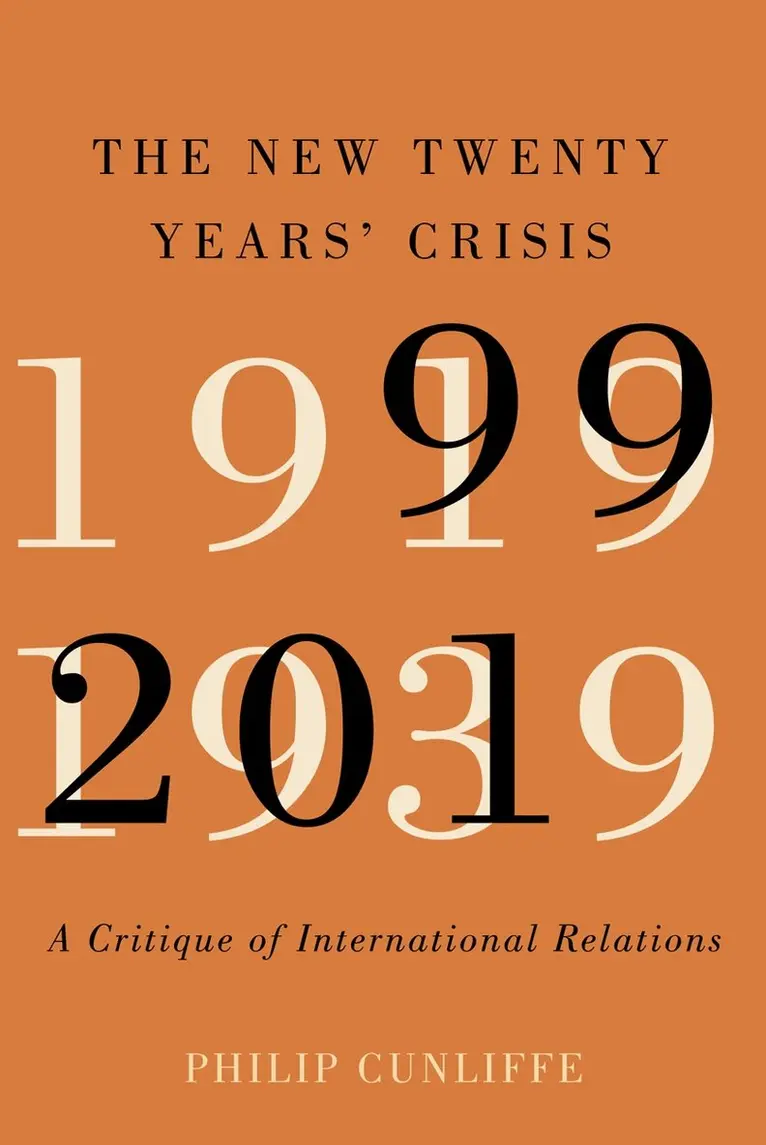
    New Twenty Years' Crisis

    A Critique of International Relations, 1999-2019

    AvPhilip Cunliffe

    Häftad, Engelska, 2020

    242 kr

    Beställningsvara. Skickas inom 10-15 vardagar. Fri frakt över 249 kr.

    Fler format och utgåvor

    E-bok

    263 kr

    E-bok

    263 kr

    Beskrivning

    The liberal order is decaying. Will it survive, and if not, what will replace it? On the eightieth anniversary of the publication of E.H. Carr's The Twenty Years' Crisis, 1919-1939, Philip Cunliffe revisits this classic text, juxtaposing its claims with contemporary debates on the rise and fall of the liberal international order. The New Twenty Years' Crisis reveals that the liberal international order experienced a twenty-year cycle of decline from 1999 to 2019. In contrast to claims that the order has been undermined by authoritarian challengers, Cunliffe argues that the primary drivers of the crisis are internal. He shows that the heavily ideological international relations theory that has developed since the end of the Cold War is clouded by utopianism, replacing analysis with aspiration and expressing the interests of power rather than explaining its functioning. As a result, a growing tendency to discount political alternatives has made us less able to adapt to political change. In search of a solution, this book argues that breaking through the current impasse will require not only dissolving the new forms of utopianism, but also pushing past the fear that the twenty-first century will repeat the mistakes of the twentieth. Only then can we finally escape the twenty years' crisis. By reflecting on Carr's foundational work, The New Twenty Years' Crisis offers an opportunity to take stock of the current state of international order and international relations theory.

    Produktinformation

    • Utgivningsdatum:2020-07-16
    • Mått:152 x 229 x 10 mm
    • Vikt:454 g
    • Format:Häftad
    • Språk:Engelska
    • Antal sidor:168
    • Förlag:McGill-Queen's University Press
    • ISBN:9780228001027

    Utforska kategorier

    • Internationella relationer inom Samhälle och politik

    Mer om författaren

    Philip Cunliffe is senior lecturer in international conflict at the University of Kent.

    Recensioner i media

    "Books that threaten to shake the foundations of an academic discipline are rare. Rarer still are those that manage to revitalise a figure the discipline had long regarded as consigned to the 'dustbin of history' to level the disciplinary terrain in such a comprehensive and courageous manner as Phillip Cunliffe's The New Twenty Years Crisis. Taking no prisoners, Cunliffe brutally and brilliantly uses E.H. Carr to critique the underlying utopianism of much, if not all, contemporary international relations. Although the book targets the discipline as a whole, the most trenchant critiques are aimed at those parts of the field that consider themselves the most 'critical.' This won't win Cunliffe many friends, but great books would never get written if that was the aim. You may not agree with Cunliffe's conclusions, but if nothing else, he will spark a long-overdue conversation about what it means to be critical. Essential reading for anyone interested in international relations as a field of study, as well as those interested in global order." Colin Wight, The University of Sydney and author of Rethinking Terrorism: Terrorism, Violence and the State"In this bold, no-holds-barred polemic, the author not only puts the liberal order to the sword but the contemporary discipline of international relations, too. Deploying Carr in ways that are both imaginative and ingenious, Philip Cunliffe demonstrates why the great English scourge of inter-war liberalism still speaks to us with such force today. A challenging tour de force." Michael Cox, London School of Economics "The New Twenty Years' Crisis offers something different--a Carr for our time. Cunliffe surfaces and pursues Carr's timely warning about the blindness that comes from an elite hostility to mass politics; but he does so with discrimination and without the distorting deference that is sometimes paid to the forefathers of the discipline. The result is a deeply engaged, unapologetically political, and wonderfully readable book." Alison McQueen, Stanford University"The historian E. H. Carr famously argued in The Twenty Years' Crisis that Western peacemakers at Versailles built the post–World War I order on utopian illusions and liberal aspirations that led two decades later to economic upheaval, authoritarian nationalism, and great-power war. In this lively polemic, Cunliffe contends that in the aftermath of the Cold War, the United States and other democratic states did it again. The book will inspire a useful debate." Foreign Affairs