• Fri frakt över 249 kr
  • •
  • Snabba leveranser
  • •
  • Billiga böcker
Kundservice

Du är på sajten för privatpersoner.

Företag, bibliotek eller offentlig verksamhet?

Du handlar på classic.bokus.com, där alla dina funktioner finns intakta.
Till classic.bokus.com
Bokus logotyp. Gå till startsidan.
  • Erbjudanden
  • Student
  • Topplistor
  • Barn & ungdom
  • Bokus Play
  • E-böcker
  • Ljudböcker
  • Pocketböcker
  • Spel & pussel

Upp till 25% på utvalda nyheter →

Sidfot

Mina sidor

    Hjälp

    • Kundservice
    • Vanliga frågor och svar
    • Frakt och leverans
    • Retur vid ångerrätt
    • Reklamera vara
    • Betalning
    • Köpvillkor
    • Allmänna villkor
    • Information om webbplatsens tillgänglighet

    Om Bokus

    • Om oss
    • Pressrum
    • För studenter
    • För företag
    • För bibliotek och offentlig verksamhet
    • För leverantörer
    • Hållbarhet

    Populärt

    • Aktuella erbjudanden
    • Presentkort
    • Studentlitteratur
    • Nya böcker
    • Topplistor
    • Signerade böcker
    • Engelska böcker

    Inspiration

    • Boktips
    • BookTok
    • Populära bokserier
    • Barnbokskaraktärer
    • Populära författare
    Logotyp för Bokus
    Följ oss på Facebook (extern länk)Följ oss på Instagram (extern länk)Följ oss på YouTube (extern länk)Följ oss på TikTok (extern länk)
    bokus @ CookiesAnpassa cookiesIntegritetspolicyKöpvillkor
    Till Citymail hemsida (extern länk)Till Budbee hemsida (extern länk)Till Postnord hemsida (extern länk)Till Schenker hemsida (extern länk)Till Early Bird hemsida (extern länk)Till Walleys hemsida (extern länk)
    1. Naturvetenskap och teknik
    2. Matematik och naturvetenskap
    3. Naturvetenskap:allmänt
    4. Populärvetenskap

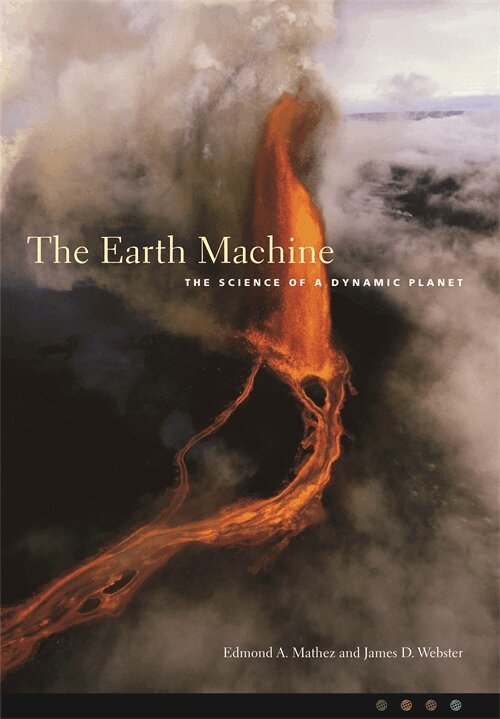
    Earth Machine

    The Science of a Dynamic Planet

    AvEdmond Mathez,James Webster

    Häftad, Engelska, 2007

    592 kr

    Beställningsvara. Skickas inom 3-6 vardagar. Fri frakt över 249 kr.

    Beskrivning

    From the scorching center of Earth's core to the outer limits of its atmosphere, from the gradual process of erosion that carved the Grand Canyon to the earth-shaking fury of volcanoes and earthquakes, this fascinating book-inspired by the award-winning Hall of Planet Earth at New York City's American Museum of Natural History-tells the story of the evolution of our planet and of the science that makes it work. With the same exuberance and expertise they brought to the creation of the Hall of Planet Earth, co-curators Edmond A. Mathez and James D. Webster offer a guided tour of Earth's dynamic, 4.6-billion-year history. Including numerous full-color photographs of the innovative exhibit and helpful, easy-to-understand illustrations, the authors explore the major factors in our planet's evolution: how Earth emerged from the swirling dusts of a nascent solar system; how an oxygen-rich, life-sustaining atmosphere developed; how continents, mountain ranges, and oceans formed; and how earthquakes and volcanic eruptions alter Earth's surface.Traversing geologic time and delving into the depths of the planet--beginning with meteorites containing minuscule particles that are the solar system's oldest known objects, and concluding with the unusual microbial life that lives on the chemical and thermal energy produced by sulfide vents in the ocean floor-The Earth Machine provides an up-to-date overview of the central theories and discoveries in earth science today. By incorporating stories of real-life fieldwork, Mathez and Webster explain how Earth is capable of supporting life, how even the smallest rocks can hold the key to explaining the formation of mountains, and how scientists have learned to read nature's subtle clues and interpret Earth's ever-evolving narrative.

    Produktinformation

    • Utgivningsdatum:2007-05-08
    • Mått:178 x 254 x 22 mm
    • Vikt:808 g
    • Format:Häftad
    • Språk:Engelska
    • Antal sidor:378
    • Förlag:Columbia University Press
    • ISBN:9780231125796

    Utforska kategorier

    • Populärvetenskap inom Naturvetenskap och teknik
    • Geovetenskap inom Naturvetenskap och teknik

    Mer om författaren

    Edmond A. Mathez is curator of petrology in the Department of Earth and Planetary Sciences at the American Museum of Natural History and was chief curator of the Hall of Planet Earth. He is the editor of Earth: Inside and Out and The Encyclopedia of Gemstones and Minerals. James D. Webster is curator of mineral deposits in the Department of Earth and Planetary Sciences at the American Museum of Natural History and was associate curator of the Hall of Planet Earth. Edmond A. Mathez is curator of petrology in the Department of Earth and Planetary Sciences at the American Museum of Natural History and was chief curator of the Hall of Planet Earth. He edited Earth: Inside and Out and The Encyclopedia of Gemstones and Minerals. James D. Webster is curator of mineral deposits in the Department of Earth and Planetary Sciences at the American Museum of Natural History and was associate curator of the Hall of Planet Earth.

    Recensioner i media

    This companion volume to the American Museum of Natural History's award-winning Hall of Planet Earth exhibit by Mathez and Webster, the original co-curators, offers readers an accessible guided tour of how our planet works from interdisciplinary and scientific perspectives. Library Journal A handsome and well-written book, in full colour and jammed full of geological information about the earth... I commend the authors for the thoroughness, accuracy and detail they give to so many parts of the Earth Sciences.New Scientist -- Simon Lamb New Scientist This book is your engaging and scientific tour guide. Natural History This informative book... explores the major forces and factors that shaped and continue to shape our planet. Rotunda A highly recommended text for any who would wonder what climates were like in past times. Bookwatch This book...is outstanding among the many fine books on the subject available today...A book of unusually widespread appeal. Highly recommended. -- T. L. T. Gross Choice By means of well-chosen examples taken from nature as we find it, they provide the best of contemporary approaches to, and conclusions about, the major issues. Science Books & Films A thorough and yet easy-to-understand account of the origins of Earth... The authors definitely know their stuff... But true to their vocations as educators, as well as scientists, they do more than just educate in this volume; they also thoroughly entertain. -- Beth Norton Science Editor

    Innehållsförteckning

    • Preface Part I. How Has Earth Evolved? 1. The Birth of Planet Earth From Meteorites to Earth The Formation of the Moon Early Earth Organizes Itself The Emergence of an Atmosphere and an Ocean 2. Learning the Age of Earth The Seeds of Doubt The Emergence of the Revolutionary Concept of an Old Earth Radioactivity and the Age of Earth 3. The Evolution of the Continents Earth: The Only Planet with a Continental Crust The Continents and Continental Crust The First Continental Crust The Assembly of the Continents 4. Life and Conditions on Early Earth Ancient Microbes Banded Iron Formations and Oxygenation of the Atmosphere and Ocean A Warm Early Earth? The Appearance of Animals and Explosion of Life in the Cambrian 5. Reading Rocks: The Story of the Grand Canyon How Sedimentary Rocks Describe Ancient Environments Evidence of Missing Rock How Old Is the Grand Canyon? Part II. Why Are There Ocean Basins, Continents, and Mountains? 6. Internal Earth The Core The Magnetic Field Convection in the Core and Origin of the Geomagnetic Field Earth's Internal Heat The Mantle Convection in the Mantle 7. Plate Tectonics Continental Drift: An Idea Proposed Before Its Time Wegener's Theory of Continental Drift From Continental Drift to Plate Tectonics Plate Boundaries: Where the Action Is Plate Motions and Continental Reconstruction 8. Lavas from the Depths of Earth Hawaii Kilauea Volcano Volcanoes of the Mid-Ocean Ridges Great Lava Floods and the Columbia River Basalts 9. Great Explosive Volcanoes The Nature of Explosive Volcanism How Gases Drive Explosive Eruptions Vesuvius: The Anatomy of an Explosive Eruption Tambora: Volcanoes and Climate Change Krakatau: An Explosion that Reverberated Around the World Great Prehistoric Eruptions Granite 10. Earthquakes Why Do Earthquakes Occur? How Earthquakes Are Measured How Earthquakes Destroy Fault Behavior and Calculating the Odds Short-term Predictions The San Andreas Fault Zone, California The Great Alaska Earthquake 11. Mountains The Shape of Earth and Why Mountains Are High The Importance of Erosion The Folding of Rocks The Metamorphism of Rocks 12. The Alps The Beginnings of Alpine Research The Formation and Structure of the Alps Part III. What Causes Earth's Climate and Climate Change? 13. The Atmosphere The Structure of the Atmosphere Global Atmospheric Circulation Greenhouse Earth: The Troposphere Story Ozone: The Stratosphere Story The Importance of Clouds 14. The World Ocean The Important Properties of Water Why Is the Ocean Salty? The Global Ocean Conveyor System Ocean Surface Currents Upwelling and Downwelling El Nio and La Nia 15. The Geological Record of Climate Change Climate Forcing Factors The Climate Record in Greenland Ice Some Other Indicators of Past Climate The Ice Age Part IV. Why Is Earth Habitable? 16. Conditions for Life Water: The Essential Ingredient The Carbon Cycle Earth, Venus, and Mars Earth's Intangible Shields 17. Black Smokers from the Deep How Hydrothermal Vent Fields Form Life at Hydrothermal Vents Did Life Originate in Deep-Sea Vents? Heat and Water: What Goes In, and What Goes Out 18. Some Natural Resources and How They Form What Salt, Gold, and Coal Have in Common Ore Deposits from Hot Water An Ancient Analogue of the Black Smokers Ore Deposits from Magmas Notes Glossary Bibliography Index