
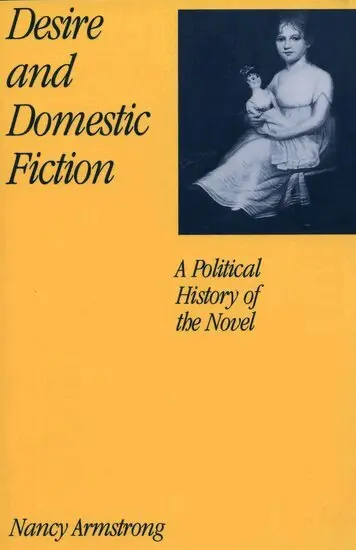
How Novels Think
The Limits of Individualism from 1719-1900
Inbunden, Engelska, 2006
1 069 kr
Beställningsvara. Skickas inom 5-8 vardagar. Fri frakt över 249 kr.
Fler format och utgåvor
Beskrivning
Nancy Armstrong argues that the history of the novel and the history of the modern individual are, quite literally, one and the same. She suggests that certain works of fiction created a subject, one displaying wit, will, or energy capable of shifting the social order to grant the exceptional person a place commensurate with his or her individual worth. Once the novel had created this figure, readers understood themselves in terms of a narrative that produced a self-governing subject. In the decades following the revolutions in British North America and France, the major novelists distinguished themselves as authors by questioning the fantasy of a self-made individual. To show how novels by Defoe, Austen, Scott, Bronte, Dickens, Eliot, Hardy, Haggard, and Stoker participated in the process of making, updating, and perpetuating the figure of the individual, Armstrong puts them in dialogue with the writings of Locke, Hume, Rousseau, Malthus, Darwin, Kant, and Freud. Such theorists as Althusser, Balibar, Foucault, and Deleuze help her make the point that the individual was not one but several different figures.The delineation and potential of the modern subject depended as much upon what it had to incorporate as what alternatives it had to keep at bay to address the conflicts raging in and around the British novel.
Produktinformation
Utforska kategorier
Mer om författaren
Recensioner i media
Innehållsförteckning
Hoppa över listan



Mer från samma författare
The Study of an Attempt Made in 1943 to Abolish Segregation of the Races on Common Carriers in the State of Virginia
Nancy Armstrong
Inbunden, 2021
446 kr
Hoppa över listan



Du kanske också är intresserad av
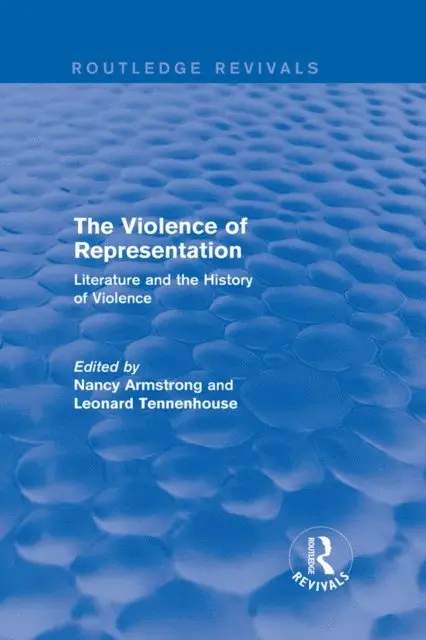
Violence of Representation (Routledge Revivals)
Nancy Armstrong, Leonard Tennenhouse
Häftad, 2015
933 kr
Violence of Representation (Routledge Revivals)
Leonard Tennenhouse, Nancy Armstrong
E-bok
20141 091 kr
The Study of an Attempt Made in 1943 to Abolish Segregation of the Races on Common Carriers in the State of Virginia
Nancy Armstrong
Häftad, 2021
276 kr
The Study of an Attempt Made in 1943 to Abolish Segregation of the Races on Common Carriers in the State of Virginia
Nancy Armstrong
Inbunden, 2021
446 kr
Violence of Representation (Routledge Revivals)
Leonard Tennenhouse, Nancy Armstrong
E-bok
20141 080 kr