• Fri frakt över 249 kr
  • •
  • Snabba leveranser
  • •
  • Billiga böcker
Kundservice

Du är på sajten för privatpersoner.

Företag, bibliotek eller offentlig verksamhet?

Du handlar på classic.bokus.com, där alla dina funktioner finns intakta.
Till classic.bokus.com
Bokus logotyp. Gå till startsidan.
  • Erbjudanden
  • Nyheter
  • Student
  • Topplistor
  • Barn & ungdom
  • Bokus Play
  • E-böcker
  • Pocketböcker
  • Spel & pussel

10% rabatt på allt med kod: NYSTART10 →

Sidfot

Mina sidor

    Hjälp

    • Kundservice
    • Vanliga frågor och svar
    • Frakt och leverans
    • Retur vid ångerrätt
    • Reklamera vara
    • Betalning
    • Köpvillkor
    • Allmänna villkor
    • Information om webbplatsens tillgänglighet

    Om Bokus

    • Om oss
    • Pressrum
    • För studenter
    • För företag
    • För bibliotek och offentlig verksamhet
    • För leverantörer
    • Hållbarhet

    Populärt

    • Aktuella erbjudanden
    • Presentkort
    • Studentlitteratur
    • Nya böcker
    • Topplistor
    • Signerade böcker
    • Engelska böcker

    Inspiration

    • Boktips
    • BookTok
    • Populära bokserier
    • Barnbokskaraktärer
    • Populära författare
    Logotyp för Bokus
    Följ oss på Facebook (extern länk)Följ oss på Instagram (extern länk)Följ oss på YouTube (extern länk)Följ oss på TikTok (extern länk)
    bokus @ CookiesAnpassa cookiesIntegritetspolicyKöpvillkor
    Till Citymail hemsida (extern länk)Till Budbee hemsida (extern länk)Till Postnord hemsida (extern länk)Till Schenker hemsida (extern länk)Till Early Bird hemsida (extern länk)Till Walleys hemsida (extern länk)
    1. Naturvetenskap och teknik
    2. Teknik och industri
    3. Energiteknik

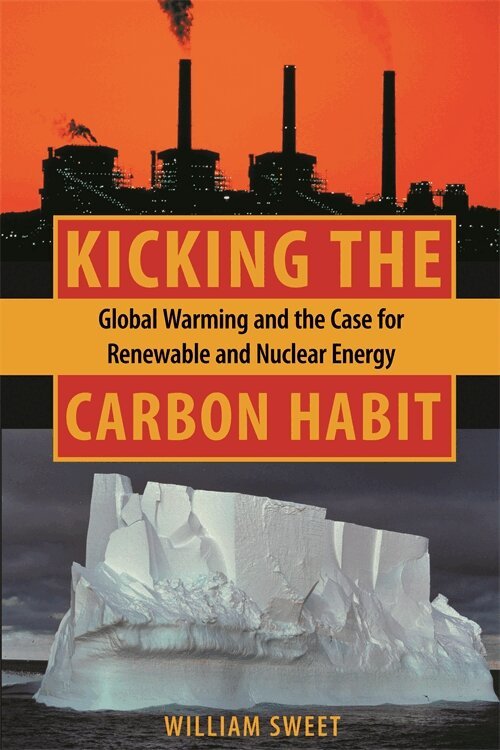
    Kicking the Carbon Habit

    Global Warming and the Case for Renewable and Nuclear Energy

    AvWilliam Sweet

    Häftad, Engelska, 2008

    268 kr

    Beställningsvara. Skickas inom 5-8 vardagar. Fri frakt över 249 kr.

    Fler format och utgåvor

    Inbunden

    986 kr

    Beskrivning

    With glaciers melting, oceans growing more acidic, species dying out, and catastrophic events like Hurricane Katrina ever more probable, strong steps must be taken now to slow global warming. Further warming threatens entire regional economies and the well being of whole populations, and in this century alone, it could create a global cataclysm. Synthesizing information from leading scientists and the most up-to-date research, science journalist William Sweet examines what the United States can do to help prevent climate devastation. Rather than focusing on cutting oil consumption, which Sweet argues is expensive and unrealistic, the United States should concentrate on drastically reducing its use of coal. Coal-fired plants, which currently produce more than half of the electricity in the United States, account for two fifths of the country's greenhouse gas emissions of carbon dioxide into the atmosphere. Sweet believes a mixture of more environmentally sound technologies-wind turbines, natural gas, and nuclear reactors-can effectively replace coal plants, especially since dramatic improvements in technology have made nuclear power cleaner, safer, and more efficient.Sweet cuts through all the confusion and controversies. He explores dramatic advances made by climate scientists over the past twenty years and addresses the various political and economic issues associated with global warming, including the practicality of reducing emissions from automobiles, the efficacy of taxing energy consumption, and the responsibility of the United States to its citizens and the international community to reduce greenhouse gases. Timely and provocative, Kicking the Carbon Habit is essential reading for anyone interested in environmental science, economics, and the future of the planet.

    Produktinformation

    • Utgivningsdatum:2008-02-22
    • Mått:152 x 229 x undefined mm
    • Format:Häftad
    • Språk:Engelska
    • Antal sidor:272
    • Förlag:Columbia University Press
    • ISBN:9780231137119
    • Utmärkelser:Winner of Choice Outstanding Academic Title 2006

    Utforska kategorier

    • Energiteknik inom Naturvetenskap och teknik
    • Miljövetenskap och miljöpolitik inom Naturvetenskap och teknik

    Mer om författaren

    William Sweet is a graduate of the University of Chicago and Princeton University. He is senior news editor at IEEE Spectrum, the flagship publication of the Institute of Electrical and Electronic Engineers. His work has appeared in dozens of newspapers and magazines, including the Los Angeles Times, The New Republic, and MIT's Technology Review.

    Recensioner i media

    His lively, clear reporting of both the science and politics of climate change... Make the book a pleasure to read. -- Doug Macdougall The Chronicle Review Sweet knows what he is talking about... Kicking the Carbon Habit is a great place to kick-start the debate and cool down the rhetoric. -- William Tucker Wall Street Journal An important contribution to the debate. Globe and Mail The book is extremely well written... Highly recommended. Choice Clearly written and very well-informed. Future Survey A must-read for anyone who wants a good summary of our current understanding of global warming and the options before us. -- Andrew C. Kadak Physics Today Sweet's book is a readable, compelling and hard-nosed analysis of this vast and complicated subject. The Exeter Bulletin [An] excellent survey perfect for both school and public libraries. The Midwest Book Review

    Innehållsförteckning

    • Preface 1. The Case for Sharply Cutting U.S. Greenhouse Gas Emissions Part I. Coal: A Faustian Bargain with Payments Coming Due 2. Basis of It All: Pennsylvania in the Pennsylvanian 3. The Air We Breathe: The Human Costs of Coal Combustion 4. From Outer Space: Asia's Brown Cloud, and More Part II. Climate: The Lockstep Relationship Between Carbon Dioxide and Temperature 5. The Drillers 6. The Modelers 7. The Synthesizers Part III. Choices: The Low-Carbon and Zero-Carbon Technologies We Can Deploy Right Now 8. Breaking the Carbon Habit 9. Going All Out for Renewables, Conservation, and Green Design 10. Natural Gas, Gasoline, and the Vision of a Hydrogen Economy 11. A Second Look at Nuclear Energy Conclusion: How to Reduce Greenhouse Gases Now, Using Today's Technology Acknowledgments Notes Bibliography Index