• Fri frakt över 249 kr
  • •
  • Snabba leveranser
  • •
  • Billiga böcker
Kundservice

Du är på sajten för privatpersoner.

Företag, bibliotek eller offentlig verksamhet?

Du handlar på classic.bokus.com, där alla dina funktioner finns intakta.
Till classic.bokus.com
Bokus logotyp. Gå till startsidan.
  • Erbjudanden
  • Nyheter
  • Student
  • Topplistor
  • Barn & ungdom
  • Bokus Play
  • E-böcker
  • Pocketböcker
  • Spel & pussel

Må bättre, för mindre! Upp till 50% rabatt på hälsoböcker

Sidfot

Mina sidor

    Hjälp

    • Kundservice
    • Vanliga frågor och svar
    • Frakt och leverans
    • Retur vid ångerrätt
    • Reklamera vara
    • Betalning
    • Köpvillkor
    • Allmänna villkor
    • Information om webbplatsens tillgänglighet

    Om Bokus

    • Om oss
    • Pressrum
    • För studenter
    • För företag
    • För bibliotek och offentlig verksamhet
    • För leverantörer
    • Hållbarhet

    Populärt

    • Aktuella erbjudanden
    • Presentkort
    • Studentlitteratur
    • Nya böcker
    • Topplistor
    • Signerade böcker
    • Engelska böcker

    Inspiration

    • Boktips
    • BookTok
    • Populära bokserier
    • Barnbokskaraktärer
    • Populära författare
    Logotyp för Bokus
    Följ oss på Facebook (extern länk)Följ oss på Instagram (extern länk)Följ oss på YouTube (extern länk)Följ oss på TikTok (extern länk)
    bokus @ CookiesAnpassa cookiesIntegritetspolicyKöpvillkor
    Till Citymail hemsida (extern länk)Till Budbee hemsida (extern länk)Till Postnord hemsida (extern länk)Till Schenker hemsida (extern länk)Till Early Bird hemsida (extern länk)Till Walleys hemsida (extern länk)
    1. Kultur
    2. Konstböcker
    3. Konsthistoria

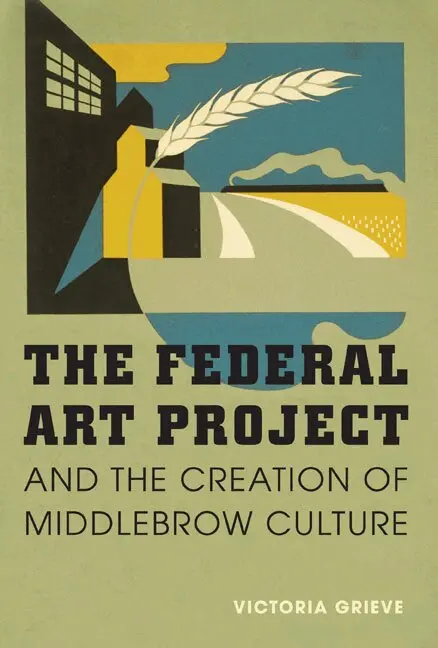
    Federal Art Project and the Creation of Middlebrow Culture

    AvVictoria Grieve

    Inbunden, Engelska, 2009

    572 kr

    Beställningsvara. Skickas inom 5-8 vardagar. Fri frakt över 249 kr.

    Beskrivning

    This intellectual history chronicles the processes of compromise and negotiation between high and low art, federal and local interests, and the Progressive Era and New Deal. Victoria Grieve examines how intellectual trends in the early twentieth century combined with government forces and structures of the New Deal's Federal Art Project to redefine American taste in the visual arts. Representing more than a response to the emergency of the Great Depression, the Federal Art Project was rooted in Progressive Era cultural theories, the modernist search for a usable past, and developments in the commercial art world in the early decades of the twentieth century. In their desire to create an art for the "common man," FAP artists and administrators used the power of the federal government to disseminate a specific view of American culture, one that combined ideals of uplift with those of accessibility: a middlebrow visual culture. Grieve discusses efforts by thinkers and reformers such as John Dewey, John Cotton Dana, and Constance Rourke to democratize art amid a blossoming consumer culture around World War I. Against this backdrop of ideas about aesthetics and the purposes of art, Grieve explores how the FAP, more than merely employing artists during the Great Depression, used government resources to create a space for the "everyman" to make and appreciate art. Two programs in particular--the Index of American Design and the Community Art Center program--attempted to bring art to the masses. By the end of the 1930s, however, the nationalism and cultural egalitarianism of middlebrow visual art came under attack. But the FAP had laid the groundwork for a postwar resurgence of American art, and by the 1960s, the federal government would once again enter the cultural arena. By linking the FAP to its roots in earlier cultural movements, The Federal Art Project and the Creation of Middlebrow Culture expands the historiography of the New Deal, illuminating the role of the visual arts in the 1930s. Focusing specifically on the fundamentally different and competing views of culture that informed the Federal Art Project, this study chronicles a controversial program that, to many, represented a unique opportunity to create a cultural democracy in America.

    Produktinformation

    • Utgivningsdatum:2009-03-13
    • Mått:152 x 229 x 23 mm
    • Vikt:513 g
    • Format:Inbunden
    • Språk:Engelska
    • Antal sidor:240
    • Förlag:University of Illinois Press
    • ISBN:9780252034213

    Utforska kategorier

    • Konsthistoria inom Kultur

    Mer om författaren

    Victoria Grieve is an assistant professor of history at Utah State University, where she is also curator of twentieth-century West Coast American Art at the Nora Eccles Harrison Museum of Art.

    Recensioner i media

    “[Grieve’s] tightly constructed and well-argued book touches on critical contemporary issues regarding federal funding of the arts, especially during times of economic distress.”--Journal of Illinois History"Recommended."--Choice  "An interesting, well-written and thought-provoking book."--American Studies "This rich study answers many important questions about an intriguing aspect of 1930s culture. The past several years have seen a growing interest in middlebrow culture, and this book will advance that current considerably."--Miles Orvell, author of After the Machine: Visual Arts and the Erasing of Cultural Boundaries "An important and original contribution to our understanding of the role of the Federal Art Project in the context of larger twentieth-century intellectual conceptualizations of the role of art in society, especially regarding middle-class and working-class audiences. Essential reading in twentieth-century art history, folklore, public history, and popular intellectual history--and a pleasure to read."--Erika Brady, author of A Spiral Way: How the Phonograph Changed Ethnography

    Innehållsförteckning

    • Acknowledgments   ixIntroduction   11. The Art of Experience   112. Inventing a Usable Past   373. New Museums and New Critics   594. The Federal Art Project and the Making of Middlebrow Culture   835. Marketing the American Folk   1106. Creating the Middlebrow Consumer   135Conclusion   163Notes   181Bibliography   205Index   223