• Fri frakt över 249 kr
  • •
  • Snabba leveranser
  • •
  • Billiga böcker
Kundservice

Du är på sajten för privatpersoner.

Företag, bibliotek eller offentlig verksamhet?

Du handlar på classic.bokus.com, där alla dina funktioner finns intakta.
Till classic.bokus.com
Bokus logotyp. Gå till startsidan.
  • Erbjudanden
  • Nyheter
  • Student
  • Topplistor
  • Barn & ungdom
  • Bokus Play
  • E-böcker
  • Pocketböcker
  • Spel & pussel

10% studentrabatt med kod TERM26

Sidfot

Mina sidor

    Hjälp

    • Kundservice
    • Vanliga frågor och svar
    • Frakt och leverans
    • Retur vid ångerrätt
    • Reklamera vara
    • Betalning
    • Köpvillkor
    • Allmänna villkor
    • Information om webbplatsens tillgänglighet

    Om Bokus

    • Om oss
    • Pressrum
    • För studenter
    • För företag
    • För bibliotek och offentlig verksamhet
    • För leverantörer
    • Hållbarhet

    Populärt

    • Aktuella erbjudanden
    • Presentkort
    • Studentlitteratur
    • Nya böcker
    • Topplistor
    • Signerade böcker
    • Engelska böcker

    Inspiration

    • Boktips
    • BookTok
    • Populära bokserier
    • Barnbokskaraktärer
    • Populära författare
    Logotyp för Bokus
    Följ oss på Facebook (extern länk)Följ oss på Instagram (extern länk)Följ oss på YouTube (extern länk)Följ oss på TikTok (extern länk)
    bokus @ CookiesAnpassa cookiesIntegritetspolicyKöpvillkor
    Till Citymail hemsida (extern länk)Till Budbee hemsida (extern länk)Till Postnord hemsida (extern länk)Till Schenker hemsida (extern länk)Till Early Bird hemsida (extern länk)Till Walleys hemsida (extern länk)
    1. Kultur
    2. Musikböcker
    3. Musik: stilar och genrer

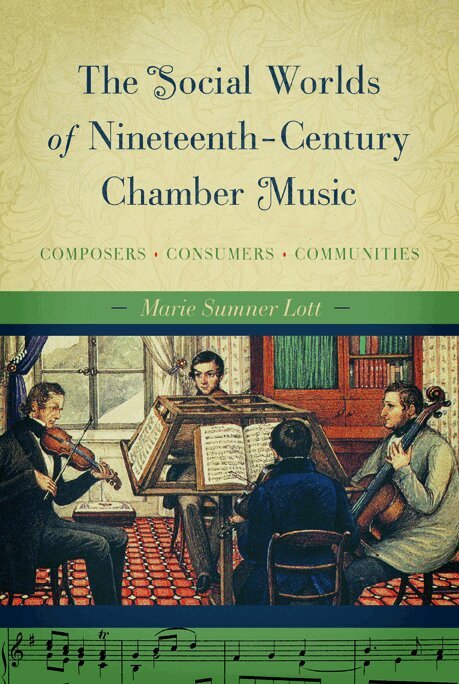
    Social Worlds of Nineteenth-Century Chamber Music

    Composers, Consumers, Communities

    AvMarie Sumner Lott

    Häftad, Engelska, 2018

    304 kr

    Beställningsvara. Skickas inom 5-8 vardagar. Fri frakt över 249 kr.

    Fler format och utgåvor

    E-bok

    566 kr

    Beskrivning

    Music played an important role in the social life of nineteenth-century Europe, and music in the home provided a convenient way to entertain and communicate among friends and colleagues. String chamber music, in particular, fostered social interactions that helped build communities within communities. Marie Sumner Lott examines the music available to musical consumers in the nineteenth century, and what that music tells us about their tastes, priorities, and activities. Her social history of chamber music performance places the works of canonic composers such as Schubert, Brahms, and Dvoøák in relation to lesser-known but influential peers. The book explores the dynamic relationships among the active agents involved in the creation of Romantic music and shows how each influenced the others' choices in a rich, collaborative environment. In addition to documenting the ways companies acquired and marketed sheet music, Sumner Lott reveals how the publication and performance of chamber music differed from that of ephemeral piano and song genres or more monumental orchestral and operatic works. Several distinct niche markets existed within the audience for chamber music, and composers created new musical works for their use and enjoyment.Insightful and groundbreaking, The Social Worlds of Nineteenth-Century Chamber Music revises prevailing views of middle-class influence on nineteenth-century musical style and presents new methods for interpreting the meanings of musical works for musicians both past and present.

    Produktinformation

    • Utgivningsdatum:2018-07-30
    • Mått:156 x 235 x 23 mm
    • Vikt:399 g
    • Format:Häftad
    • Språk:Engelska
    • Antal sidor:328
    • Förlag:University of Illinois Press
    • ISBN:9780252083846

    Utforska kategorier

    • Musik: stilar och genrer inom Kultur

    Mer om författaren

    Marie Sumner Lott is an associate professor of music history and literature at Georgia State University and a winner of a 2013 ASCAP-Deems Taylor award.

    Recensioner i media

    "By focusing on the milieu of middle-class amateurs rather than the professional world of the concert hall that has occupied most scholars, Lott provides a fresh perspective on the production and consumption of chamber music in nineteenth-century Europe. The Social Worlds of Nineteenth-Century Chamber Music is an exemplary contextual study that enhances our appreciation of not only canonic masterworks but also lesser-known pieces written for this thriving market."--Walter Frisch, author of Music in the Nineteenth Century"Marie Sumner Lott's monograph, The Social Worlds of Nineteenth-Century Chamber Music: Composers, Consumers, Communities, takes us on a rewarding journey into chamber music's often hidden social worlds, adopting an approach accessible to a broad readership." --Victorian Studies  "This book is an extremely significant achievement. It is likely to attract the interest of a broader readership and is strongly recommended, both as a resource for students and more seasoned scholars. It is all too rare that one encounters a book that engages one's avid interest throughout: this was one of those books."--Ad Parnassum

    Innehållsförteckning

    • CoverTitleCopyrightContentsList of Figures and TablesList of Musical ExamplesAcknowledgmentsIntroduction. String Chamber Music and Its Audiences in the Nineteenth Century1. Publishing Chamber Music: Archival Evidence for Chamber Music Production and Consumption2. "Domesticating" the Foreign in Arrangements of Operas, Folk Songs, and Other Works for Chamber Ensembles3. Music for Men of Leisure: An Examination of the Domestic String Style4. Redefining the "Progressive" Style in Responses to Beethoven's Late Quartets5. Creating "Progressive" Communities through Programmatic Chamber Music6. Audience and Style in Brahms's String Chamber Music7. The Diversity of Dvořák's String Quartet AudiencesAppendix 1 J. Strunz, string quartet transcription of no. 18, "Prière" (Prayer), from Meyerbeer's Robert le DiableAppendix 2 C. W. Henning, string quartet transcription of no. 8, "Leise, leise, fromme Weise" (Gently, gently, pious words), from Weber's Der FreischützAppendix 3 M. Kässmayer, string quartet arrangement of "Mein Herz ist im Hochland" (My heart is in the Highlands) from Deutsche Lieder, op. 14, no. 4NotesBibliographyIndex