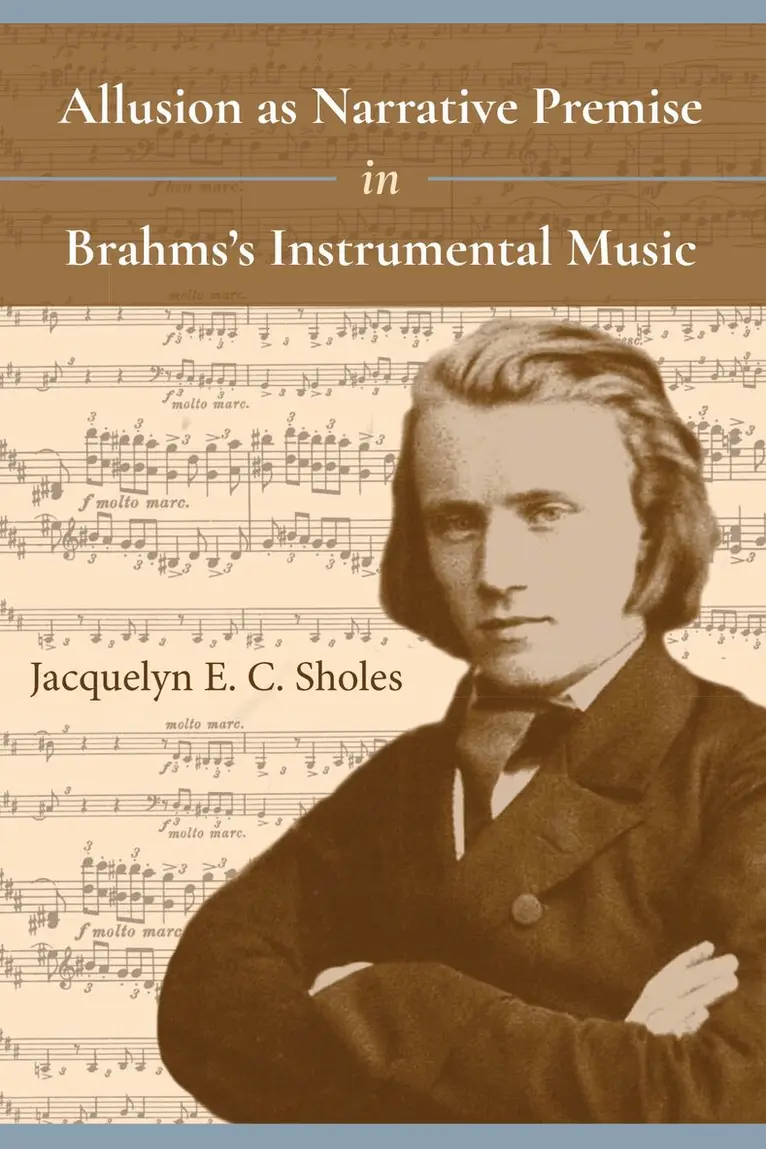
E-bok, Engelska, 2018
Allusion As Narrative Premise in Brahms's Instrumental Music
Del i serien Musical Meaning and Interpretation
104 kr
Läs direkt i Bokus Reader – eller ladda ned till din enhet (PDF kräver ofta zoom och scroll på små skärmar).
Beskrivning
Who inspired Johannes Brahms in his art of writing music? In this book, Jacquelyn E. C. Sholes provides a fresh look at the ways in which Brahms employed musical references to works of earlier composers in his own instrumental music. By analyzing newly identified allusions alongside previously known musical references in works such as the B-Major Piano Trio, the D-Major Serenade, the First Piano Concerto, and the Fourth Symphony, among others, Sholes demonstrates how a historical reference in one movement of a work seems to resonate meaningfully, musically, and dramatically with material in other movements in ways not previously recognized. She highlights Brahms's ability to weave such references into broad, movement-spanning narratives, arguing that these narratives served as expressive outlets for his complicated, sometimes conflicted, attitudes toward the material to which he alludes. Ultimately, Brahms's music reveals both the inspiration and the burden that established masters such as Domenico Scarlatti, J. S. Bach, Haydn, Mozart, Schubert, Schumann, Wagner, and especially Beethoven represented for him as he struggled to emerge with his own artistic voice and to define and secure his unique position in music history.
Produktinformation
- Utgivningsdatum: 2018-05-24
- Språk: Engelska
- Antal sidor: 274
- Filformat: PDF
- Kopieringsskydd: LCP
- ISBN: 9780253033161
- Förlag: Indiana University Press
- Serie: Musical Meaning and Interpretation
- Mått: 152 x 229 x undefined mm
Utforska kategorier
Mer om författaren
Jacquelyn E. C. Sholes serves on the faculty of the Department of Musicology and Ethnomusicology at Boston University.
Recensioner i media
"Worth a read for Brahms devotees, even those without advanced music theory knowledge. . . . Recommended."—Choice"This is a wonderfully musical book with many valuable insights (and many generously long music examples). It will be useful to Brahms scholars, of course, but also to those who studymusic from roughly 1780 to the early twentieth century."—Notes
Betyg & recensioner
0 recensioner
Inga recensioner tillgängliga.