• Fri frakt över 249 kr
  • •
  • Snabba leveranser
  • •
  • Billiga böcker
Kundservice

Du är på sajten för privatpersoner.

Företag, bibliotek eller offentlig verksamhet?

Du handlar på classic.bokus.com, där alla dina funktioner finns intakta.
Till classic.bokus.com
Bokus logotyp. Gå till startsidan.
  • Erbjudanden
  • Nyheter
  • Student
  • Topplistor
  • Barn & ungdom
  • Bokus Play
  • E-böcker
  • Pocketböcker
  • Spel & pussel

10% rabatt på allt med kod: NYSTART10 →

Sidfot

Mina sidor

    Hjälp

    • Kundservice
    • Vanliga frågor och svar
    • Frakt och leverans
    • Retur vid ångerrätt
    • Reklamera vara
    • Betalning
    • Köpvillkor
    • Allmänna villkor
    • Information om webbplatsens tillgänglighet

    Om Bokus

    • Om oss
    • Pressrum
    • För studenter
    • För företag
    • För bibliotek och offentlig verksamhet
    • För leverantörer
    • Hållbarhet

    Populärt

    • Aktuella erbjudanden
    • Presentkort
    • Studentlitteratur
    • Nya böcker
    • Topplistor
    • Signerade böcker
    • Engelska böcker

    Inspiration

    • Boktips
    • BookTok
    • Populära bokserier
    • Barnbokskaraktärer
    • Populära författare
    Logotyp för Bokus
    Följ oss på Facebook (extern länk)Följ oss på Instagram (extern länk)Följ oss på YouTube (extern länk)Följ oss på TikTok (extern länk)
    bokus @ CookiesAnpassa cookiesIntegritetspolicyKöpvillkor
    Till Citymail hemsida (extern länk)Till Budbee hemsida (extern länk)Till Postnord hemsida (extern länk)Till Schenker hemsida (extern länk)Till Early Bird hemsida (extern länk)Till Walleys hemsida (extern länk)
    1. Medicin
    2. Klinisk medicin och internmedicin

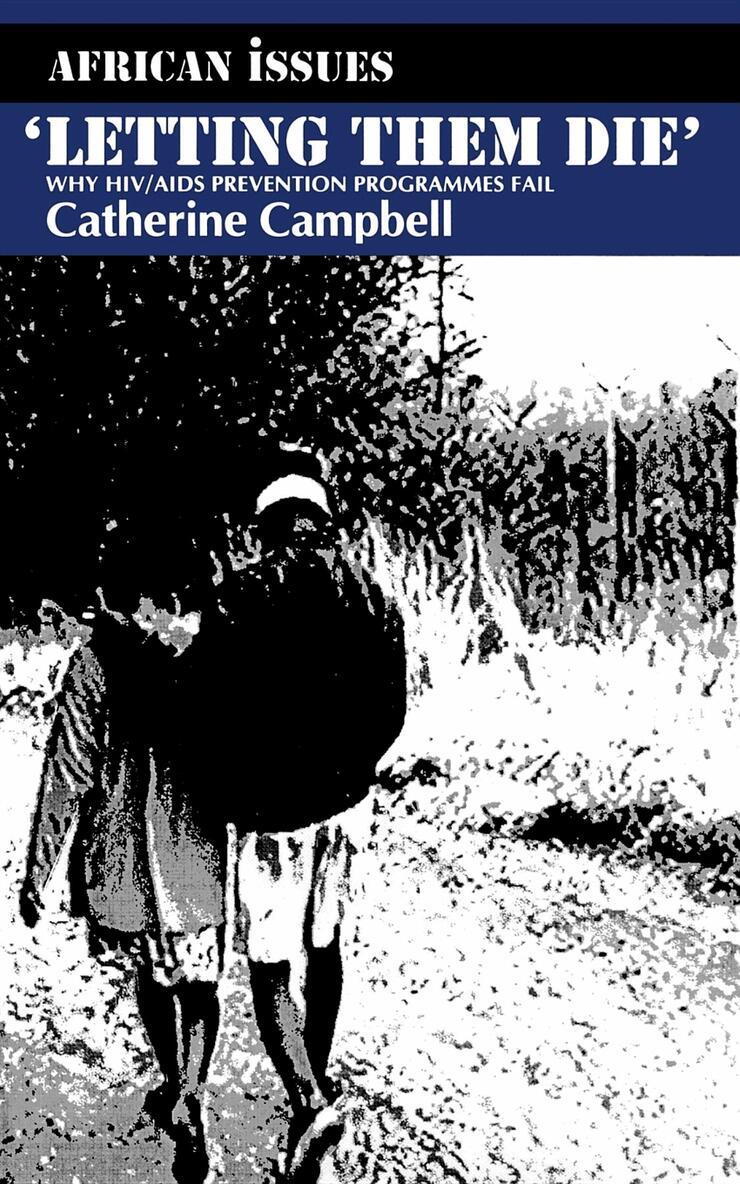
    Letting Them Die

    Why HIV/AIDS Prevention Programmes Fail

    AvCatherine Campbell

    Häftad, Engelska, 2003

    Del i serien African Issues

    446 kr

    Beställningsvara. Skickas inom 3-6 vardagar. Fri frakt över 249 kr.

    Beskrivning

    "In the old South Africa we killed people. Now we're just letting them die." —Pieter Dirk Uys, South African satiristToday in South Africa, HIV/AIDS kills about 5 in 10 young people. Many of the victims are miners and commercial sex workers who ply their trade in mining communities. In this critique of government-sponsored and privately funded HIV/AIDS prevention programs in South Africa, Catherine Campbell exposes why it has been so difficult to stop the HIV/AIDS epidemic. Campbell's research focuses on local vectors of the disease such as what people believe about the spread and prevention of AIDS, what measures they take to prevent disease, and whether they are likely to seek treatment at local AIDS clinics. "Letting Them Die" is not just an investigation into sexuality, social relations, health, and medicine; it is also a sharp review of the kinds of programs that are becoming the standard method of HIV/AIDS intervention throughout Africa.

    Produktinformation

    • Utgivningsdatum:2003-09-01
    • Mått:127 x 203 x undefined mm
    • Vikt:249 g
    • Format:Häftad
    • Språk:Engelska
    • Serie:African Issues
    • Antal sidor:224
    • Förlag:Indiana University Press
    • ISBN:9780253216359

    Utforska kategorier

    • Klinisk medicin och internmedicin inom Medicin

    Mer om författaren

    Catherine Campbell is a Reader at the London School of Economics and an External Professor at the University of Natal.

    Recensioner i media

    "A remarkable book . . . a signal example of why Campbell is considered one of the foremost researchers on HIV and AIDS. It is trenchant, troubling, meticulously reasoned and compellingly written."—New England Journal of Medicine". . . of universal interest . . . a guidebook for anyone running or working in a health related programme in a developing country . . ."—African Review of Books"A compelling demonstration of the value and power of qualitative research and process evaluation . . . intriguing and important . . . provides an inspiring intervention paradigm."—Journal of Community and Applied Social Psychology"Brave, frank, perceptive . . . a uniquely detailed description and interpretation."—Population and Development Review"An important and compelling contribution to the field of public health education . . . recommended to all those interested in finding ways of addressing the basic issues of health care inequality and social injustice through community education and organisation"—Health Education and Behavior"Arguably the most important practitioner critique to have appeared in recent years . . . a landmark book. . . . I salute the author's intellectual honesty."—Anthropology in Action"A superb analysis of community development initiatives . . . well researched, intelligently summarised, and riveting . . . an important and compelling contribution."—European Journal of Development Research"The book is a major achievement, setting the standard for rigorous evaluation of planning and delivering HIV prevention. It should be required reading . . . for all interested in developing or evaluating social interventions to promote health."—Health Education Research"This is a splendid and courageous book. . . . Tidily organised, properly directed and well-written. It will be significant reading for health and AIDS activists, those involved in development studies and social theorists of various stripes."—Journal of Health Psychology"A superb ethnography of a leading HIV/AIDS prevention programme . . . There is an honesty in Campbell's writing that makes uncomfortable reading"—New Political Economy

    Innehållsförteckning

    • Preliminary Table of Contents: AcknowledgmentsPart 1. Sexuality and Sexual Health in the Summertown Mining Community: Context and Concepts1. Sexuality, Participation, and Social Change2. "Going underground and going after women": HIV Transmission amongst Mineworkers3. Mobilizing a Local Community to Prevent HIV/AIDS: The Summertown Project4. Community, Participation, and Sexual Health: Conceptual ChallengesPart 2. Sexuality, Sexual Health, and Peer Education amongst Summertown Sex Workers5. The Social Organization of Commercial Sex Work6. Sex Workers Organize to Fight HIV Transmission: Community-Led Peer Education in an Informal, "Hard-to-Reach" Setting7. Factors Shaping the Success of Community Mobilisation in Informal SettingsPart 3. Sexuality and Sexual Health amongst Young People in Summertown8. HIV Transmission amongst Young People: Gender, Social Norms, and Sexuality9. Changing Young People's Sexual Behavior?: Youth-Led Participatory HIV Prevention in SummertownPart 4. Power, Participation, and Political Will: The Context of HIV Prevention Efforts10. Make or Break: Stakeholder Collaboration in Project Planning11. Make or Break: Technical Capacity and Grassroots Identification with Project Goals12. Commitment, Conceptualization, and Capacity