• Fri frakt över 249 kr
  • •
  • Snabba leveranser
  • •
  • Billiga böcker
Kundservice

Du är på sajten för privatpersoner.

Företag, bibliotek eller offentlig verksamhet?

Du handlar på classic.bokus.com, där alla dina funktioner finns intakta.
Till classic.bokus.com
Bokus logotyp. Gå till startsidan.
  • Erbjudanden
  • Nyheter
  • Student
  • Topplistor
  • Barn & ungdom
  • Bokus Play
  • E-böcker
  • Pocketböcker
  • Spel & pussel

10% studentrabatt med kod TERM26

Sidfot

Mina sidor

    Hjälp

    • Kundservice
    • Vanliga frågor och svar
    • Frakt och leverans
    • Retur vid ångerrätt
    • Reklamera vara
    • Betalning
    • Köpvillkor
    • Allmänna villkor
    • Information om webbplatsens tillgänglighet

    Om Bokus

    • Om oss
    • Pressrum
    • För studenter
    • För företag
    • För bibliotek och offentlig verksamhet
    • För leverantörer
    • Hållbarhet

    Populärt

    • Aktuella erbjudanden
    • Presentkort
    • Studentlitteratur
    • Nya böcker
    • Topplistor
    • Signerade böcker
    • Engelska böcker

    Inspiration

    • Boktips
    • BookTok
    • Populära bokserier
    • Barnbokskaraktärer
    • Populära författare
    Logotyp för Bokus
    Följ oss på Facebook (extern länk)Följ oss på Instagram (extern länk)Följ oss på YouTube (extern länk)Följ oss på TikTok (extern länk)
    bokus @ CookiesAnpassa cookiesIntegritetspolicyKöpvillkor
    Till Citymail hemsida (extern länk)Till Budbee hemsida (extern länk)Till Postnord hemsida (extern länk)Till Schenker hemsida (extern länk)Till Early Bird hemsida (extern länk)Till Walleys hemsida (extern länk)
    1. Samhälle och politik
    2. Politik och statsskick
    3. Statsvetenskap och politisk teori

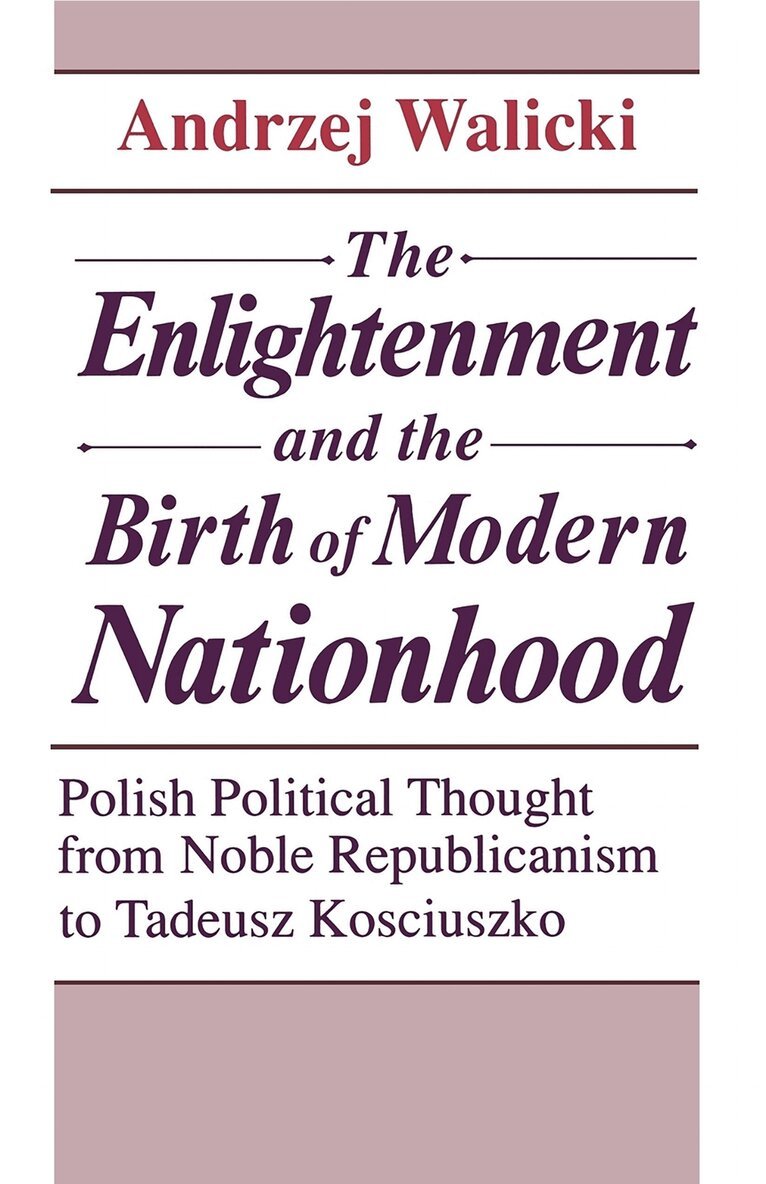
    Enlightenment and the Birth of Modern Nationhood

    Polish Political Thought from Noble Republicanism to Tadeusz Kosciuszko

    AvAndrzej Walicki

    Inbunden, Engelska, 1989

    363 kr

    Beställningsvara. Skickas inom 5-8 vardagar. Fri frakt över 249 kr.

    Beskrivning

    Renowned historian Andrzej Walicki here challenges the conventional understanding of the rise of nationalism and the nation-building process in East-Central Europe.Arguing that the views advanced by Hans Kohn and others are marred by an inadequate knowledge of Polish history and thought, Walicki examines the emerging nationalism of the eighteenth century in a comparative perspective. He shows how Poland, the largest state in East-Central Europe, developed a modem national consciousness and, in fact, a political nationalism earlier and more successfully than has generally been acknowledged.Walicki presents his case by examining the main currents of Polish thought in the Enlightenment from Noble Republicanism to the development of the progressive constitution of May 3, 1791. A final chapter analyzes the ideas of Tadeusz Kosciuszko, the leader of the Polish uprising of 1794, showing him as an ideologist of "new republicanism" and a bridge between the Enlightenment and Romantic periods. This chapter will be of particular interest to readers familiar with Kosciuszko as a hero of the American Revolution.

    Produktinformation

    • Utgivningsdatum:1989-03-02
    • Mått:140 x 216 x 13 mm
    • Vikt:353 g
    • Format:Inbunden
    • Språk:Engelska
    • Antal sidor:170
    • Förlag:University of Notre Dame Press
    • ISBN:9780268006181

    Utforska kategorier

    • Statsvetenskap och politisk teori inom Samhälle och politik

    Mer om författaren

    Andrzej Walicki was the O'Neill Professor of History at the University of Notre Dame, is the author of Legal Philosophies of Russian Liberalism, Philosophy and Romantic Nationalism: The Case of Poland, and numerous other books.

    Recensioner i media

    Walicki provides a unique perspective on Polish history and culture, influenced by both Polish and American academic worlds and intellectual traditions. The strength of the book is its focus on the role of language and the manipulation of terms such as "communism" or "liberalism" by contemporary political leaders in Poland to achieve specific emotional reactions from the public. —Institute of Slavic Studies, Polish Academy of Sciences