• Fri frakt över 249 kr
  • •
  • Snabba leveranser
  • •
  • Billiga böcker
Kundservice

Du är på sajten för privatpersoner.

Företag, bibliotek eller offentlig verksamhet?

Du handlar på classic.bokus.com, där alla dina funktioner finns intakta.
Till classic.bokus.com
Bokus logotyp. Gå till startsidan.
  • Erbjudanden
  • Nyheter
  • Student
  • Topplistor
  • Barn & ungdom
  • Bokus Play
  • E-böcker
  • Pocketböcker
  • Spel & pussel

10% rabatt på allt med kod: NYSTART10 →

Sidfot

Mina sidor

    Hjälp

    • Kundservice
    • Vanliga frågor och svar
    • Frakt och leverans
    • Retur vid ångerrätt
    • Reklamera vara
    • Betalning
    • Köpvillkor
    • Allmänna villkor
    • Information om webbplatsens tillgänglighet

    Om Bokus

    • Om oss
    • Pressrum
    • För studenter
    • För företag
    • För bibliotek och offentlig verksamhet
    • För leverantörer
    • Hållbarhet

    Populärt

    • Aktuella erbjudanden
    • Presentkort
    • Studentlitteratur
    • Nya böcker
    • Topplistor
    • Signerade böcker
    • Engelska böcker

    Inspiration

    • Boktips
    • BookTok
    • Populära bokserier
    • Barnbokskaraktärer
    • Populära författare
    Logotyp för Bokus
    Följ oss på Facebook (extern länk)Följ oss på Instagram (extern länk)Följ oss på YouTube (extern länk)Följ oss på TikTok (extern länk)
    bokus @ CookiesAnpassa cookiesIntegritetspolicyKöpvillkor
    Till Citymail hemsida (extern länk)Till Budbee hemsida (extern länk)Till Postnord hemsida (extern länk)Till Schenker hemsida (extern länk)Till Early Bird hemsida (extern länk)Till Walleys hemsida (extern länk)
    1. Filosofi och religion
    2. Religion och tro
    3. Religion: allmänt

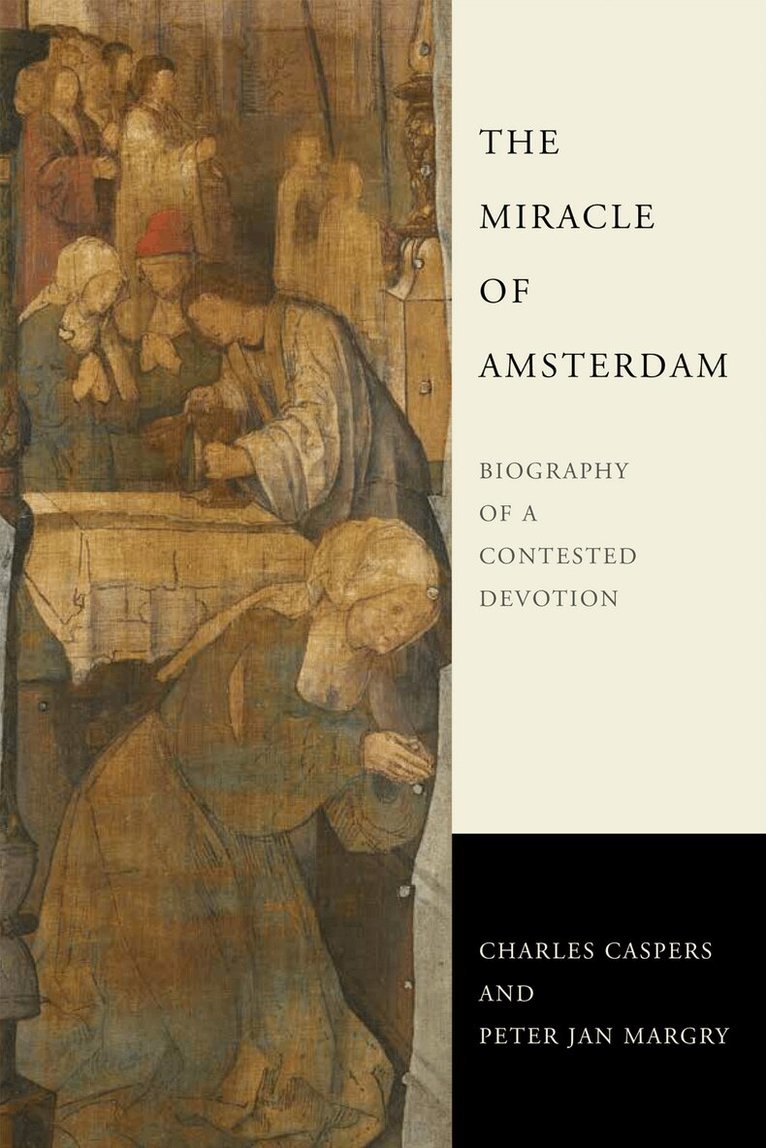
    Miracle of Amsterdam

    Biography of a Contested Devotion

    AvCharles Caspers,Peter Jan Margry

    Inbunden, Engelska, 2019

    622 kr

    Beställningsvara. Skickas inom 5-8 vardagar. Fri frakt över 249 kr.

    Beskrivning

    The Miracle of Amsterdam presents a "cultural biography" of a Dutch devotional manifestation. According to tradition, on the night of March 15, 1345, a Eucharistic host thrown into a burning fireplace was found intact hours later. A chapel was erected over the spot, and the citizens of Amsterdam became devoted to their "Holy Stead." From the original Eucharistic processions evolved the custom of individual devotees walking around the chapel while praying in silence, and the growing international pilgrimage site contributed to the rise and prosperity of Amsterdam.With the arrival of the Reformation, the Amsterdam Miracle became a point of contention between Catholics and Protestants, and the changing fortunes of this devotion provide us a front-row seat to the challenges facing religion in the world today. Caspers and Margry trace these transformations and their significance through the centuries, from the Catholic medieval period through the Reformation to the present day.

    Produktinformation

    • Utgivningsdatum:2019-05-31
    • Mått:152 x 229 x 25 mm
    • Vikt:790 g
    • Format:Inbunden
    • Språk:Engelska
    • Antal sidor:464
    • Förlag:University of Notre Dame Press
    • ISBN:9780268105655
    • Utmärkelser:Winner of Catholic Press Association Book Award: History, Third Place 2020 (United States)

    Utforska kategorier

    • Religion: allmänt inom Filosofi och religion
    • Kristendom inom Filosofi och religion

    Mer om författaren

    Charles Caspers is an expert in the field of popular devotions, spirituality, liturgy, and mission history. Together with Peter Jan Margry he published a four-volume study on pilgrimage sites in the Netherlands. He is a senior fellow of the Titus Brandsma Institute in Nijmegen.Peter Jan Margry is professor of European ethnology at the University of Amsterdam and a senior fellow at the Meertens Institute. He is the editor of Shrines and Pilgrimage in the Modern World: New Itineraries into the Sacred.

    Recensioner i media

    "This 'cultural biography' recounts the fascinating life of a religious devotion that has persisted from the Middle Ages to today. Repeatedly changing form and meaning, veneration of the Miracle of Amsterdam has been an important part of Dutch Catholic identity for almost seven centuries. Through the lens of the Miracle, Caspers and Margry offer a compelling view of a much wider story of religious and social change." —Ben Kaplan, University College London"In their marvelously detailed account, Charles Caspers and Peter Jan Margry show how deeply embedded sacred matters are in the history of a place. Excavating layer upon layer of political, civil, and religious history, the authors bring to light the deeply structured cultural memory of a miracle, demonstrating in the process just how richly creative tradition can be. The miracle of a fourteenth-century Eucharistic host is as persistent as Dutch Catholicism and as vivacious as the city of Amsterdam. Extensively researched and clearly written, this book is a model of how to do the cultural history of religion." —David Morgan, Duke University"The book is the first to provide a synthesis of the historical work on the Amsterdam cult and the curious religious practices that developed around it. It is one of the great achievements of this book that the authors can convince their readers of how the ritual has its own chapters. The scholarly work is impressive. The authors combine well-known historical facts and figures with smaller stories and testimonies by lay Catholics that might seem trivial at first but prove to be particularly meaningful and telling." —Tine Van Osselaer, Ruusbroec Institute of the University of Antwerp"The subtitle 'Biography of a Contested Devotion' aptly describes The Miracle of Amsterdam. This is the account of a devotional cult in Amsterdam from its origins in 1345 to the present day, thus a period of almost six hundred years. Despite the fact that the book has two authors, its authorial voice is remarkably uniform and consistent. The book is impeccably researched, elegantly written, and judicious in its handling of sometimes very tricky evidence. I found it to be a deeply insightful, balanced, humane treatment of an important topic." —Daniel Hobbins, University of Notre Dame

    Innehållsförteckning

    • IntroductionPart 1. Creation and expansion of a cult (1345-1500)1. The rise of Amsterdam2. Religious context3. The Miracle4. Corpus Christi and Sacraments of Miracle5. The bishop and the count6. Miracles of the Miracle7. Processions through the cityPart 2. In the Habsburgs' Favor (1500-1600)8. Royal interest in the Holy Stead9. The Habsburgs and national consciousness10. Eucharistic symbolism11. The Reformation comes to Holland12. A women's resistance movement and the city's identity13. The failed coup of the Anabaptists in 153514. Disciplining faith and cult15. 1566, the "miraculous year"16. The end of Amsterdam as an international place of pilgrimagePart 3. The Miracle on the margins (1600-1795)17. Hidden devotion18. Catholic hope and Reformed fear19. The Miracle expressed20. The Miracle celebrated21. The Miracle weighed upPart 4. The battle for public space (1795-1881)22. A velvet revolution: change and continuity23. 1845: the "Feast of Folly"24. Antipapism and the ban on public space25. The "Ultramontane miracle disease"Part 5. The Silent Walk as a national symbol of identity (1881-1960)26. The construction of the Silent Walk27. Cult versus cultural heritage28. A national cult29. The practice of the Walk30. The international Eucharistic movement31. Politics and ideology: the interwar years and the Second World War32. The post-war cult: climax and catharsisPart 6. Revolution and the reinvention of tradition (1960-2015)33. Reconstruction and affluence34. Revolution in the long 1960s35. Religion, market, and tradition36. Ecumenical harmony?37. Continuing, broken, restored, and new traditionsPart 7. Conflict or consensus?Route of the Silent WalkTimelineSources and literatureIndex