• Fri frakt över 249 kr
  • •
  • Snabba leveranser
  • •
  • Billiga böcker
Kundservice

Du är på sajten för privatpersoner.

Företag, bibliotek eller offentlig verksamhet?

Du handlar på classic.bokus.com, där alla dina funktioner finns intakta.
Till classic.bokus.com
Bokus logotyp. Gå till startsidan.
  • Erbjudanden
  • Nyheter
  • Student
  • Topplistor
  • Barn & ungdom
  • Bokus Play
  • E-böcker
  • Pocketböcker
  • Spel & pussel

10% rabatt på allt med kod: NYSTART10 →

Sidfot

Mina sidor

    Hjälp

    • Kundservice
    • Vanliga frågor och svar
    • Frakt och leverans
    • Retur vid ångerrätt
    • Reklamera vara
    • Betalning
    • Köpvillkor
    • Allmänna villkor
    • Information om webbplatsens tillgänglighet

    Om Bokus

    • Om oss
    • Pressrum
    • För studenter
    • För företag
    • För bibliotek och offentlig verksamhet
    • För leverantörer
    • Hållbarhet

    Populärt

    • Aktuella erbjudanden
    • Presentkort
    • Studentlitteratur
    • Nya böcker
    • Topplistor
    • Signerade böcker
    • Engelska böcker

    Inspiration

    • Boktips
    • BookTok
    • Populära bokserier
    • Barnbokskaraktärer
    • Populära författare
    Logotyp för Bokus
    Följ oss på Facebook (extern länk)Följ oss på Instagram (extern länk)Följ oss på YouTube (extern länk)Följ oss på TikTok (extern länk)
    bokus @ CookiesAnpassa cookiesIntegritetspolicyKöpvillkor
    Till Citymail hemsida (extern länk)Till Budbee hemsida (extern länk)Till Postnord hemsida (extern länk)Till Schenker hemsida (extern länk)Till Early Bird hemsida (extern länk)Till Walleys hemsida (extern länk)
    1. Skönlitteratur
    2. Litteraturvetenskap
    3. Litteraturvetenskap

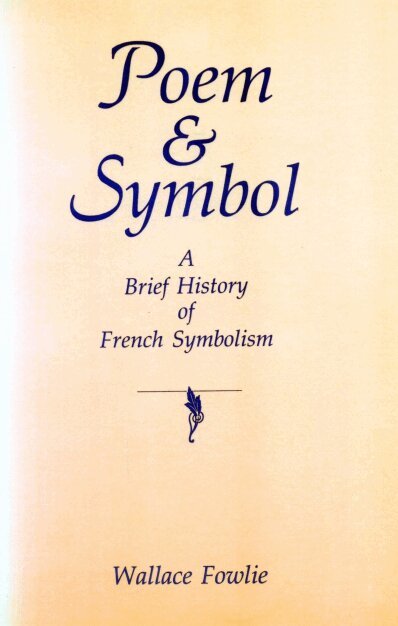
    Poem and Symbol

    A Brief History of French Symbolism

    AvWallace Fowlie

    Häftad, Engelska, 1990

    669 kr

    Beställningsvara. Skickas inom 5-8 vardagar. Fri frakt över 249 kr.

    Beskrivning

    Wallace Fowlie provides an uncommonly well-written survey of French Symbolism by way of analyzing key poems in relation to the historical and literary contexts in which they were written.The literary symbol, as it has been used since Baudelaire’s time, has in Fowlie’s view a closer relationship with the religious spirit of humanity than with any practical or didactic use. Symbolism has been a major focus of literary study since Baudelaire’s Correspondances, which can be seen as a succinct manifesto. It has provided an aesthetic basis for works that have elements of both myth and allegory. These are among the most impressive works of literature since 1850, which have reacted strongly against a realistic art of precision in order to reflect preoccupations that are religious and philosophical. After tracing the background of Symbolism from Romanticism to “Art for Art’s Sake,” Fowlie considers the work of Nerval, Baudelaire, Mallarmé, Rimbaud, Laforgue, Corbière, and Verlaine. He then recapitulates the major features of Symbolism and illustrates its continuity to our day. Fowlie sees Symbolism and modern poetry not as the art of rules and obstacles, but rather as the art of triumph over obstacles and the transcendence of human adventure and experience. He concludes with penetrating analyses of the poetic practice of Valéry, Claudel, St. John Perse, and René Char.

    Produktinformation

    • Utgivningsdatum:1990-08-15
    • Mått:152 x 229 x 13 mm
    • Vikt:286 g
    • Format:Häftad
    • Språk:Engelska
    • Antal sidor:172
    • Förlag:Pennsylvania State University Press
    • ISBN:9780271006963

    Utforska kategorier

    • Litteraturvetenskap inom Skönlitteratur
    • Poesi inom Skönlitteratur

    Mer om författaren

    Wallace Fowlie is James B. Duke Professor Emeritus at Duke University. He is an eminent scholar-teacher whose books include highly regarded studies of Mallarmé, Rimbaud, and Proust.

    Recensioner i media

    “This is a highly successful study of the development of French Symbolism. It is always on the mark, and it progresses with economy and intelligence to make all of its points. It is unfussy, uncluttered by any kind of pretension that too often passes for scholarship and criticism these days.”—Robert T. Denommé, University of Virginia