• Fri frakt över 249 kr
  • •
  • Snabba leveranser
  • •
  • Billiga böcker
Kundservice

Du är på sajten för privatpersoner.

Företag, bibliotek eller offentlig verksamhet?

Du handlar på classic.bokus.com, där alla dina funktioner finns intakta.
Till classic.bokus.com
Bokus logotyp. Gå till startsidan.
  • Erbjudanden
  • Nyheter
  • Student
  • Topplistor
  • Barn & ungdom
  • Bokus Play
  • E-böcker
  • Pocketböcker
  • Spel & pussel

10% rabatt på allt med kod NYSTART10 →

Sidfot

Mina sidor

    Hjälp

    • Kundservice
    • Vanliga frågor och svar
    • Frakt och leverans
    • Retur vid ångerrätt
    • Reklamera vara
    • Betalning
    • Köpvillkor
    • Allmänna villkor
    • Information om webbplatsens tillgänglighet

    Om Bokus

    • Om oss
    • Pressrum
    • För studenter
    • För företag
    • För bibliotek och offentlig verksamhet
    • För leverantörer
    • Hållbarhet

    Populärt

    • Aktuella erbjudanden
    • Presentkort
    • Studentlitteratur
    • Nya böcker
    • Topplistor
    • Signerade böcker
    • Engelska böcker

    Inspiration

    • Boktips
    • BookTok
    • Populära bokserier
    • Barnbokskaraktärer
    • Populära författare
    Logotyp för Bokus
    Följ oss på Facebook (extern länk)Följ oss på Instagram (extern länk)Följ oss på YouTube (extern länk)Följ oss på TikTok (extern länk)
    bokus @ CookiesAnpassa cookiesIntegritetspolicyKöpvillkor
    Till Citymail hemsida (extern länk)Till Budbee hemsida (extern länk)Till Postnord hemsida (extern länk)Till Schenker hemsida (extern länk)Till Early Bird hemsida (extern länk)Till Walleys hemsida (extern länk)
    1. Biografier
    2. Biografier

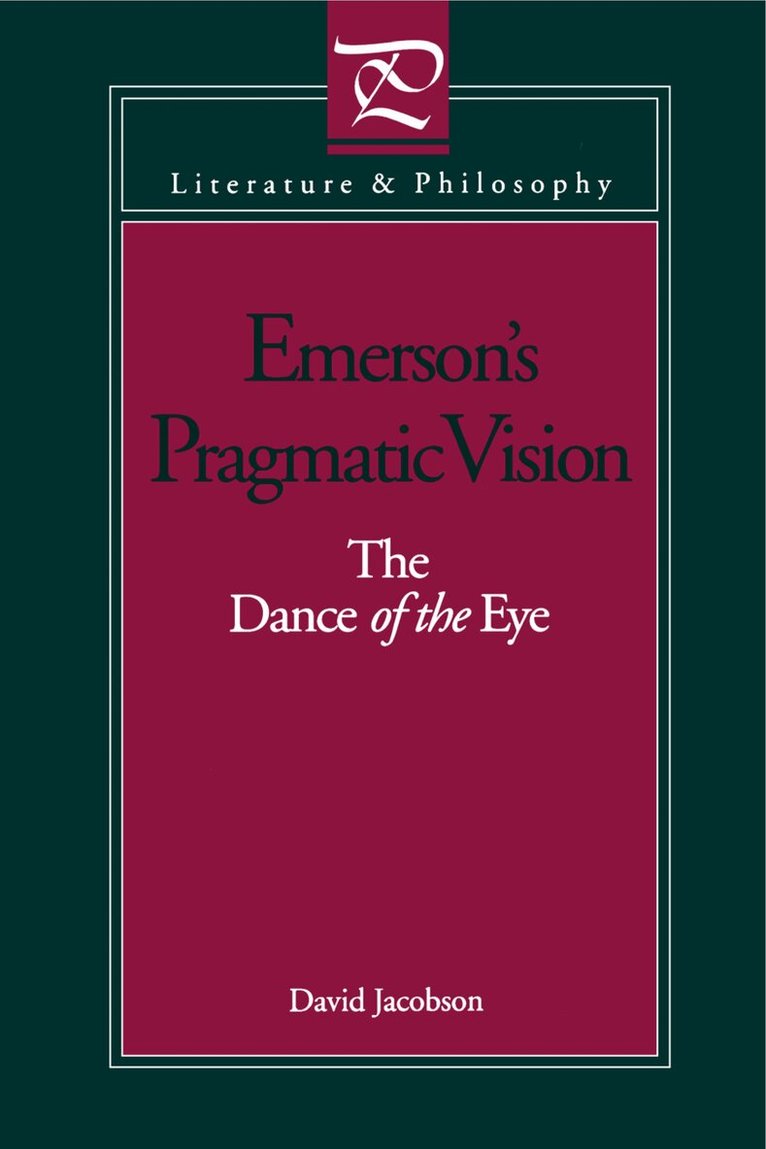
    Emerson's Pragmatic Vision

    The Dance of the Eye

    AvDavid Jacobson

    Häftad, Engelska, 1993

    Del i serien Literature and Philosophy

    669 kr

    Beställningsvara. Skickas inom 5-8 vardagar. Fri frakt över 249 kr.

    Beskrivning

    The long ignored philosophical content of Emerson's writings has recently emerged as a central topic in Emerson studies. In Emerson's Pragmatic Vision, David Jacobson enters the discussion, placing Emerson in a line of philosophers from Kant and Hegel to Heidegger and Derrida, and adding to our understanding of his philosophical appropriations and anticipations. In the process Jacobson shows how Emerson grappled not only with basic issues of philosophy but eventually with the value of philosophical discourse itself. Conceiving Emerson's writings as reflective of a continuous inquiry into the fundamental question that motivates philosophy and guides reason—the question of Being—Jacobson traces his movement through philosophical humanism and anti-humanism to his identification of a philosophy founded on a reconceptualization of individual practice.Emerson's Pragmatic Vision depicts not two Emersons but three. Between the early humanist confidence in self-reliance and the late embrace of fate, Jacobson identifies a transitional period, enunciated in the stark lecture, "The Method of Nature" (1841), and typified by the pessimism and humanist nostalgia of "Experience." The doctrine of fate, Emerson's mature pragmatic philosophy, is presented as a response to this period in which is found Emerson's retrieval of a philosophical posture rooted in obedience to the eloquence of the practice of life.

    Produktinformation

    • Utgivningsdatum:1993-09-15
    • Mått:152 x 229 x 14 mm
    • Vikt:540 g
    • Format:Häftad
    • Språk:Engelska
    • Serie:Literature and Philosophy
    • Antal sidor:220
    • Förlag:Pennsylvania State University Press
    • ISBN:9780271026459

    Utforska kategorier

    • Biografier inom Biografier

    Mer om författaren

    David Jacobson is Assistant Professor of English at the University of Illinois, Urbana.

    Recensioner i media

    “Emerson’s Pragmatic Vision is an excellent and thorough piece of reflection and scholarship. Jacobson carefully traces the transformations of Emerson’s vision and relocates the early material within the larger evolution of a naturalist perspective. He shows how ‘The Method of Nature’ marks a turning point in which Emerson moves decisively beyond his earlier humanism (with its attendant narcissism) toward a view which places the human process at the service of the much vaster and more compelling method of nature.”—Robert Corrington, Drew University