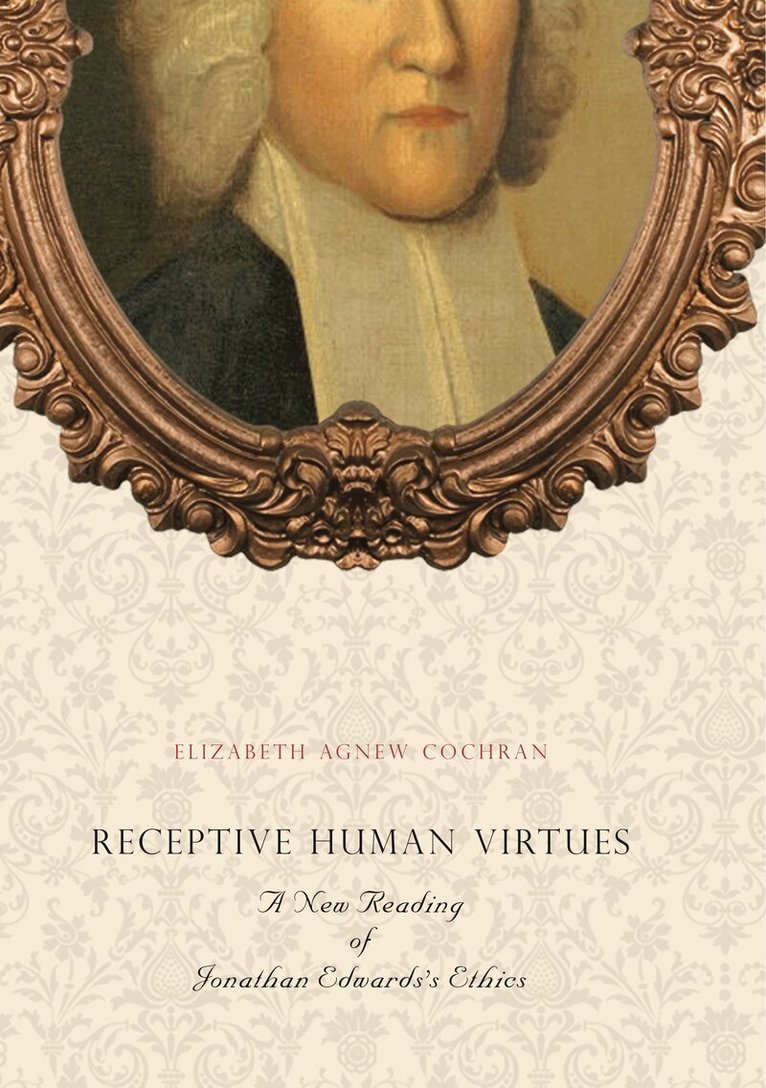
Receptive Human Virtues
A New Reading of Jonathan Edwards's Ethics
570 kr
Beställningsvara. Skickas inom 5-8 vardagar. Fri frakt över 249 kr.
Du är på sajten för privatpersoner.
570 kr
Beställningsvara. Skickas inom 5-8 vardagar. Fri frakt över 249 kr.
Elizabeth Agnew Cochran is Assistant Professor of Theology at Duquesne University.
“Elizabeth Agnew Cochran’s examination of Jonathan Edwards and the human virtues engages questions of interest both to contemporary ethicists and to historians of eighteenth-century American and British thought. No other scholar has focused so intently on Edwards’s views of the human virtues or illustrated so carefully the problems inherent in their articulation in his theology or the solutions he devised to overcome those problems. The style is lucid and unpretentious, and Cochran contributes to a lively continuing conversation among ethicists and historians about the plausibility of an ethics of virtue in a Christian moral theology. By arguing skillfully that an ethics of virtue can have, as it did for Edwards, Christian rather than exclusively Aristotelian presuppositions, she stakes out a forceful position in a continuing debate.”—E. Brooks Holifield, Charles Howard Candler Professor, Emory University
Du är på sajten för privatpersoner.
570 kr
Beställningsvara. Skickas inom 5-8 vardagar. Fri frakt över 249 kr.
Elizabeth Agnew Cochran is Assistant Professor of Theology at Duquesne University.
“Elizabeth Agnew Cochran’s examination of Jonathan Edwards and the human virtues engages questions of interest both to contemporary ethicists and to historians of eighteenth-century American and British thought. No other scholar has focused so intently on Edwards’s views of the human virtues or illustrated so carefully the problems inherent in their articulation in his theology or the solutions he devised to overcome those problems. The style is lucid and unpretentious, and Cochran contributes to a lively continuing conversation among ethicists and historians about the plausibility of an ethics of virtue in a Christian moral theology. By arguing skillfully that an ethics of virtue can have, as it did for Edwards, Christian rather than exclusively Aristotelian presuppositions, she stakes out a forceful position in a continuing debate.”—E. Brooks Holifield, Charles Howard Candler Professor, Emory University