• Fri frakt över 249 kr
  • •
  • Snabba leveranser
  • •
  • Billiga böcker
Kundservice

Du är på sajten för privatpersoner.

Företag, bibliotek eller offentlig verksamhet?

Du handlar på classic.bokus.com, där alla dina funktioner finns intakta.
Till classic.bokus.com
Bokus logotyp. Gå till startsidan.
  • Erbjudanden
  • Nyheter
  • Student
  • Topplistor
  • Barn & ungdom
  • Bokus Play
  • E-böcker
  • Pocketböcker
  • Spel & pussel

10% rabatt på allt med kod NYSTART10 →

Sidfot

Mina sidor

    Hjälp

    • Kundservice
    • Vanliga frågor och svar
    • Frakt och leverans
    • Retur vid ångerrätt
    • Reklamera vara
    • Betalning
    • Köpvillkor
    • Allmänna villkor
    • Information om webbplatsens tillgänglighet

    Om Bokus

    • Om oss
    • Pressrum
    • För studenter
    • För företag
    • För bibliotek och offentlig verksamhet
    • För leverantörer
    • Hållbarhet

    Populärt

    • Aktuella erbjudanden
    • Presentkort
    • Studentlitteratur
    • Nya böcker
    • Topplistor
    • Signerade böcker
    • Engelska böcker

    Inspiration

    • Boktips
    • BookTok
    • Populära bokserier
    • Barnbokskaraktärer
    • Populära författare
    Logotyp för Bokus
    Följ oss på Facebook (extern länk)Följ oss på Instagram (extern länk)Följ oss på YouTube (extern länk)Följ oss på TikTok (extern länk)
    bokus @ CookiesAnpassa cookiesIntegritetspolicyKöpvillkor
    Till Citymail hemsida (extern länk)Till Budbee hemsida (extern länk)Till Postnord hemsida (extern länk)Till Schenker hemsida (extern länk)Till Early Bird hemsida (extern länk)Till Walleys hemsida (extern länk)
    1. Skönlitteratur
    2. Litteraturvetenskap

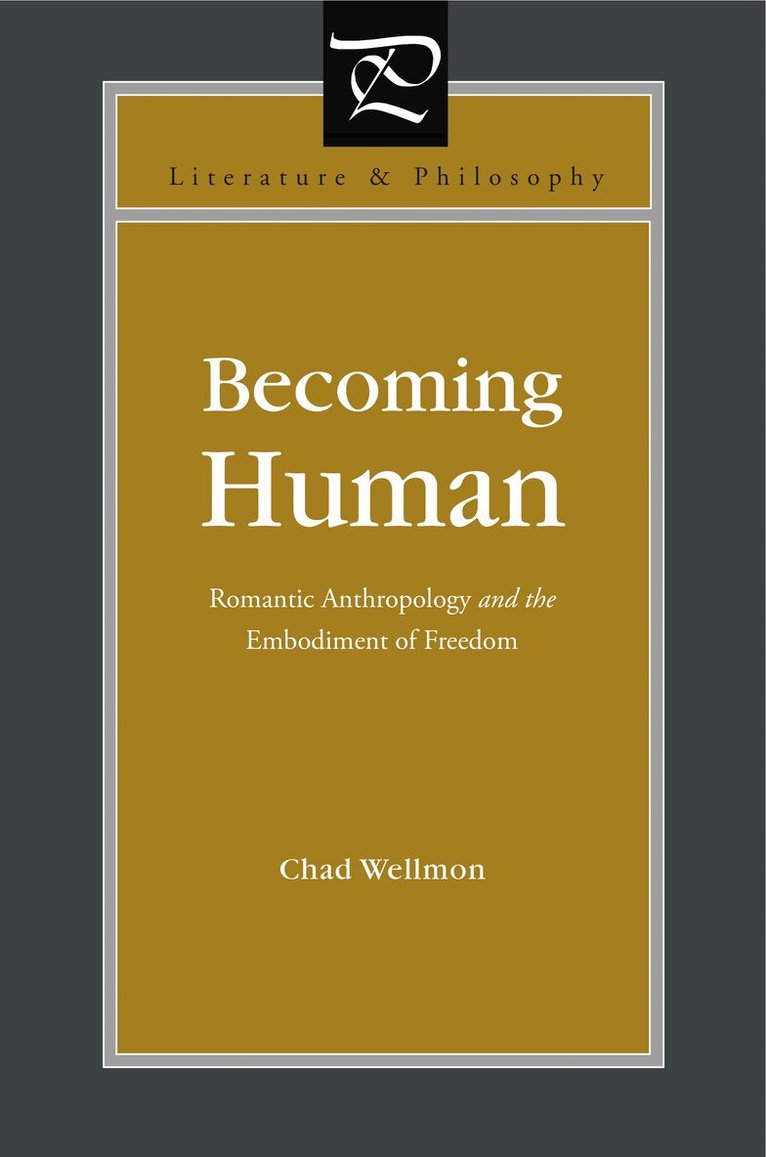
    Becoming Human

    Romantic Anthropology and the Embodiment of Freedom

    AvChad Wellmon

    Häftad, Engelska, 2014

    Del i serien Literature and Philosophy

    507 kr

    Beställningsvara. Skickas inom 5-8 vardagar. Fri frakt över 249 kr.

    Beskrivning

    Immanuel Kant wrote that his infamously academic, arid philosophy posed three questions: What can I know? What can I do? What can I be permitted to hope for? He then added a fourth that he claimed would subsume them all: What is the human? This last question, he suggested, could be answered by a new science of man called anthropology. In Becoming Human, Chad Wellmon recounts the emergence of anthropology around a question that had become too capacious for a single discipline and too unstable for the distinctions that had come to ground Enlightenment modernity—distinctions between nature and culture, body and mind, human and animal, European and non-European. If, as Friedrich Schlegel wrote, we don’t even know “what the human is,” then what would a science of the human base itself on? How would it be possible and why would it even be necessary? This book is an intellectual and literary history of how these questions took form in late eighteenth-century Germany. By examining this period of anthropological discourse through the works of thinkers such as Kant, Novalis, Schleiermacher, Wilhelm von Humboldt, and Goethe, Wellmon argues that the crisis of a late eighteenth-century anthropology marks the emergence of a modernity that sees itself as condemned to draw its norms and very self-understanding from itself. Modernity became fully modern when it became fully reflexive—that is, sensitive to the paradoxical and possibly futile nature of the modern project.

    Produktinformation

    • Utgivningsdatum:2014-06-15
    • Mått:152 x 229 x 24 mm
    • Vikt:499 g
    • Format:Häftad
    • Språk:Engelska
    • Serie:Literature and Philosophy
    • Antal sidor:336
    • Förlag:Pennsylvania State University Press
    • ISBN:9780271048529

    Utforska kategorier

    • Litteraturvetenskap inom Skönlitteratur

    Mer om författaren

    Chad Wellmon is Assistant Professor of Germanic Languages and Literatures at the University of Virginia.

    Recensioner i media

    “In Becoming Human, Chad Wellmon accomplishes three significant feats: he provides a genealogy of the conceptual crisis that still haunts cultural anthropology, demonstrates the complexities of the ‘Enlightenment project’ that developed a richer notion of humanity than post-Enlightenment caricatures of the autonomous cogito suggest, and puts those complexities to work in a redefinition of modernity with a critical potential that can address contemporary issues.”—John H. Smith, University of California, Irvine

    Innehållsförteckning

    • ContentsAcknowledgmentsIntroduction: On the Possibility of Critique and the Failure of AnthropologyPart One: The Historical Problem1. Proto-anthropology and the Discovery of ReflexivityPart Two: A Provisional (Kantian) Solution2. Cultivating Freedom: Kant’s Affective Ethics3. Freedom, Between Nature and Reason: Kant’s Pragmatic Anthropology4. Testing the Human: Kant and Forster on the Differences of Race and the Possibilities of CulturePart Three: Three Responses to Kant5. Poesie as Anthropology: Schleiermacher, Colonial History, and the Ethics of Ethnography6. Lyrical Feeling: Novalis’s Anthropology of the Senses7. The Body of Language: Goethe, Humboldt and the “Lively Gaze”ConclusionNotesBibliographyIndex